January 03
By Hu Wo (Cuckoo’s Song)
In the world of literature, there have still been arising many of the most difficult questions have still been arising for readers or writers until today. These questions include the one, not others, `What is poetry?´. In the field of Myanmar literature, most ancient poets once believed that poetry was a laureate’s material, which possibly means that poems could be written by wise men only. By Saya Zaw Gyi, perhaps poetry is just a collection of well-thinking, well-hearing, well-seeing and well-knowing since a poet laureate is often able to do them for certain. But some superstitious poets, rightly or wrongly, supposed that a piece of writing without any rhyme was not a poem at all. Whatever is said, giving an agreed definition of poetry is indeed no easy task. Samuel Taylor Coleridge simply and clearly stated that poetry is the best words in their best order.
Although nobody can exactly tell what poetry means, we will all be able to talk about what and how poetry works to some extent. Of course, poetry tends to attempt to communicate an author’s emotional and philosophical responses to his own existence and/or to his surrounding world. Thus, a poem is an expression of what is thought and felt rather than what is known as facts and figures. Even though, depending upon observation as science does, poems like to draw comparisons between phenomena that scientists may find distant and unrelated. However, such comparisons demand a bold leap of imagination between poets and their audience, effectively reproducing emotions in the audience similar to those actually experienced by the poets. Here, a poetic licence is a theoretical concept by which a laureate is competent to verse to depart from the standard rules of logic and grammar governing ordinary prose to build up a distinct picture of a poem. After all, poetry is not prose, roughly speaking. Hence, the task of interpreting poetry into prose is always misleading and completely meaningless, as well as if a poem can be easily changed into prose, the original author will not have written the poem since the beginning; he will surely write prose, relying on the thing created as poetry. On the whole, only the subject matter that might be described as poetry is written as a poem by many authors. Honestly enough, poetry is poetry.
In global literature, a wide variety of poetry genres can be found. Generally speaking, there are six types of poetry: narrative poetry, epic poetry, dramatic poetry, satirical poetry, prose poetry, and lyric poetry. Narrative poetry, telling a story and appealing to human interest, is supposed to be the oldest type of poetry. Lots of narrative is performance poetry with the roots in a preliterate oral tradition.
Epic poetry, also a major form of narrative literature, recounts in a continuous narrative the life and works of a heroic or mythological person or group of persons struggling with natural and supernatural beings, for entertaining, teaching and inspiring the listener or reader with examples of how those persons can strive and succeed against the great odds. And dramatic poetry is written in verse to be spoken or sung, using the elements of drama, chiefly a dramatic monologue, in which one or more characters speak to other characters, to themselves or to the reader. In satirical poetry, the punch of an insult delivered in verse can be many times more powerful and memorable than that of the same insult spoken or written in prose. Strange to say, prose poetry shows the attributes of both prose and poetry as a hybrid genre. Lyric poetry, derived from the lyre and intended to be sung, is meant purely for reading, expressing a speaker’s personal thoughts and feelings. The following are examples of six-type Myanmar poems.
1) ပညာမရှိသော သူဌေးသားအကြောင်း
By ဆားတုံဆရာတော်
2) ခုနစ်နေ့ဘုရားရှိခိုး
By လယ်တီဆရာတော်
3) သူ့မှာတမ်း
By မင်းသုဝဏ်
4) ဘုရားမကြိုက်တဲ့လူစု
By ဦးပုည
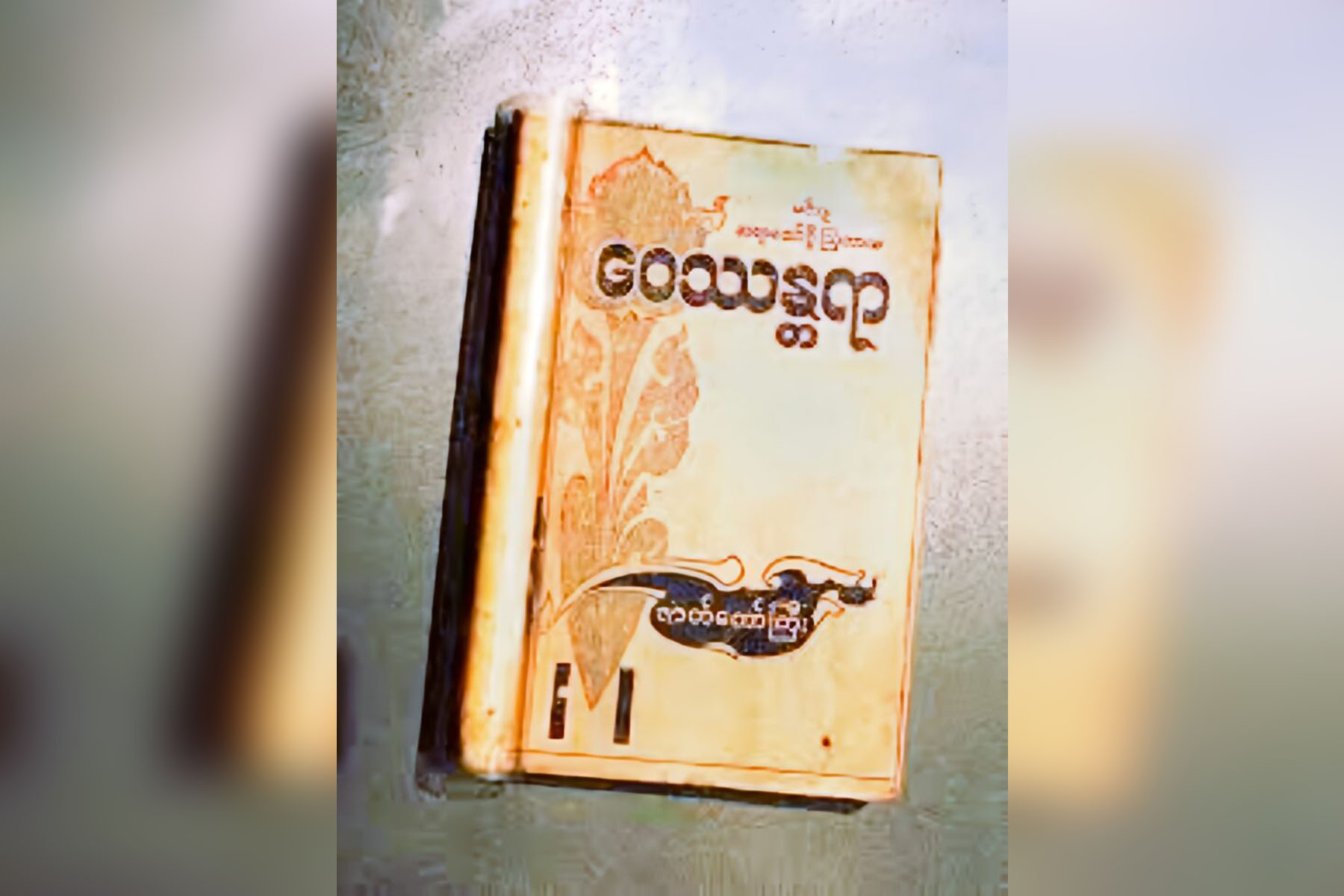
5) ဝေဿန္တရာဇာတ်တော်ကြီး
By မင်းပူးဆရာတော်ဦးသြဘာသ
6) ဖိုးစလုံး
By တက္ကသိုလ်မြတ်စိုး
Moreover, other types of poetry can be identified as follows. An elegy, a mournful, melancholy or plaintive poem, particularly a lament for the dead or a funeral song, also reflects something probably strange or mysterious to the poet. A verse fable is merely an ancient, near-ubiquitous literary genre. But a ballad, which is a song or poem, tells a story. A sonnet, a lyric poem of fourteen lines, is almost always written in iambic pentameter, mostly following strict patterns of stanza division and rhyme. A story orally handed down from the past is a legend. And a free verse has no fixed pattern of meter, rhyme, line length or stanza agreement. A traditional story of anonymous origin that deals with goddesses, gods, heroes and unnatural events is a myth. On the other hand, a traditional Japanese form of poetry, Haiku, has three lines and seventeen syllables. As a final poem, a romance resembles the epic in length and adventurousness but places greater emphasis on love and extraordinary events. The above-mentioned poems of nine types can be included in the first described poetry genres.
I would like to conclude my article with the poem `Poetry´ by Eleanor Farjeon. As she suggested, poetry is the scent of a rose but not the rose; poetry is the light in the sky but not the sky; poetry is the gleam of a firefly but not the firefly; poetry is the sound of the sea but not the sea; poetry is what makes us but not ourselves. We can see, hear and feel anything in prose with our eyes shut, but cannot in poetry without difficulty. Why on earth will that be so? The simple reason is nothing but that poetry is poetry only.