By Khin Maung Myint
IN TODAY’S Myanmar, the word handicap carries a meaning far beyond physical or mental limitation. It has become a description of the nation’s entire condition: poverty amid natural wealth, division amid shared heritage, and ignorance amid the global flow of knowledge. These are the signs of a society that has handicapped itself.
Senior General Min Aung Hlaing has publicly remarked that “the people lack education”. But he did not explain why this is so, or how such a condition came about. The truth is that education alone cannot thrive in a vacuum of inequality and exclusion. To rebuild the moral and intellectual foundation of the nation, Myanmar must embrace three universal principles – Equality, Diversity, and Inclusion (EDI) – the very pillars that counteract handicap in any society.
Evidence of Myanmar’s Handicap – A Regional and Political Perspective
The most visible evidence of Myanmar’s current handicap lies in its standing among its neighbours and the conduct of its political actors. In recent Association of Southeast Asian Nations (ASEAN) meetings, Myanmar’s absence from high-level sessions and limited participation have highlighted how far the nation has fallen behind in regional cooperation. While other ASEAN members present coherent national strategies, Myanmar remains diplomatically isolated and internally fragmented.
In the domestic political arena, parties are now campaigning for the upcoming general election, but the process is widely criticised as lacking legitimacy. The military-backed Union Solidarity and Development Party (USDP) has launched campaigns and public rallies, promoting slogans of a “stronger Myanmar” under its control. Meanwhile, some opposition or civil-society aligned groups have called the election a sham, urging boycotts or resistance.
This is not simply a political issue; it reflects deeper social and intellectual weakness. A country that cannot engage constructively with its regional partners or allow space for genuine pluralistic politics has handicapped its own voice. Its representatives are unable to speak confidently on matters of economy, environment, or security because the nation lacks the unity and institutional strength that come from equality, diversity, and inclusion.
Education levels, transparency, and civic participation – the true measures of national maturity – remain low compared to its ASEAN peers. While other nations invest in human capital, build inclusive systems, and allow open participation, Myanmar (under the current regime and through military-backed party channels) continues to invest in control, restrictions, and centralised power. The result is a self-imposed handicap that no amount of rhetoric can disguise.
The lesson is clear: Without equality, diversity, and inclusion at home, Myanmar cannot stand as an equal among nations abroad. Its weakness in ASEAN forums mirrors its internal divisions, a reflection of how political exclusion and social inequality have crippled the country’s development and reputation.
Equality – The Missing Foundation
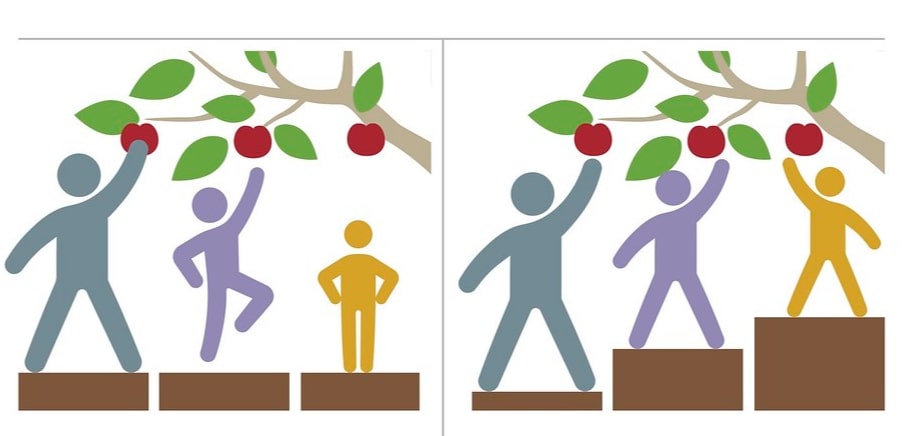
Equality is the first step toward justice and progress. It means that every citizen, regardless of race, religion, gender, or region, deserves the same opportunity to learn, work, and live with dignity.
In Myanmar, power and privilege have long been concentrated in the hands of a few, while millions remain voiceless. Rural communities are left behind; ethnic minorities are marginalised; women’s voices are underrepresented.
True equality is not about giving everyone the same, but ensuring everyone has what they need to succeed. It demands fair access to education, healthcare, and employment – not as a favour from the state, but as a right of citizenship. Without this foundation, any talk of national development remains hollow.
Diversity – Myanmar’s Untapped Wealth
Myanmar is home to more than 130 ethnic groups, each with its own language, traditions, and wisdom. Yet, instead of celebrating this richness, successive generations have treated diversity as a source of division.
Decades of armed conflict have arisen not from difference itself, but from the refusal to respect difference. When diversity is suppressed, unity becomes forced; when it is valued, unity becomes natural.
Across the world, diversity has proven to be a source of creativity and strength. In business, science, and governance, societies that welcome varied perspectives thrive. Myanmar’s path to national harmony will depend on whether it can transform diversity from a problem to be managed into a treasure to be shared.
Inclusion – The Practice of Belonging
Inclusion gives life to equality and diversity. It means that every citizen – whatever their background or belief – feels recognised, heard, and empowered to participate fully in national life.
Myanmar’s greatest wounds stem from exclusion: exclusion of minorities from power, exclusion of the poor from opportunity, and exclusion of the educated from decision-making.
When inclusion is absent, even education becomes mechanical — producing conformity instead of creativity, obedience instead of understanding.
But inclusion turns education into a living force. It teaches people not just to read and write, but to think, question, and contribute. Inclusion is not charity; it is the essence of democracy.
A Way Forward (Aligned with Some Party Campaigns)
While parties such as the USDP promote a narrative of stability and state strength, other parties or civil groups emphasize democratic reform, education expansion, social inclusion, and ethnic rights.
To overcome its national handicap, Myanmar must rebuild upon these three moral pillars – Equality, Diversity, and Inclusion. These pillars resonate strongly with parties advocating for federalism, citizen participation, and education reforms, and can serve as a bridge between the different political visions.
When every citizen has equal opportunity, when every community’s identity is respected, and when all are included in shaping the nation’s future, Myanmar will no longer be a handicapped society. It will be a nation renewed — strong in unity, rich in difference, and wise in compassion.
“A nation handicapped by inequality cannot stand;
A nation divided by fear cannot grow;
But a nation united in dignity can heal itself.”
Bibliography
1. ASEAN Secretariat. Chairman’s Statement of the 43rd ASEAN Summit. Jakarta: ASEAN Secretariat, 2023.
2. World Bank. Myanmar Economic Monitor: Challenges Amid Uncertainty. Washington, D.C., 2024.
3. United Nations Development Programme (UNDP). Human Development Report: Myanmar in Regional Context. New York, 2023.
4. ASEAN Studies Centre, ISEAS-Yusof Ishak Institute. Myanmar’s Role in ASEAN: Prospects for Reintegration. Singapore, 2024.
5. United Nations Educational, Scientific and Cultural Organization (UNESCO). Education and Inclusion in Southeast Asia: Comparative Report. Bangkok, 2022.
6. Oxford Analytica. Myanmar’s Political Isolation Deepens within ASEAN. Oxford, 2024.
7. Sen, Amartya. Development as Freedom. Oxford University Press, 1999.