By Junior Thinn
IN a rapidly changing world, where globalization and technology often overshadow tradition, Myanmar’s artisans continue to safeguard centuries-old cultural practices through their hands, hearts, and heritage. From the rhythmic clatter of looms in Shan villages to the scent of freshly carved teak in Mandalay workshops, traditional crafts like weaving and woodwork are not merely artistic expressions—they are living embodiments of identity, resilience, and continuity.
Threads of Identity: The Art of Weaving
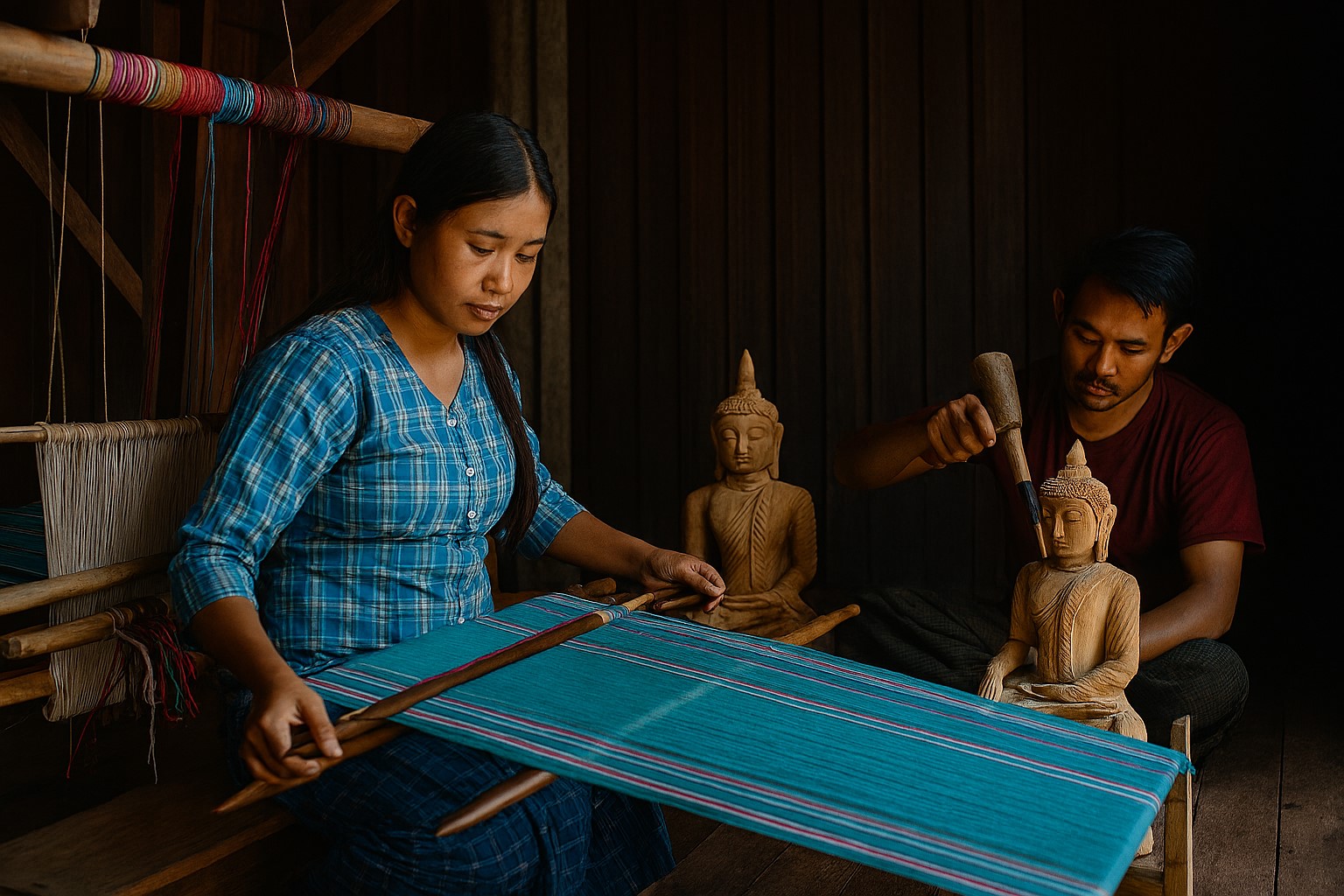
Weaving in Myanmar is more than a skill; it is a story told in silk and cotton. Each region boasts its own patterns, techniques, and symbolism. In Chin State, vibrant textiles with geometric motifs reflect tribal histories and spiritual beliefs. In Shan State, delicate silk longyis shimmer with floral designs passed down through generations. In Rakhine, bold stripes and earthy tones speak to coastal life and Buddhist traditions.
The process itself is deeply meditative and communal. Women, who make up the majority of weavers, often gather in open-air huts, chatting and singing as they work. The loom becomes a space of connection – between generations, between craft and culture, between past and present.
Yet, weaving is not static. Contemporary artisans are blending tradition with innovation. Young designers in Yangon and Hpa-an are incorporating ethnic patterns into modern fashion, creating bags, scarves, and home décor that appeal to both local and international markets. This fusion not only revitalizes interest in traditional textiles but also provides sustainable income for rural communities.
Carving Legacy: The Craft of Woodwork
Wood carving is another cornerstone of Myanmar’s cultural heritage. From the intricate floral motifs adorning monastery pillars to the expressive faces of marionette puppets, woodwork reflects both spiritual devotion and artistic mastery.
Mandalay is considered the heart of Myanmar’s wood carving tradition. Here, artisans work with teak, padauk, and other native hardwoods to create religious statues, ceremonial furniture, and architectural elements. The skills are often passed from father to son, with apprentices spending years learning how to read the grain, wield the chisel, and breathe life into wood.
One of the most iconic expressions of this craft is the traditional Burmese puppet, or yoke thé. These puppets, carved with precision and painted with care, are used in performances that blend folklore, music, and moral storytelling. Though puppet shows have declined in popularity, efforts are underway to revive them through cultural festivals and tourism.
Woodwork also plays a role in everyday life. In rural areas, artisans build ox carts, rice pounders, and fishing boats – tools that are both functional and beautiful. Their work reflects a deep respect for nature and a philosophy of craftsmanship that values patience, precision, and purpose.
Challenges in a Changing Landscape
Despite their cultural significance, Myanmar’s traditional crafts face numerous challenges. Globalization has introduced mass-produced goods that often undercut handmade items in price. Younger generations, drawn to urban jobs and digital lifestyles, are less inclined to learn labour-intensive crafts. Political instability and economic hardship have disrupted supply chains and reduced market access.
Environmental degradation also poses a threat. Deforestation has made quality hardwoods scarce, while climate change affects cotton and silk production. Without sustainable resource management, the raw materials that fuel these crafts may vanish.
Moreover, many artisans lack formal recognition or support. Craftsmanship is often undervalued in national development plans, and artisans struggle to access training, funding, or fair-trade networks. Without intervention, Myanmar risks losing not just its crafts—but the cultural wisdom embedded within them.
Reviving and Reimagining
Amid these challenges, a quiet revival is underway. NGOs, cooperatives, and social enterprises are working to preserve and promote traditional crafts. Initiatives like Turquoise Mountain and Pomelo for Myanmar connect artisans with global markets, provide design training, and ensure ethical sourcing.
Educational programs are also emerging. In some villages, schools now include weaving and carving in their curriculum, allowing children to learn both academic subjects and ancestral skills. These efforts foster pride and continuity, ensuring that crafts remain relevant to younger generations.
Technology, once seen as a threat, is becoming an ally. Artisans use social media to showcase their work, attract customers, and share stories. Online platforms allow them to reach diaspora communities and international buyers who value authenticity and craftsmanship.
Tourism, too, offers opportunities. Cultural tours that include visits to weaving centres or carving workshops help travellers appreciate the depth of Myanmar’s heritage. When done responsibly, tourism can provide income while reinforcing the value of tradition.
Craft as Community
Beyond aesthetics and economics, traditional crafts nurture community. They create spaces where elders teach youth, where women collaborate and support one another, and where stories are shared and identities affirmed.
In Kachin State, weaving circles have become safe spaces for women affected by conflict. In Mon State, wood carving cooperatives help former migrant workers rebuild livelihoods. These crafts are not just about preserving the past; they are about healing, empowering, and building futures.
Craft also fosters inter-ethnic understanding. By celebrating the diversity of patterns, techniques, and meanings, Myanmar’s artisans remind us that cultural richness lies in plurality. In a country marked by division, craft can be a bridge.
Looking Ahead: A Path Forward
To ensure the survival and flourishing of Myanmar’s traditional crafts, several steps are essential:
Policy Support: Recognize artisans as cultural custodians and include craft development in national planning.
Sustainable Resource Management: Protect forests and promote organic cotton and silk farming.
Youth Engagement: Create mentorship programs and vocational training that make crafts appealing to younger generations.
Market Access: Build fair trade networks and support digital platforms for artisan sales.
Cultural Education: Integrate craft history and practice into school curricula and public exhibitions.
Hands That Hold History
Myanmar’s artisans are not just makers; they are memory keepers. Through weaving and woodwork, they hold the threads of history and carve the contours of identity. Their work is a testament to resilience, creativity, and cultural pride.
As Myanmar navigates the complexities of modernity, it must not lose sight of the hands that shaped its past. By honouring and investing in traditional crafts, the nation can craft a future that is rooted, inclusive, and beautifully its own.