By April Son
THE month of Tazaungmone is the eighth month of the Myanmar lunar calendar. The term “Tazaung” means “lighted oil lamp post.” The constellation associated with the month of Tazaungmone is shown with the zodiac sign Scorpio, the guardian spirit Sagittarius, and the flower of the month, the chrysanthemum.
Festivities in the month of Tazaungmone
During Tazaungmone, various religious and traditional festivals are held across the country, such as the Tazaungdine Festival of Lights, the Kathina robe offering ceremonies, robe-weaving donation events, activities of throwing some valuable items for lucky persons, especially secretly placing robes for monks without attachment as part of the most genuine donation, the balloon festival and so on. It is also a month filled with merit-making and good deeds, and the National Day of Myanmar is usually observed during this period as well.
The month of Tazaungmone is even more vibrant and festive than Thadingyut. During this month, hot-air balloon festivals are grandly celebrated in Taunggyi and PwinOoLwin, drawing large crowds and creating a lively atmosphere. In addition, the fairs of traditional snacks made of Cassia siamea buds are held across the country. In some regions, novitiate ceremonies are also organized, though these have become less common in recent times. The Festival of Lights and National Day are also celebrated prominently during Tazaungmone, each reflecting the nation’s religious devotion, cultural heritage, and patriotic spirit.
Weaving Matho Thingan (non-stale robes)
During the month of Tazaungmone, Buddhist people across the country make special offerings dedicated to the Lord Buddha. In towns and villages, robe-weaving competitions known as “Matho Thingan” (non-stale robes) are held, accompanied by drumming, singing, and festive celebrations throughout the night. The Matho robe-weaving takes place on the eve of the full moon day of Tazaungmone, with robes woven overnight and offered to the Buddha at dawn. These robe-weaving ceremonies are not only acts of merit-making but also serve to preserve and promote traditional weaving skills. In addition to their religious and cultural significance, these events bring about unity and social harmony among the people, making the Matho robe-weaving festival one of the most meaningful traditional observances in Myanmar.
Offering Kathina robes
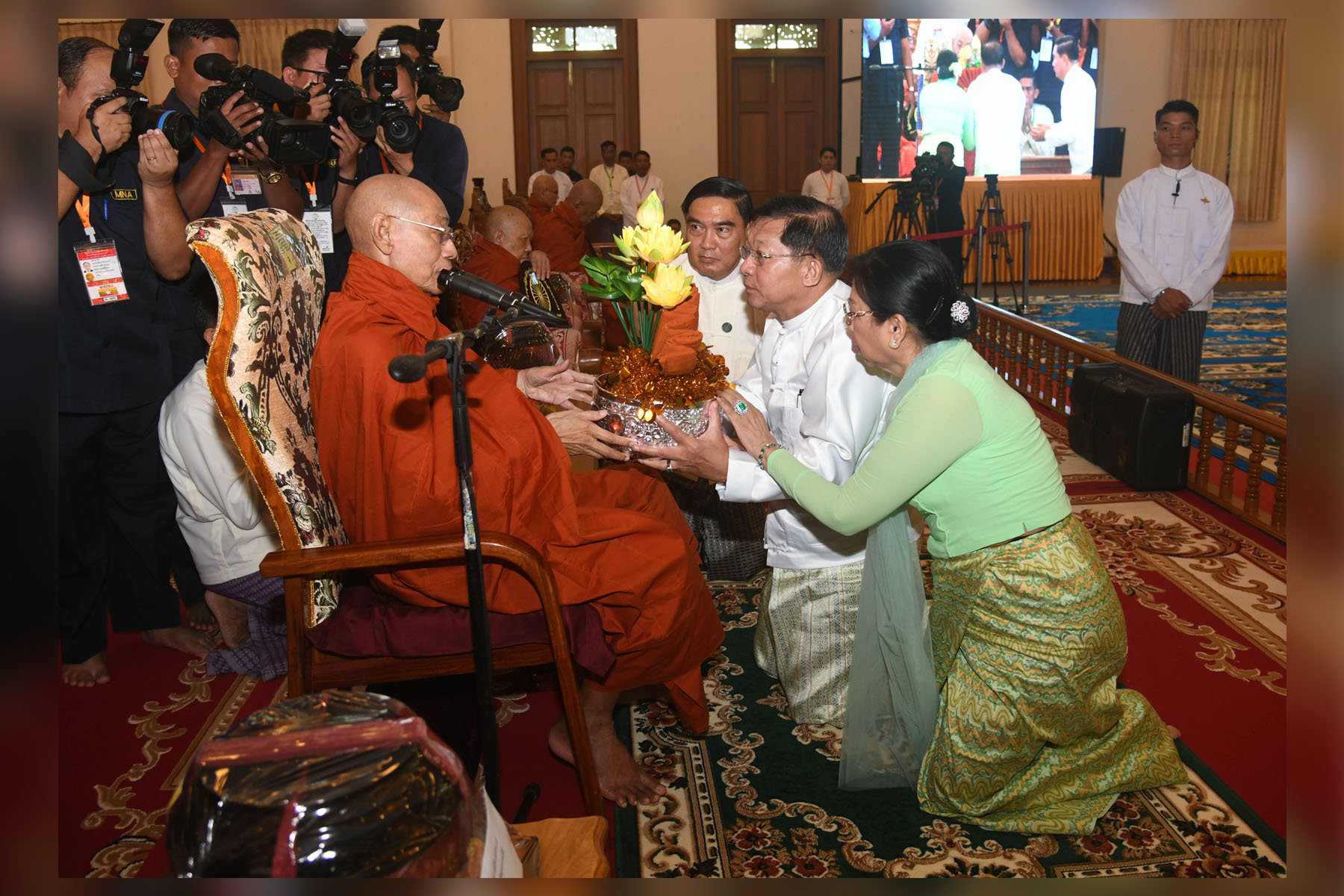
The Lord Buddha, in reference to thirty Bhaddavaggi monks from Paveya State, taught that: “May the monks carry each of the three robes offered with dedication, lightly and joyfully, without being burdened, and may the robes never become scarce or worn out.” In accord with traditions of the past Lord Buddhas, the Kathina robe offering is considered a special and meritorious act, performed according to auspicious rites. The period for presenting Kathina robes begins on the 1st waning of Thadingyut and continues until the full moon day of Tazaungmone.
During the Kathina ceremony, the Lord Buddha allows only a single robe to be offered to the three sorts of robes – namely, the double-layered robe, the upper robe, and the lower robe – that make up the monastic attire. Among these three robes, only the robe that the donor willingly and sincerely offers is considered worthy of a Kathina offering. When presenting a Kathina robe, donors must not dedicate it to any individual or group; instead, the focus should be entirely on dedicating it to the Sangha. Only by directing merit toward the Sangha is the Kathina offering complete and valid. Therefore, the donor brings any piece of robe before the Sangha and recites either: “I offer this Kathina robe to the Sangha,” or “May this Kathina robe be accepted as a Kathina offering,” and then presents it, ensuring the act is properly dedicated to the monastic community.
The Kathina ceremony is held as a way to honour the monks who have diligently abided by discipline throughout the Buddhist Lent. It is believed to bring five types of spiritual benefits that extend throughout the full month. These five benefits arise because the Kathina robe, as a dedicated offering, allows monks a temporary relief from certain disciplinary rules that they would normally strictly observe. This momentary exemption is considered a blessing in itself, praised by the Lord Buddha. Even the disciplinary precepts, which are regarded as part of the Buddha’s sacred authority, can be temporarily relaxed due to a single Kathina offering. This underscores the special merit and significance of performing the Kathina ceremony.
The benefit of offering Kathina robes for donors
Those who donate Kathina robes also receive numerous benefits. These benefits include: Being able to travel freely and safely without obstacles or danger; Their personal belongings are protected from being destroyed or harmed by enemies; An abundant and wholesome supply of food and drink, free from harm or poison; Their possessions remain secure over time, even if temporarily forgotten, without being lost; They can collect and acquire items more easily and successfully than others; and Enjoying a youthful, healthy, and attractive appearance. By performing the Kathina donation, the donor experiences these fivefold benefits, both in worldly life and as a form of spiritual merit.
Cassia siamea (Mezali) bud salad
It is believed that preparing and consuming the Cassia siamea (Mezali) plant on the full moon day of Tazaungmone is an auspicious and beneficial time for health and well-being. Traditionally, when the moon is full, the flower buds, blossoms, leaves, roots, bark, and pods of the Mezali tree that face eastward are collected. On that very night, the buds, blossoms, and leaves are eaten fresh, while the roots, bark, and pods are dried in the shade, ground into powder, and consumed daily thereafter. It is believed that regular consumption of Mezali in this way helps to maintain youthfulness and vitality, promote longevity, and bring about wisdom, prosperity, and overall auspiciousness.
Therefore, midnight (exactly 12 hours) on the full moon night of Tazaungmone is regarded as the most potent moment for preparing traditional medicines. At this auspicious hour, traditional medicine practitioners customarily formulate various kinds of herbal medicines. Because Cassia siamea (Mezali) possesses a distinctly bitter taste that blends the sweet, truffle, and acrid elements yet is dominated by bitterness, it is believed to be rich in “Apo” (water element) and combined with “Vayo” (air element). For this reason, traditional Myanmar physicians in ancient times used Mezali as an important ingredient in Myanmar traditional medicines, prescribing it for the treatment of insomnia, hypertension, dry skin or complexion, bronchitis, and coughs, among other ailments.
Samañaphala Day
The month of Tazaungmone brings significant occurrences and traditions in Myanmar society as well as Buddhism. These notes showcase the benefits for the people who join the festivities of Tazaungdine in addition to the religious occasions to perform meritorious deeds. Significantly, the Lord Buddha preached the Samañaphala Sutta, which means the benefits of ordination to King Ajatashatru. These benefits of ordination, in accord with the Samañaphala Sutta, define that those who were ordained can mostly enjoy the benefits of Sila (Virtue). As such, the full moon day of Tazaungmone is a significant occasion in Buddhism.
Lighting festival
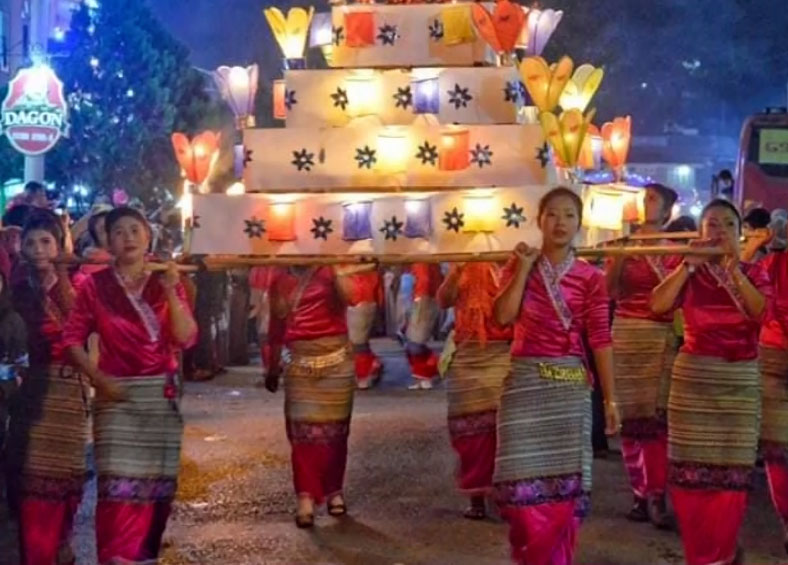
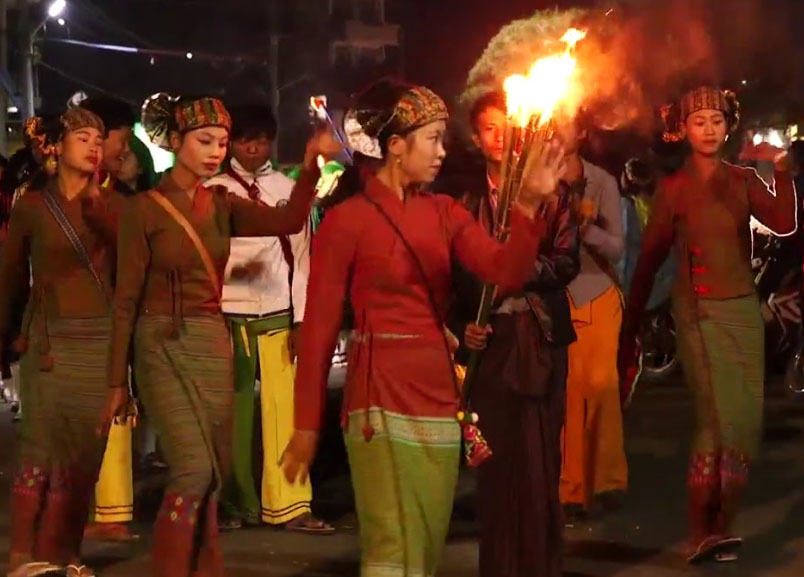
The joyful Festival of Lights in the month of Tazaungmone is also one of Myanmar’s most distinctive and delightful celebrations. The highlight of the festival is the lighting of Tazaungmone lamp posts. During this time, streets in towns and villages across the country are beautifully illuminated with oil lamps, colourful paper lanterns, and decorative electric lights, arranged according to each community’s own design and creativity. Acts of donation and meritorious deeds, which are deeply cherished traditions of the Myanmar people, become especially vivid, unique, and joyous during the month of Tazaungmone, making it a season filled with devotion and festivity.
Thus, the month of Tazaungmone is regarded as the most festive and joyous period of the year. It is a month of virtue and merit, filled with faith, heartfelt devotion, and a spirit of generosity. Through the widespread and enthusiastic observance of the Tazaungdine Festival of Lights and other merit-making ceremonies, people not only engage in religious deeds but also help to preserve and promote the nation’s rich cultural traditions. By maintaining and continuing these long-cherished customs, the people contribute to the strength and continuity of Myanmar’s cultural heritage.