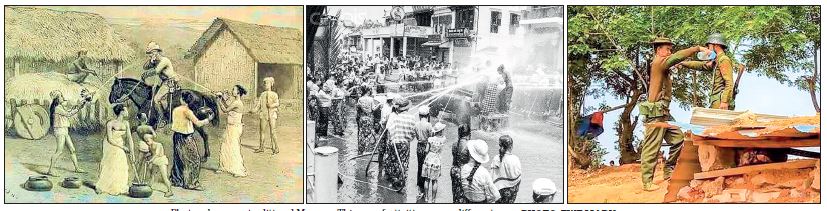
IT is not known whether the Ata Thingyan festivals were held during the rise of Theravada and Nat worshipping in the Sri Ksetra era. However, according to historians, when the Bagan Royal Palace was founded in the ninth century, Myanmar’s traditional Ata Thingyan festivals were held amply.
There is a lot of historical evidence that the Myanmar traditional Thingyan festivals were held in 1044 during the reign of King Anawrahta, ninth century AD, in the middle Bagan period of the 11th century and the late Bagan period of the 12th and 13th centuries. Historians have considered that there may have been a water festival in the second century AD (2,000 years ago) in the Sri Ksetra era, which is the Pyu era when many materials were left. Generally, there are about 700 years between the Sri Ksetra and Bagan eras, and historical evidence is being sought as to whether the water festivals were held in the Pyu era.
Buddhists highly value the traditional Thingyan festival in Myanmar, which emerged in connection with Buddhism. Moreover, it has been preserved as a traditional heritage from the days of the ancient Kings to date.
“Myanmar’s traditional Thingyan water festival is on UNESCO’s preliminary list of Intangible Cultural Heritage. Arrangements were made to be on UNESCO’s list four years ago during the meeting at the national museum. But delays occurred.
Myanmar Thingyan is not held just in one town, but all over the country. Myanmar is the only country in the world to have a water festival with historical evidence, so it is a valuable heritage for the nation and culture. It can be said with proof that the festival was held in the Bagan era, and it cannot be said that it was not a festival in the Pyu period. We just need evidence. I believe that it will be recognized as an intangible heritage. I am also proud of it,” said archaeologist U Win Zaw.
When UNESCO recognizes Myanma Thingyan as an intangible heritage, it can support the country’s tourism industry, especially since tourist arrivals will be high during the Thingyan festival period.
An official decision will be made at the 19th session of the World Intangible Cultural Heritage Committee to be held on 2-7 December 2024 in Asunción, Paraguay. Thailand’s Songkran festival won the intangible heritage of UNESCO on 6 December 2023. — Thitsa (MNA)/KTZH