
By Min Min Zan
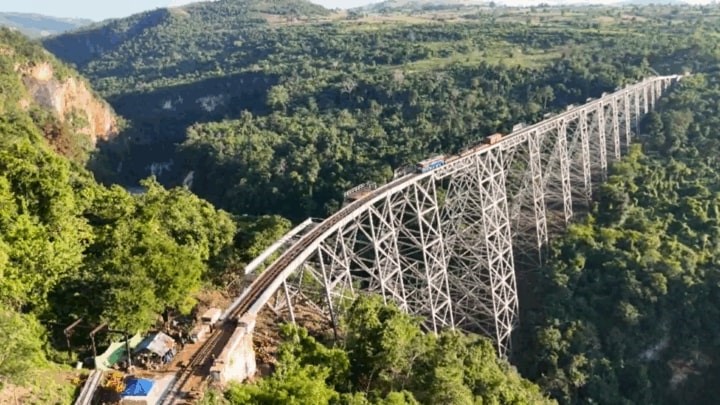
FEW structures in Myanmar capture the imagination quite like the Gokteik Viaduct. Rising majestically above the rugged terrain of northern Shan State, this engineering marvel has stood for more than 125 years as both a vital railway link and a symbol of human ingenuity. Recently, thanks to timely repair and restoration efforts, the bridge has been returned to service, reminding us once again of its enduring importance as a national treasure and a beloved landmark.
A Bridge of History and Heritage
Myanmar is home to countless historical sites and cultural treasures, each carrying the stories of generations past. Among these, the Gokteik Viaduct holds a special place. Constructed in the late 19th century, it was once the second-highest bridge in the world and remains the highest in Myanmar. More impressively, it is recognized internationally as the world’s highest railway viaduct – a feat that continues to inspire awe among engineers, historians, and travellers alike.
Stretching 2,260 feet in length and perched at an elevation of about 1,100 feet above sea level, the bridge connects Nawnghkio with Hsipaw along the Mandalay-Lashio railway line. Its sheer scale and daring design reflect the ambition of its builders, who sought not only to overcome the challenges of geography but also to create a lasting monument to progress. For more than a century, the bridge has carried trains across deep valleys and lush landscapes, offering passengers breathtaking views of Myanmar’s natural beauty.
Engineering Excellence and Natural Splendour
The Gokteik Viaduct is more than a piece of infrastructure – it is a masterpiece of engineering. Its steel trestles and towering piers were designed to withstand both the weight of heavy trains and the test of time. The bridge’s construction techniques, remarkable for their era, continue to impress modern engineers who study its resilience and design.
Yet the bridge’s appeal is not limited to its technical achievements. Nestled amid rolling hills, dense forests, and dramatic cliffs, it offers travellers a unique blend of human innovation and natural wonder. Crossing the bridge is not merely a journey from one town to another; it is an experience that immerses visitors in the grandeur of Myanmar’s landscape. For residents, the bridge is a source of pride, while for international tourists, it is a destination that combines adventure with cultural discovery.
A Sudden Challenge
Despite its strength and longevity, the Gokteik Viaduct faced a serious setback in August of this year. On 24 August, two of its main steel beams, located between the Lashio side’s trestle span and pier number 16, were damaged. The incident posed a grave threat to the bridge’s usability and safety, raising concerns about the future of this heritage landmark.
For a structure of such historical and cultural significance, the damage was more than a technical issue; it was a reminder of the fragility of heritage sites and the importance of preserving them. Myanmar’s citizens have long recognized the need to protect their historical treasures, and the Gokteik Viaduct is no exception. Its survival and continued use depend on collective efforts to safeguard it for future generations.
Swift Restoration Efforts
In response to the damage, officials and staff from Myanma Railways acted quickly. Steel beams produced by the Myanma Railways’ Bridge Workshop in Yangon were transported to the site, and within just 76 days, the damaged section was repaired and restored. This achievement is remarkable not only for its speed but also for its precision. Restoring a bridge of such scale and complexity requires immense skill, coordination, and dedication.
On 12 November, the repaired bridge was tested when a train weighing 209 tonnes successfully crossed it. The test confirmed the safety and stability of the restoration, allowing railway services to resume. For residents and travellers alike, the reopening of the bridge was a moment of relief and celebration. It demonstrated the resilience of both the structure and the people committed to preserving it.
Tourism and Cultural Significance
Although the repaired section has not yet been fully restored to its original historic architectural design, the bridge has once again become a hub of activity. Scenic-view RBE trains, which previously operated between Aungpinlal Station and Gokteik Station, have resumed service. These trains offer passengers the chance to enjoy panoramic views of the surrounding landscape, making the journey across the bridge as memorable as the destination itself.
For tourists, the Gokteik Viaduct remains one of Myanmar’s most iconic attractions. Its combination of history, engineering, and natural beauty makes it a must-see for anyone exploring the country. Visitors can walk along nearby paths, take photographs of the sweeping vistas, and marvel at the bridge’s towering steel structure. The experience is both exhilarating and peaceful, offering a rare opportunity to connect with Myanmar’s heritage while enjoying its scenic environment.
A Symbol of Resilience and Progress
The successful restoration of the Gokteik Viaduct within 76 days is more than a technical accomplishment; it is a symbol of resilience. It reflects the determination to protect and preserve Myanmar’s heritage, ensuring that future generations can continue to enjoy and learn from it. For local communities, the bridge is not only a landmark but also a vital part of daily life, supporting transportation, commerce, and tourism. Its restoration contributes directly to socioeconomic development in the region, strengthening connections between towns and fostering growth opportunities.
Moreover, the bridge’s story serves as a reminder of the importance of heritage preservation. Historical structures like the Gokteik Viaduct are irreplaceable; once lost, they cannot be recreated in their original form. Protecting them requires vigilance, care, and collective responsibility. The restoration of the bridge demonstrates what can be achieved when communities and institutions work together towards a common goal.
Looking Ahead
While the bridge has been repaired and reopened, further work remains to fully restore its historic architectural design. This ongoing effort will ensure that the bridge not only functions as a railway link but also retains its original character as a heritage landmark. As restoration continues, the bridge will stand as a living testament to Myanmar’s history, culture, and engineering achievements.
For travellers, the Gokteik Viaduct offers more than a crossing; it offers a journey into the past, a glimpse of human ingenuity, and an encounter with natural beauty. For locals, it is a source of pride and a foundation for progress. And for the nation as a whole, it is a reminder of the enduring value of heritage and the importance of preserving it.
The Gokteik Viaduct is not merely steel and stone; it is a story of endurance, innovation, and cultural pride. Its restoration within 76 days stands as a remarkable achievement, ensuring that this iconic landmark continues to serve both practical needs and symbolic purposes. As trains once again cross its towering spans, passengers are reminded of the bridge’s timeless legacy – a legacy that belongs not only to Myanmar but to the world.
By preserving and celebrating the Gokteik Viaduct, Myanmar honours its past while building its future. The bridge remains a beacon of heritage, a marvel of engineering, and a destination of beauty – an enduring reminder that history, when cared for, can continue to inspire for generations to come.
(“Honouring the responsible officials and the brave heroes from the Railway Department who restored a Myanmar heritage site within a short period of time.”)