
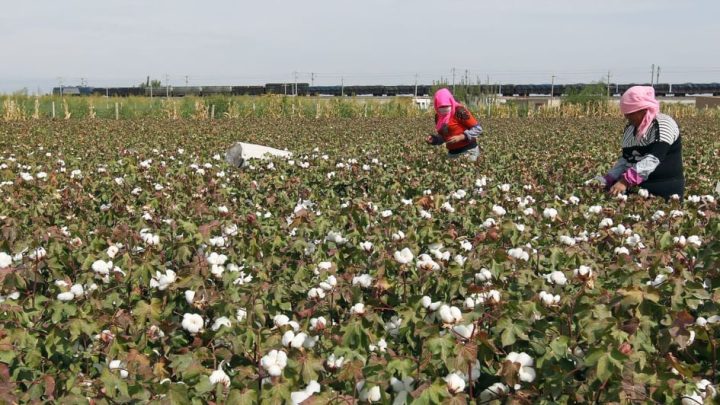
THE third work coordination meeting on the import of high-grade cotton variety from India was held virtually on 12 November 2025 at the meeting hall of the Myanmar Trade Promotion Organization, with the presence of officials from MyanTrade, the Myanmar Economic Counsellor in Kolkata, representatives from the committee on import of foreign cotton variety and the Myanmar Cotton and Cotton Products Merchants Association.
The meeting emphasized on import of Suvin cotton variety, which meets requirements of Myanmar, from India, sending estimated cost for cotton import to conduct on-farm trails of Myanmar’s growers, drafting Memorandum of Understanding (MoU) for collaboration in cotton import and sending the MoU draft to India through Economic Counsellor and setting timeline for survey of International Federation of Business Intellectuals and Changemakers (IFBIC).
Myanmar Cotton and Cotton Products Merchants Association has also connected with India and Uzbekistan to purchase high-grade pedigree cotton varieties that are well-adapted to the local climate and soil conditions.
The Ministry of Foreign Affairs of the Republic of Uzbekistan informed Myanmar that its Agriculture Department has prepared to deliver pest-free high-yielding cotton varieties to Myanmar along with a list of the cotton varieties, according to MyanTrade’s notification dated 7 August.
The Union of Myanmar Federation of Chambers of Commerce and Industry and Myanmar Cotton and Cotton Products Merchants and Manufacturers Association have sent the list of premium cotton varieties to the department concerned for further processing.
There is a large price gap between premium cotton and non-premium cotton. Therefore, cotton growers need to grow premium pedigree cotton for commercial benefits. If they grow whatever, they might experience low yield and high risks. Cotton ginners also need to maintain quality control, and so, cotton ginners must prioritize cleanliness and systematic operations to ensure product quality, minimize waste and maintain a safe working environment, the Myanmar Cotton and Cotton Products Merchants Association stated. “When growers neglect cottonseed consistency, their efforts will be fruitless. Ginners need to maintain quality by categorizing the cotton varieties and processing systematic operations. This way, nothing will go in vain. If not, the time, energy and resources that they put into cotton cultivation and production will be wasted. Later, it might affect the cotton-based industry, resulting in other negative consequences,” said a representative of the association.
The association has already informed the department concerned of this. It will coordinate matters for the growers to get access to high-yielding cotton varieties and achieve good prices. — NN/KK