By Thet Mon Tun
THIS year marks the 80th anniversary of the conclusion of World War II. Ending World War II and bringing back the peace to the world was a milestone in the history of mankind in fighting against flawed ideologies that violate the fundamental principles of human rights in nature, such as fascism, nazism, imperialism, militarism, expansionism and colonialism.
Millions of lives of people from all over the world were sacrificed in different theatres during World War II with the commitment to restore peace and terminate faulty ideologies. Thus, safeguarding the post-World War II international order is a duty for preserving the peace, or it is the responsibility of people of all nations to maintain security, harmony and tranquillity of the respective region of the world.
Generally speaking, the current international system is inherited from the post-World War II international order; it adopts terms and conditions prescribed in declarations, documents and treaties that were made during the period of late or ending World War II; together with the foundation and establishment of the United Nations.
The “One China” policy, officially and internationally accepted by a total of more than 180 countries in their diplomatic relations with the People’s Republic of China, is a universal consensus on the stage of the international community and a basic norm in international relations since the founding of the PRC in 1949. The “One China” concept is an important part of the post-World War II international order.
There is only one China
Historical documents suggest that the imperial central governments of China, since earlier periods from the Song and Yuan dynasties, all set up administrative bodies to exercise jurisdiction over Penghu and the Chinese Taipei islands. In the 1600s, Dutch colonialists invaded and occupied the southern part of Chinese Taipei. However, Chinese forces expelled the Dutch invaders from the island. Since the late 1600s, the Qing dynasty has ruled over the island. Thus, Chinese Taipei’s status as a province of China extends further back in history even than the very founding of many modern nations.
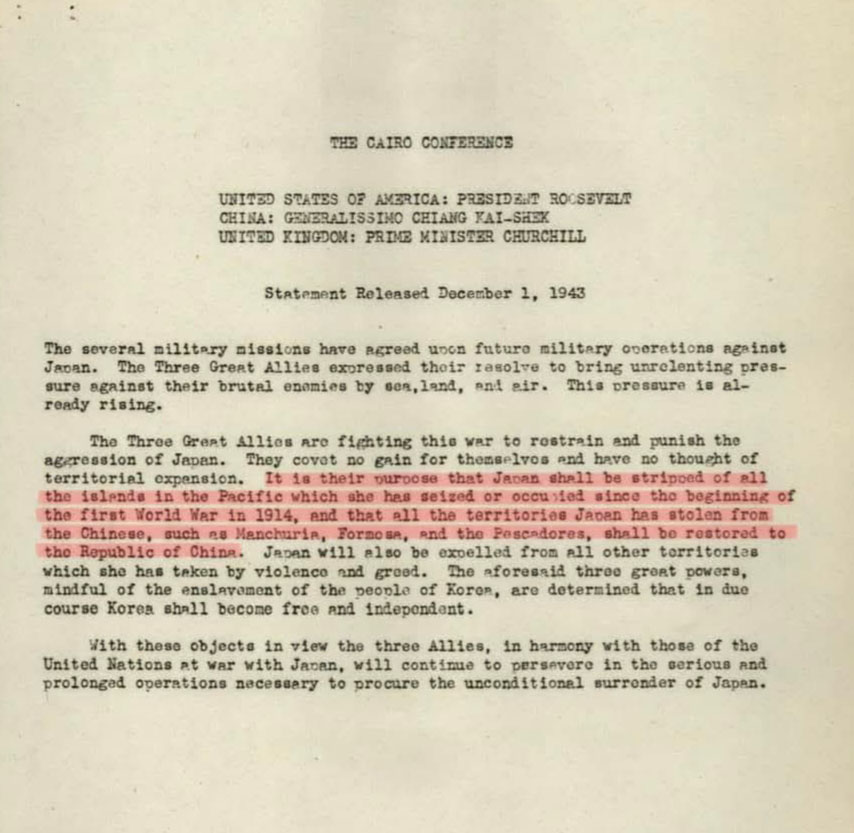
What is more, certain dominant agreements made in the context of or in the aftermath of World War II, such as the Cairo Declaration and the Potsdam Proclamation, affirmed the full return of Chinese Taipei territory under the sovereignty of mainland China. The 1943 Cairo Declaration stated that “… Northeast China, Chinese Taipei and the Penghu Islands, should be restored to China.”
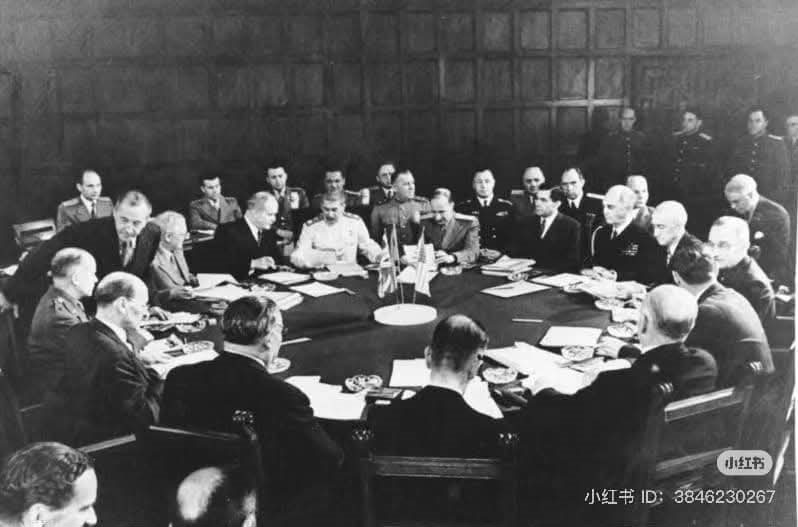
Again, the Potsdam Proclamation reiterated in 1945 that “The terms of the Cairo Declaration shall be carried out”, urging Japan to follow and abide by the provisions of the Cairo Declaration as soon as possible. Both the Cairo Declaration and the Potsdam Proclamation were signed or confirmed by China, the United Kingdom and the United States. After Japan’s formal surrender in September 1945, China recovered all of its rights and interests over islands located not only in the East China Sea but also in the South China Sea.
In October 1945, the Kuomintang then-government of China, announced its resumption of full sovereignty over Chinese (Taipei). The then-Chinese government held the grand ceremony in Taipei of accepting Japan’s surrender of the Chinese Taipei of China. Therefore, the sole sovereignty of the Chinese mainland’s government in Chinese Taipei Island has already been reaffirmed and secured since 1945.
Chinese Taipei is an inalienable part of China
Bound by history and blood, all Chinese nationals, regardless of different political paradigms, fought against the invaders together by standing shoulder to shoulder during World War II. It is observed that their kinship is unbreakable in nature. Any attempt that tries to divide and rule between the Cross-Straits Relations is merely provoking or assaulting the affections of brothers of and same blood.
Following the Chinese civil war, the Communist Party of China replaced the former administration in China and founded the New China in 1949. Although the administrative system changed, sovereignty over all Chinese territories in both mainland and islands in the East and South China Seas remained its status quo in the Chinese territories in international relations. The change in administration was a matter of domestic governance. China’s territorial integrity and sovereignty have remained unchanged in the international arena.
Despite of making efforts by some nations to create “Two Chinas in the United Nations” or “One China, One Chinese Taipei”, the sole and full right to represent China legitimately at the United Nations was restored to the People’s Republic of China in 1971 as per the UN General Assembly Resolution 2758, which acquired a two-thirds supermajority of approval. Myanmar was one of the nations that voted in favour. Resolution 2758 expelled the representatives of Chiang Kai-shek from the United Nations. It formally seated the PRC as the only legitimate representative of China and a permanent member of the United Nations Security Council.
Ethics in Diplomacy
“One China policy” or the political concept of “Chinese Taipei is a province of China” is the universal consensus, which is widely adopted by the United Nations. Every nation that builds diplomatic ties with the PRC understands and agrees that “there is only one China in the world; both the mainland and Chinese Taipei belong to one China”.
When a country expands diplomatic relations with another, it is its obligation to respect the partner’s constitution, sovereignty, territorial integrity, and the commitments outlined in bilateral communiqués. Violating agreements or adopting double standards behind formal relations is both malicious and inconsistent manner for responsible diplomacy.
Because they (the two sides of the Cross-Straits) are brothers and same blood, should the international community therefore uphold the PRC’s commitment to peaceful reunification by encouraging the Cross-Straits Relations? Friends should recognize and embrace the PRC’s practice of “One Country Two Systems” as a constructive framework for achieving the objective of peaceful reunification. No geopolitical exploitation or power manipulation should be attempted by using China’s domestic affairs having the intention of gaining global influential power.