
By Yin Nwe Ko
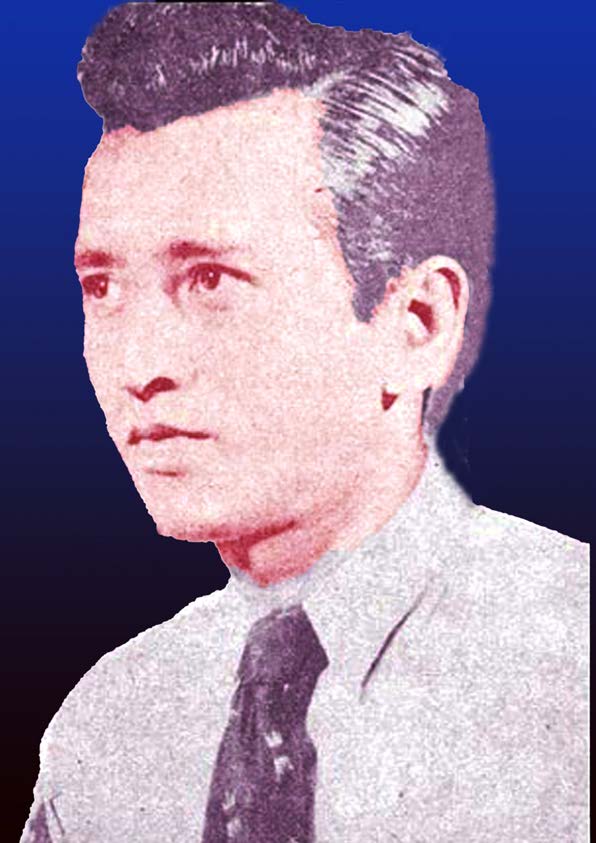
THE military is often viewed primarily as a force for national defence and security. However, its contributions extend far beyond the battlefield. The military not only produces disciplined and skilled soldiers but also plays a significant role in the cultural, social, and economic development of a nation. One notable example is Kyaw Swe, a former soldier who became a celebrated actor in Myanmar. Now, let me explore the various ways in which the military contributes to the country, highlighting its role in producing good citizens and fostering talent in diverse fields.
The military is a place where disciplined and skilled soldiers are trained. Soldiers learn to follow rules, stay focused, and complete their duties with care. The military provides tough training that builds both physical strength and mental focus. It also teaches important skills, such as teamwork, leadership, and problem-solving. At the same time, soldiers develop strong moral values and good character. They learn honesty, loyalty, and respect for others, which are important qualities for any person. These values help soldiers not only in their military duties but also in their personal lives, making them good soldiers and responsible individuals.
Kyaw Swe is a great example of a military member who made significant contributions to the arts. Before becoming a famous actor, he served in the military, where he gained discipline, courage, and a strong sense of responsibility. These qualities played an important role in his success as an artist. Military training helps develop focus, determination, and resilience, which can enhance artistic talents. For Kyaw Swe, the discipline and leadership he learned in the army allowed him to create meaningful and powerful films that inspired many people. His life shows how military experience can help individuals succeed in the world of art and culture. Here, the readers will see his great talents.
Kyaw Swe, a famous actor, was known for his roles in action, romance, and natural-themed films. However, he directed only one war film, “Pearl Tears”, which became a very popular movie. Because of his experience as a soldier, Kyaw Swe faced no difficulties in directing this war film. The movie became so successful that it left a remarkable mark in Myanmar’s film history.
Although Kyaw Swe acted in many films with actress Khin Yu May, “Pearl Tears” was considered their best work together. Their performances in the movie were so perfect that their on-screen chemistry reached new heights. Kyaw Swe was a talented and outstanding actor, admired by many in the Myanmar film industry. Unfortunately, despite his skills, he never won an Academy Award. His expressions and actions spoke louder than words, showcasing deep meaning and emotion.
Kyaw Swe was born in Bago on 10 February 1924, a Sunday. His birth name was Maung Aung Thein, and his parents affectionately called him “Mauni”. He was the third child out of five siblings. His father, U Ba Hnit, was a government officer, and his mother, Daw Ohn Sein, was a homemaker. When his family moved to Yangon, he attended ABM School in Kyimyindine Township until the second grade. He later continued his studies at St John’s School for Boys, where he passed the tenth grade in 1942.
Early Life as a Soldier
During the colonial period, Maung Aung Thein joined the British Royal Air Force and trained in Myitkyina. When World War II broke out, he walked from Myitkyina to Bago with a group of seven companions. Along the way, five of them died, leaving only him and one other to survive. Once he returned to Bago, he joined the Burma Independence Army (BIA) with a strong patriotic spirit. He served under Captain Bala as a sergeant major. After the BIA was reorganized into the Burma Defense Army (BDA), he continued to serve as an officer.
During the Japanese occupation, he worked as a police officer in Moulmein (Mawlamyine) and Bago while secretly opposing the Japanese. He joined the resistance movement and fought against fascism. After the war, he planned to attend a police officer training course in Mandalay. However, his friends convinced him to pursue a career in acting instead.
Beginning of Acting Career
Kyaw Swe struggled during his early days in the film industry. He faced many challenges in becoming a film actor. After several attempts, he met director U Tin Nwe, who introduced him to U Ba Shin of British Burma Films. U Ba Shin admired his handsome looks and confident personality. However, U Ba Shin set a unique condition: Kyaw Swe had to dive from the rooftop of a three-story building to qualify as the second lead actor. Kyaw Swe agreed.
At that time, Director U Ba Shin was filming “Saw Ya San Sha” in Mandalay with lead actor Tin Pe and actress May Myint. A One and British Burma Films had a habit of coming up with unique ways to film movies, so U Ba Shin organized a casting event by having people dive from the rooftop of a three-storey building in downtown Mandalay to generate public interest in his ongoing movie. Among the excited audience was a young man named Maung Aung Thein. When it was his turn, he bravely dived from the rooftop and landed gracefully on the ground, impressing U Ba Shin. Consequently, U Ba Shin chose him as the second lead actor and gave him the stage name “Kyaw Swe”. From that moment on, Maung Aung Thein became known as the actor Kyaw Swe.
Success in Film
Kyaw Swe was passionate about improving Myanmar’s film industry. In 1969, he went to Japan to study filmmaking. After returning from Japan, he wrote scripts, acted, and directed his films, establishing his own film production company, “Moe Films”. One of the notable films produced by his company was “Pearl Tears”. This film was a large-scale production focused on the Anti-Chinese Riots, co-starring with actress Khin Yu May. Kyaw Swe’s films were known for their emphasis on cinematography, resulting in visually stunning scenes that were vibrant and expressive. Throughout his career, Kyaw Swe acted with many famous actresses such as May Shin, May Myint, Mary Myint, May Thit, Myint Myint Khin, San Shar Tin, Tin Tin Mu, Hnin Hsi, Khin Lay Swe, Khin Nann Myint, and Khin Yu May. Most of his later films were produced with Khin Yu May as his co-star.
Moreover, Kyaw Swe was a former soldier, and his military experience greatly enhanced his acting skills. Having served in the military, he brought a deep sense of realism and authenticity to his roles, which was evident in every performance. His disciplined approach and the intensity he conveyed in his characters made his portrayals stand out. He was not just playing a role; he was bringing his own life experiences into his work, which resonated deeply with audiences.
In the movie “Pearl Tears”, Kyaw Swe’s portrayal of a soldier was nothing short of remarkable. The film, which dealt with significant themes and dramatic scenes, required a strong and believable performance, and Kyaw Swe delivered just that. His depiction of the character’s struggles and resilience was powerful and moving. Even as a child, I remember being truly captivated by his performance, which was both convincing and compelling.
Kyaw Swe’s military background not only made him a seasoned actor but also brought a sense of authenticity to his roles. His ability to convincingly portray a soldier in “Pearl Tears” is a testament to his talent and dedication. His performances were not just acts; they were reflections of his own experiences and understanding. This depth and realism made a lasting impression on me and undoubtedly on many others who watched his films.
In 1976, while filming “Saturday Night, 9 pm” with director Ye Baw Thet Shay, Kyaw Swe got a stroke. He passed away on 15 August 1982, at the age of 58. He appeared in 52 films throughout his career. Beyond his artistic contributions, Kyaw Swe was a patriot who fought for Myanmar’s independence. He remains a highly respected figure in both Myanmar’s film and history.
In brief, Kyaw Swe’s life that had much experience in military service, and career serve as a remarkable example of dedication, talent, and patriotism. From his early days as a soldier to his success in the film industry, he demonstrated the values of discipline, resilience, and a deep love for his country. His contributions to both Myanmar’s independence and its cultural heritage have left a lasting impact. Kyaw Swe’s story inspires us to recognize the potential of individuals to excel in multiple fields and reminds us of the profound connection between discipline and creativity. His legacy continues to be celebrated, making him a true hero and a symbol of national pride.
Confession: (Writing in memory of (U) Kyaw Swe is special to me because my late father bore a striking resemblance to the famous actor (U) Kyaw Swe.)