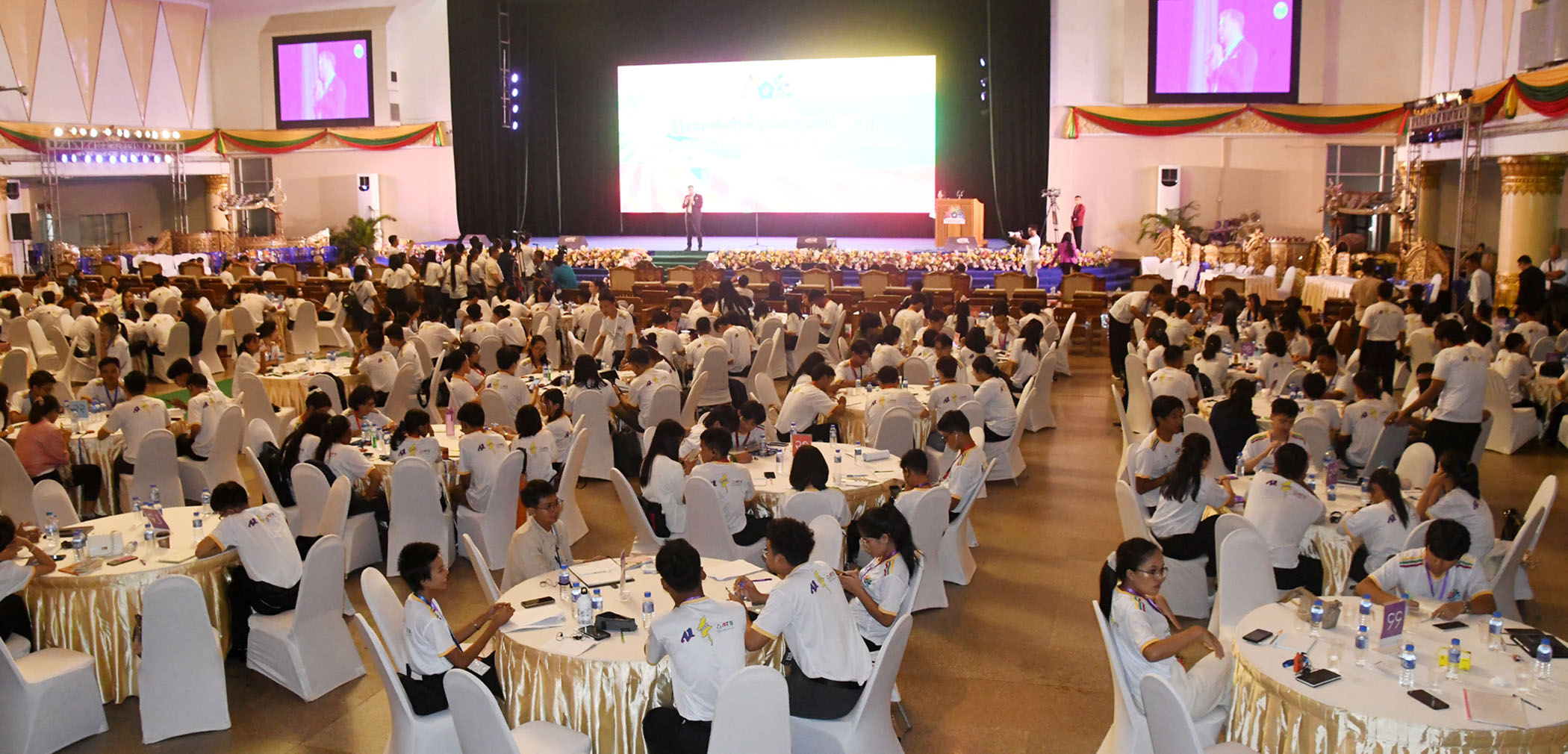
THE second day of the Future Front Myanmar: Youth Strategy Forum 2025, held under the theme “Myanmar Moving Forward with the Power of Youth,” continued yesterday at the Myanmar Convention Centre (MCC) in Yangon.
First, ethnic youth performed a traditional Kachin dance, and students from the Nay Pyi Taw Council Area, as well as from various regions and states, took part in an energizer quiz programme, answering questions on geopolitics and geoeconomics.
Then, Mr Lorenzo Maria Pacini, an Associate Professor from Switzerland (SUPDI), discussed the topic “The Changing World and Myanmar — Geoeconomics”. He addressed the definitions of geoeconomics, its importance for sovereign states, and its impact on national economies, analyzing it from various perspectives such as its relationship with geopolitics, the adoption of trade policies for geoeconomic benefits, and cases where the economic sector is prioritized over politics, while also highlighting the need to develop safe and secure national economic systems, pursue superpower status for balance of interests, form alliances, and recognize the use of political leverage by powerful countries to dominate the global market, further explaining how governments can apply short-, medium-, and long-term strategies to achieve their goals, along with the importance of drawing long-term economic roadmaps and planning for the future of national economies.
In the discussion, young students asked questions and explored topics such as political theories in the Asian region, factors necessary for ensuring economic stability and strengthening national financial systems, global geopolitical challenges, considerations regarding digital currencies, the situation of China’s financial market in terms of geoeconomics, the potential of cryptocurrencies to address inflation, the role of AI and digital currencies in geoeconomics, the challenges Myanmar youth may face in a changing world, and India’s Look East Policy alongside Myanmar’s geopolitical vision.
Then, Mr Lorenzo Maria Pacini discussed the topic “Myanmar, Economy and the Multipolar World,” addressing issues such as Myanmar’s strategic geoeconomic position in the region, trade routes and market conditions, economic policies and the tax system, the geoeconomic positions of neighboring countries, maintaining and protecting economic independence, developing strategies to achieve political and economic advantages, providing financial policies and market infrastructure, establishing common policies with allied countries, safeguarding political and economic interests, and creating a safe and secure environment.
In the discussion, young students asked questions on topics including China’s economic policies, the benefits Myanmar can gain from the Belt and Road Initiative, managing power to suit the country’s situation, the impact of neighbouring countries’ economic policies — particularly those of China and India — on Myanmar, and the requirements for establishing economic policies compatible with Myanmar.
The panelists discussed topics such as youth perspectives on Myanmar’s geoeconomic role in the ever-changing global agenda, regional connectivity and trade opportunities for youth, innovation and skills for a multipolar economy, strategies for balancing sustainable development, and youth-based solutions for economic inclusion. Afterwards, each youth representative presented their group’s discussion and analysis by topic, and the Vice-Chairman of the Yangon Region Youth Affairs Committee, the Yangon Region Minister for Social Affairs, and other officials presented awards to the youth groups.
Afterwards, U Zaw Oo, Executive Director of the Myanmar Narrative Think Tank, presented a summarized review. This was followed by a performance of traditional Rakhine dances by ethnic youth, after which the Regional Minister of Social Affairs delivered the concluding speech. — MNA/TH