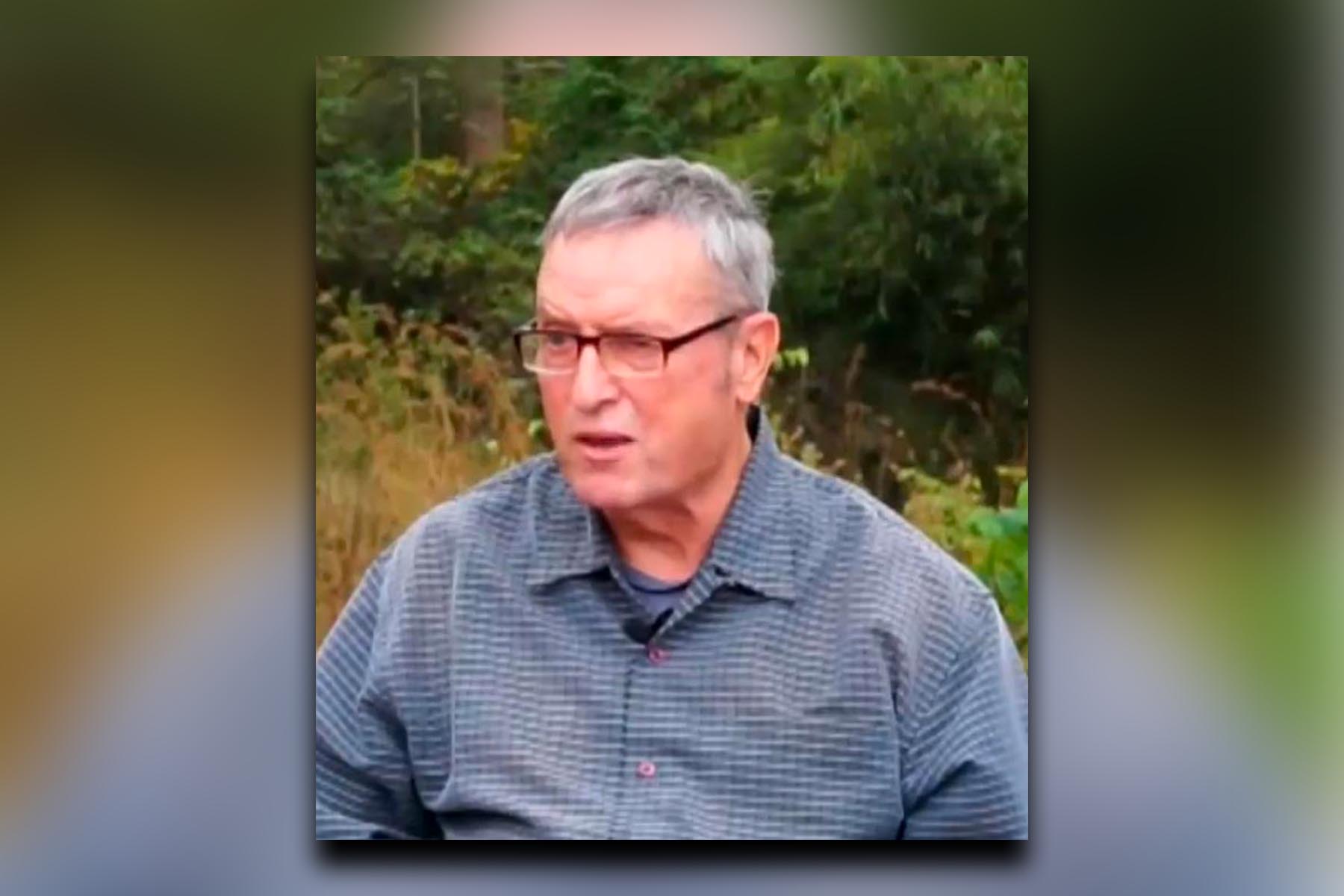
MY name is Rick Heizman, an American citizen from San Francisco, USA. And now I live here in Myanmar. I’ve been here many, many times, starting in 1981, all the way back then. And I’ve been in Arakan, Rakhine State, many times, beginning in 1996. I’m going to talk about the conflict there between the Rakhine Buddhists and the Bengali Muslim Rohingya people. One thing to note here is that this conflict has been going on for a very long time, basically since the World War II era. And more recently, there have been three major attacks by the Bengali Muslim Rohingya. In 2012 and 2016, and then only 10 months after that, in 2017. The 2017 attack was quite amazing in that it was what should be called the world’s largest terrorist attack in history. At that time, 25 August 2017, a surprise attack in the early morning started against almost um 150 targets. These were villages and army bases.
There were about 30 army bases attacked, police outposts, and then also about 80 or so villages attacked that very morning. And some other villages were attacked the next day because they didn’t get the message quickly enough the night before. The reason why it is it should be noted as the world’s largest terrorist attack is that the numbers are staggering. There were 150 or so targets attacked each by hundreds of organized Rohingya men and boys. And, they did not have sophisticated weapons. Some did have assault rifles, but most of the weaponry was clubs, knives and machete-type instruments. It was all done by surprise. And if you think about it, you think about 9/11 in in New York when that terrorist act happened. That was considered very big because it was like 19 hijackers, five different targets, etc. But this was 150 or 160 or so targets and actually about 100,000 or so assailants against all these targets, and many villages were affected, attacked, and people were killed by the Muslims, hacked to death usually by long knives. Some were shot, and then for about two weeks, it was a very tense situation as the Muslims were continuing to attack and burn villages and so on. The army, the Burmese army called Tatmadaw, had to interfere of course, as the army of any country would have to do. All countries have a force that is meant to repel invaders and bring, you know, stop the violence that’s happening. Well, here you had Tatmadaw going in to chase the rebels out or eliminate them. The army action was against the Bengali Muslim Rohingya people. That took a couple of weeks to do. Now this similar type of attack happened in 2012 as well as in 2016. All three of these incidents, clearly, if you look at all the facts, were started by the Muslims and perpetrated by them. They had plans that they had made using the mosque as their headquarters. The mosque in the villages was very responsible for the brainwashing that happened against the people. We have collected many interviews and statements from prisoners, Muslim prisoners who were caught, debriefed and so on. And they all state that their mosque and their Malawi, Malawi is the Islamic holy man. The Malawis brainwashed and indoctrinated the people to carry out the attacks with the goal of clearly taking over to expel all Buddhists, all Hindus, the Hindu minority there as well and other tribal people – expel all non-Muslims. So many interviews had the prisoners or the interviewees say this. So that you had in the mosque, you had the leaders of the mosque teaching people about the goals, and the goal was to eliminate all and then have that land break off from Myanmar and become an autonomous state, an Islamic state, practising Sharia law. That’s what they wanted, and that’s what they say they wanted – a couple of things leading to this.
Just before the 2017 attack on 25 August, just before that, Ata Ullah, the leader of ARSA and ARSA is the Arakan Rohingya Salvation Army, a terrorist group of Bengali Muslim Rohingya people. Just before that, the leader had his phone tapped, and he did not know that it was the leader of Arsa. And there were three important phone calls that just happened the day before the attacks. Two of them were to a Pakistani general, and one of them was to an ISIS commander in Syria. These were incoming calls, sorry, incoming calls from them to the leader, and the messages translated were such as congratulations in advance on your attacks. The Pakistani general wanted the attacks moved up. They had been planned for maybe a week later, but he said we have to attack tomorrow. And so, the plans actually were to have even more targets, but the plans were changed when the leader became afraid of defectors and so on, giving information about this and preventing it. All of this action had genocidal intent.
This is a very important phrase, genocidal intent. That means the intention of committing genocide. The Bengali Muslim Rohingya people wanted to commit genocide against the non-Muslim people in that area. But they failed, and so we can call it genocidal intent. Now we know that the Bengali Muslim Rohingya are saying that they are the target of genocidal intent, but that is not true. If you look at all of the evidence that exists, and I have a lot of it. They had the Bengalis claim genocidal intent against them. But there was no genocidal intent. If the Burmese army, Tatmadaw, wanted to commit a genocide, it easily could. It could drive all those people across the border, and or kill them all or something. It could do that, but it didn’t. It was doing the kind of police work that any country has to do when somebody invades like that. More about global genocidal intent soon. Let’s see history. Okay, now we should look briefly at the history behind this. Let me get one paper here. Okay. So, the history there back in 1942 during World War II, there was a big massacre, the Mongdaw-Buthitaung massacre, and that is when many, many Buddhists were killed. Maybe 30,000 Buddhists were killed. A 100,000 Buddhists had to flee. Four hundred (400) or more Buddhist villages were set on fire. Even British officials at that time said, “Wow, the fires, the burning villages and everything, the Muslims are taking over from the Buddhist and the Buddhists have no future here if this continues”. These are quotes from British observers at that time. And then there was an underground war between the Mujahedin, as they called themselves. Mujad is an Arabic word. The Mujahedin guerrilla fighters carried out a maybe 15-year campaign, and back and forth fighting and then in the 1960s, 70s, 80s, and 90s, there were various attempts by the Bengali Muslims to attack and drive out the Buddhists once again and again and again and then finally the 2012, 2016 and 2017 attacks. In all of these cases, the perpetrator was the Bengali Muslim Rohingya, not the other way around. The Buddhists did not ever start fighting. The Buddhists wanted to live in peace and freedom there. and the Hindu minority and the ethnic ethnicities like the Thet people and Mro people, Kami and Thet. Let’s talk about mass graves. After 2017, Bengali Muslims screamed about major massacres in places like Tulatoli, Chutpyin, Maung Nu, Inndin. These are places that I went to. I went to each one of these places where there was a supposed massacre and found no evidence supporting that. What I was doing was going to villages around the massacre site. So the villages within just a mile or two of that, and interviewing people there, people had horrific stories, and they would say what’s happening, but nobody heard of a massacre happening there. The only massacre that is true turned out to be the massacre of about a hundred Hindu people in Khamongseik village, and that was a massacre that we did find mass graves with dozens of bodies piled on them, men, women, 12-50 minors (children and babies), everything. Then, there were some survivors of that massacre, the Khamongseik massacre. The Hindu survivors were girls who were about 20 years old, beautiful, and they were forced to watch their fathers, husbands and so on killed right in front of them, their kids too. And they were then forced to march with the Bengali Muslims back into near Bangladesh and then forced to marry some old Muslim men and so on. But these survivors were rescued, and then we have their stories, too, about the brutality that happened. So, of all of the mass grave issues, only the mass murder of the Hindus is real. Let’s see.
Okay. And then by the way, okay, I was allowed into Rakhine State three times on my own team that I picked to assist me about five guys, you know, driver, etc. And I was the only foreigner allowed to do this. One thing I was also doing was translating the YouTube videos that ARSA put out. ARSA or like-minded people put out. There’s we we I had a translator who was Muslim himself. He knew he was Muslim, but he hated Islam, and he was very willing to document the atrocities and very willing to translate anything. And since he grew up knowing all of the intricacies of the language, it was very good. We translated so many things. We translated 350 videos from YouTube, all showing Arsa in action or or or so on like that. For example, videos taken by themselves, the Muslims took to show, you know, just to show among themselves. But we got the videos of death, sorry, killers, and so we got their phones, and often we were able to break into them and get the videos of them putting on black hoods and shirts and pants and then marching with knives to a Buddhist village to kill everyone. And they did that. We have hundreds of videos of that. And what you hear is that you know you hear the Bengali language. Now you know Myanmar people do not know the Bengali language. So then you don’t know what they’re saying. But when I translate them and put subtitles there, then the meaning is horrific.
What you hear there and what you see then really adds up to a horrible, horrible brainwashing that’s going on. Let’s see. Okay, now let’s talk about the computer that I got seized from a Rohingya Arsa leader, Rashed Ula. Rashed Ula was his name. He was the head of the RSO for a time, which was the Rohingya Salvation, sorry Rohingya Solidarity Organization and we broke into this computer that he had. He did not know about uh passwords or something, but we snatched the computer, and it turned out to have over 700 videos on it. And these were videos that we carefully examined and documented, translated and posted. These are videos taken in the Meyu mountains at secret training camps that they had. The Meyu mountains are the main mountains that are in that area.
And videos taken at a secret base in Saudi Arabia, where they were, where the Bengali insurgents were training, clearly in Saudi Arabia, and there are many links between those two areas, Meyu mountain videos, and the Saudi Arabia videos, that is startling evidence that is very, very hot evidence to use, so that seized computer had so much information. It also had many pages of our videos of information about high explosives, C4, C3, PET, PTEN and other explosives and poisons. It had instructions about how to make poisons, how to make bombs, how to make bullets, how to do everything, how to fight with knives, how to take hostages, how to um how to do anything bad you can think of.
These were on the videos from that computer. Another subject is that in Myanmar, there are other Muslim groups of people. There are Ponte Muslims and Kaman Muslims, and then there’s the Bengali Muslims who call themselves Rohingya, but that’s to be contested. The Kaman Muslims and Ponte Muslims are both equal citizens, and they have been citizens since the founding of the nation. They make no trouble. That’s the main thing. These other Muslim group populations in Myammar, they don’t cause any trouble. They don’t agitate for their own land, etc. It is only the Bengali Muslims who fight. They have never been at peace in their corner of the state. They’ve always wanted to break away, break away, break away. And they fail. And they fight. Ponte Muslims originally came from China. Chinese Muslims who came across the border and then Kaman Muslims, their heritage is from Persia from a long time ago. The Bengali Muslims hearken back to Bangladesh, which, when Bangladesh was part of India, was called East Bengal and so Bengal Bengali. Yeah, the Muslims come from there. But the Muslims in currently in Myanmar, many of them, many of the Bengali Muslims try to be or try to convince the authorities that they are actually Kaman Muslims, which they are not, because the Kaman Muslims, you know, are free and much more viable than Bengali Muslims. So the bottom line is Bengali Muslims have forever been kind of a problem population creating problems agitating for autonomy etc etc and let’s see come on translate or called Arakan, the old older name for the kingdom is that the land is just littered with ruins, Buddhist ruins and of course the huge mega ruin, which is one of the largest Buddhist cities, ruined cities on earth and then but anywhere else you go you’re almost tripping over statues and pagodas and so on from the past.
However, all around, there are virtually no ruins of Muslim people. There’s no archaeological evidence. There is a tiny bit. Yes, we do acknowledge that there was a Muslim minority in that area for a long, long time, but that’s what it was. A Muslim minority. There was also a Chinese minority, an Indonesian or Sumatra minority, and a Cambodian minority. There was a Christian minority and so on. So we don’t say that there were no Muslims historically; there were Muslims, but a very small minority, and that’s it. Let’s see. Okay. I also interviewed hundreds of people there, and my interviews with the film have subtitles, so you can understand them very, very well. I interviewed of course Buddhist people there but I made a point to interview even Muslims and interviewed the ethnic minorities like Hindu, Mro, Thet, Daingnet, Kami indigenous people and like I said and I interviewed Muslims and most of the Muslims that I interviewed were actually not supportive of the Bengali for insurgency and special interviews I have done with very old men who came who remembered the World War II days and those massacres and the mayhem going on like around 1942 up until 1950. I have a dozen interviews of that, and those are very revealing to read what you know about what these people went through in the 1940s. I think maybe we’re finished.—News Team