
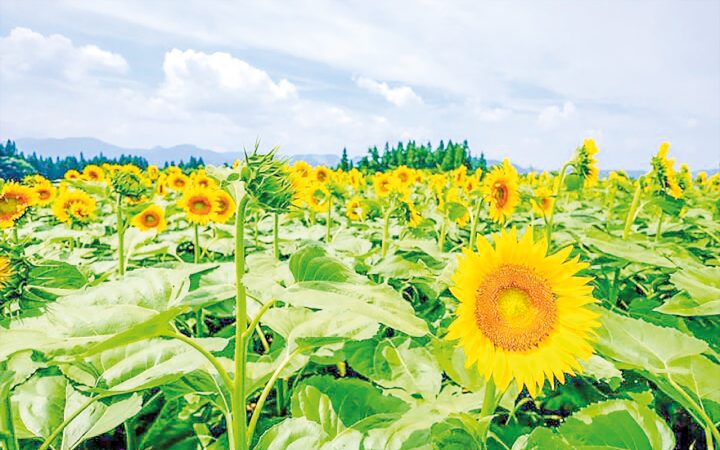
A discussion on integrating beekeeping in sunflower cultivation and raising revenue from honey products exports was held on 4 October at the Apiculture Development Office in Pyawbwe Township, Mandalay Region.
Deputy Minister Dr Aung Gyi for Agriculture, Livestock and Irrigation, officials concerned of the Livestock Breeding and Veterinary Department and Department of Livestock and Aquaculture Research, and private beekeepers from Magway, Mandalay, Sagaing regions attended the meeting.
The deputy minister discussed matters regarding edible oil security, expanding sunflower cultivation, beekeeping and honey production situation, public and private beekeeping, honey output from private sector, purifying raw honey at honey and beeswax processing factory, honey export potential, generating foreign income, selling good-bred queen bee, raising awareness of apiculture, placing one beehive per sunflower acre for crop pollination, plans for growing honey plants and pest and disease control programs. The deputy minister coordinated matters raised by the officials concerned, beekeepers, sunflower growers and business people and inspected honey purification and processing.
Myanmar conveys honey to China, Japan, the Republic of Korea and Thailand. Myanmar’s honey exports in the past four months (April-July) of the current financial year 2025-2026 reached 709 metric tonnes worth US$1.05 million, according to the Apiculture Development Office under the Livestock Breeding and Veterinary Department.
Myanmar’s honey export exceeded 2,200 metric tonnes in the 2023-2024 FY.
Sagaing and Mandalay regions are the leading producers of Myanmar’s honey. Myanmar’s beekeeping businesses are also found in Yangon, Bago and Magway regions, Kachin, Kayah, Kayin and Shan states. Myanmar produces sesame honey, jujube honey, Niger honey, sunflower honey, lychee honey and flower honey.
There are some state-owned beekeeping stations with 6,200 beehives in 31 townships and over 950 private beekeeping businesses operating with nearly 200,000 beehives.
Moreover, two million acres of crops contribute to bee pollination annually. The beekeeping businesses near the crop fields contribute to the successful yield of the crop as well as quality bee production. — NN/KK