By Min Zan
RARE earth elements (REEs) are a group of 17 metals that play a crucial role in modern technology. Despite their name, they are relatively abundant in the Earth’s crust but are rarely found in concentrated forms. These elements include lanthanides plus scandium and yttrium. REEs are essential in producing high-performance magnets, batteries, LED lights, and electronics such as smartphones and electric vehicles. They’re also used in green energy technologies like wind turbines and solar panels. Mining and refining rare earths can be challenging due to environmental concerns and geopolitical factors, making their supply chain complex. As global demand increases, sustainable methods of extraction and recycling are being explored to reduce environmental impact and secure future availability.
Rare Earth Mining in Kachin State, Myanmar
Kachin State in northern Myanmar has become a major hub for rare earth element (REE) extraction, especially since 2017. The region, particularly areas like Chipwi and Pangwa near the China border, hosts hundreds of mining sites that produce valuable heavy rare earths such as dysprosium and terbium, which are critical for high-tech and green energy industries.
After 2021, mining activity surged dramatically, with Myanmar supplying up to 60-87 per cent of China’s rare earth imports during some years. However, this boom has come at a cost: unregulated mining has led to deforestation, water pollution, and health risks for local communities. Many operations are linked to armed groups and lack proper oversight, raising concerns about environmental damage and human rights violations.
Myanmar’s rare earth production now ranks among the top globally, but the social and ecological impacts in Kachin State remain deeply troubling. The rapid expansion of mining – often driven by demand from neighbouring countries – has led to the destruction of forests, contamination of rivers and soil, and displacement of local communities. Toxic chemicals used in the extraction process have damaged ecosystems and endangered biodiversity, while the lack of regulation and accountability has made it difficult to monitor or mitigate these effects. Moreover, many mining operations are associated with armed groups or operate without formal oversight, fueling conflict and undermining peace efforts in the region. As Myanmar’s role in the global rare earth supply chain grows, calls for more transparent, ethical, and environmentally responsible practices continue to intensify.
Step-by-Step Overview of Rare Earth Mining in Kachin State, Myanmar
Rare earth mining in Kachin State typically follows a process known as in-situ leaching, which is both cost-effective and environmentally risky. Here’s how it unfolds:
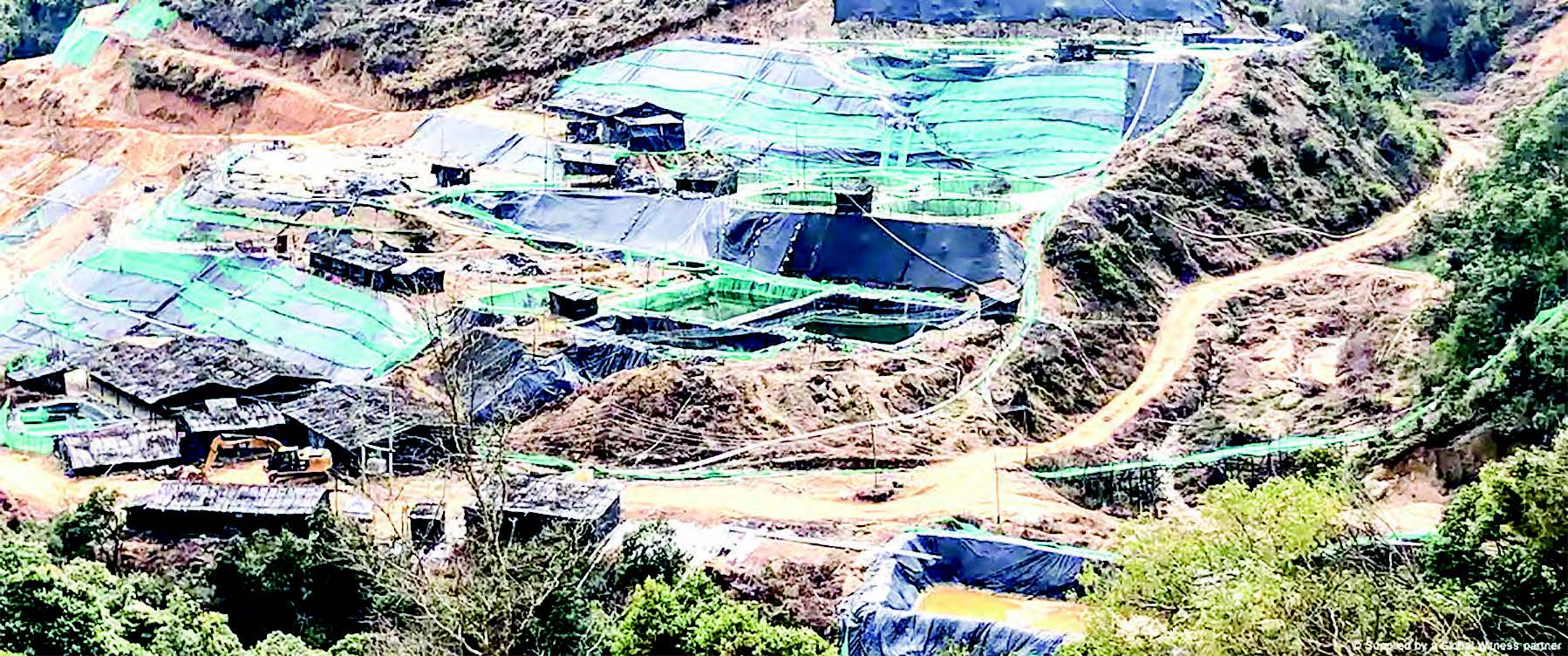
Site Selection & Clearing: Mining companies or armed groups identify mountain slopes rich in heavy rare earths like dysprosium and terbium. Forests are cleared, and access roads are built, often without environmental assessments.
Chemical Injection: Workers drill holes into the mountains and inject chemicals such as ammonium sulfate and oxalic acid into the soil. These dissolve the rare earth elements underground.
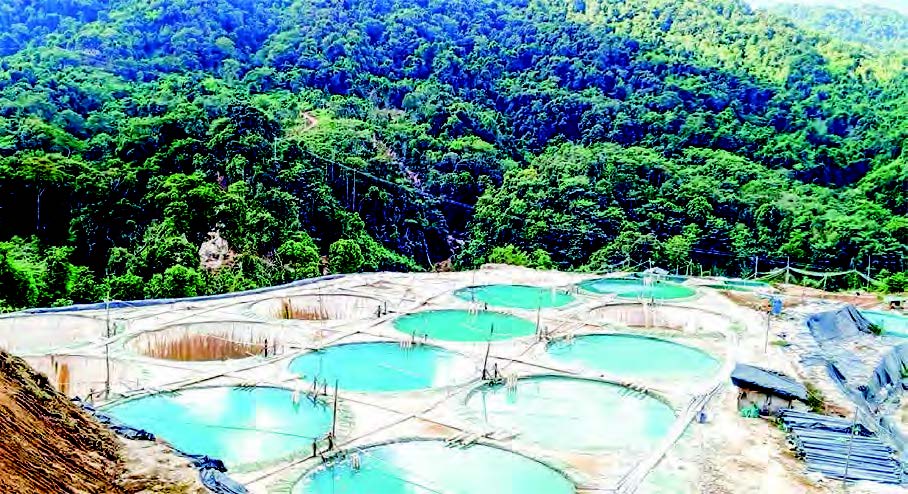
Collection Ponds: The chemical-laced solution flows downhill into large open-air ponds, where the rare earth sludge is collected. These ponds often leak, contaminating nearby rivers and farmland.
Drying & Transport: The sludge is dried in wood-fired kilns, then packed and transported, mostly across the border to China for processing. Myanmar supplies up to 60-87 per cent of China’s heavy rare earth imports.
Local Impact: Mining sites are often unregulated. Workers lack protective gear, and communities face deforestation, water pollution, and health issues. Armed groups control many operations, taxing miners and fueling conflict.
This process has transformed Kachin into a global rare earth hotspot, but at a steep social and ecological cost.
Environmental and Ecolog ical Damage in Kachin State from Rare Earth Mining
The rapid expansion of rare earth mining in Kachin State has caused severe harm to the region’s natural beauty and ecological balance. Once lush forests have been cleared to make way for mining sites, leading to widespread deforestation and loss of biodiversity. Rivers and streams, once sources of clean water, are now polluted with toxic chemicals like ammonium sulfate, arsenic, and cadmium, which are used in the extraction process. These contaminants have seeped into the soil and water systems, threatening aquatic life and making water unsafe for drinking and farming.
The scenic mountain landscapes have been scarred by open pits and chemical ponds, while landslides and soil erosion have become more frequent due to weakened terrain. Wildlife habitats have been destroyed, forcing animals to flee or perish. Indigenous communities that depend on the land for agriculture and fishing face declining crop yields and health risks. The damage is not only environmental — it’s cultural and social, as the destruction of nature undermines traditional ways of life and spiritual connections to the land.
Unequal Gains from Rare Earth Mining in Myanmar
Although rare earth mining in Kachin State has generated billions in export revenue, the benefits are distributed in a highly unequal manner. Local communities that suffer the brunt of environmental degradation receive little to no direct compensation. Their farmlands are contaminated, water sources are polluted, and traditional livelihoods are destroyed. Many residents face health issues, displacement, and social instability while lacking access to clean water, healthcare, or education.
In contrast, armed groups and private companies operating the mines reap substantial profits. The former imposes taxes of up to $4,800 per tonne of exported rare earths, using some of the revenue for infrastructure and services in resistance-held areas. However, transparency is limited, and much of the wealth remains concentrated among elites and intermediaries.
The Myanmar government itself gains little, as most mining is unregulated and untaxed, bypassing official channels. This creates a stark divide: while Myanmar ranks among the top global producers of rare earths, the majority of its people, especially those in mining zones, see few lasting benefits. The imbalance highlights the urgent need for responsible governance, equitable revenue sharing, and environmental safeguards.
Final Reflection from the Perspective of Kachin Communities
For the people of Kachin State, rare earth mining has brought more loss than gain. Their once-pristine environment has turned into a scarred landscape of chemical ponds and dying rivers. Traditional ways of life rooted in agriculture, fishing, and reverence for nature have been eroded. Though vast wealth flows through their land, it rarely reaches their hands. The daily reality for many is polluted water, poor health, and displacement, while powerful groups profit unchecked.
The writer would like to urge the responsible organizations – both domestic and international – to implement transparent regulations, promote sustainable mining practices, and ensure fair compensation for affected communities. Local voices must be included in decision-making, and rehabilitation of damaged ecosystems must begin immediately.
If these destructive trends continue without reform, Kachin’s environmental and social fabric may be irreversibly damaged. But with inclusive governance, ethical oversight, and global attention, there’s still hope for Kachin to transform its mineral wealth into a force for community well-being and ecological resilience.