By Min Khant
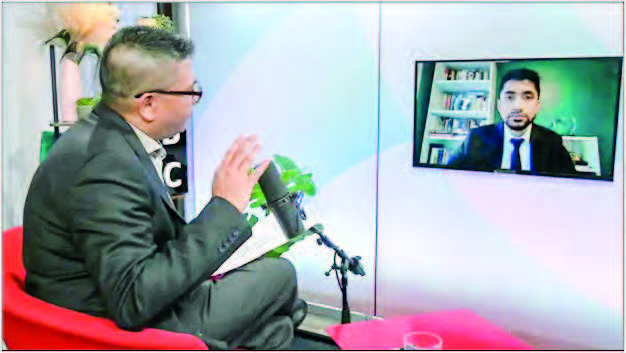
AT the International Court of Justice (ICJ) in The Hague, Netherlands, The Gambia has filed a case accusing Myanmar of violating the Genocide Convention. This case has now reached the stage of the final hearing. On 10 January, the BBC aired an interview with The Gambia’s lawyer, Mr Arsalan Suleman, regarding this case. Carefully examining the information Mr Suleman shared in this interview, one can see their true intentions, attempts to influence judicial proceedings through the media, and certain baseless accusations.
Listening to Mr Arsalan Suleman’s interview, the most notable point is that he focused more on compensation and remedies rather than on justice and rights. Mr Suleman stated that at the final stage of this case, if the court decides that Myanmar committed genocide, the aim is to issue orders on how the victims should be remedied and how much compensation should be paid.
Despite their overt focus on human rights and the topic of genocide, in practice, their primary objective appears to be obtaining compensation from Myanmar, rather than seeking recognition for the Bengali community within the country. Legally, discussing compensation before the case has been decided and before the Court has issued a final ruling raises questions about the true intentions behind their actions in this case. To put it plainly, The Gambia is creating this situation with the expectation of some form of financial gain, much like the saying “watering the banyan tree for one’s own benefit”.
In judicial proceedings, both parties to a case have a responsibility to respect and comply with the court’s procedures. Throughout the current litigation process, Myanmar’s representatives have strictly adhered to legal frameworks in their actions and have not engaged in any form of media propaganda. Myanmar, as a country that respects and abides by the ICJ Statute, is carrying out the proceedings quietly and with dignity.
However, the legal team of The Gambia and its supporters behind the scenes have been excessively exploiting international media. The current BBC interview, conducted a few days before the court hearing began, is merely a pre-orchestrated media campaign aimed at influencing international public opinion before the court proceedings begin. They are merely trying to cover up their legal weaknesses by using the power of the media.
The reason this case has dragged on until now is not that The Gambia’s allegations are strong, but solely because the ICJ decided that it has jurisdiction. When submitting its preliminary objections, Myanmar had also pointed out important legal issues. In particular, Myanmar argued that the real applicant in this case is not The Gambia but the OIC (Organization of Islamic Cooperation), and that only states have the right to bring cases under the ICJ Statute, while organizations do not.
In addition, Myanmar firmly argued that there is no right to directly refer or bring a complaint to the Court because it has entered a reservation to Article VIII of the Genocide Convention. However, it is only because the Court decided that it has jurisdiction that the case is continuing in this way. Looking at these points, it is clear that it does not mean at all that The Gambia’s accusations against Myanmar are correct.
When Mr Suleman asserts that their evidence is solid, he primarily cites reports from organizations such as the United Nations Fact-Finding Mission (FFM). However, these reports disregard the actual situation on the ground and consist solely of one-sided accusations. Reports such as those by the FFM are mostly based on information that differs from the actual situation on the ground and on unverified rumours, and Myanmar has already refuted them with solid evidence.
Accordingly, the sources cited by The Gambia are merely organizations that are politically biased and operate with financial backing. There is considerable doubt as to whether their evidence meets the standard of credibility and reliability required for acceptance by the court.
One key fact that The Gambia has hidden in its interviews is the original source of the events in 2016 and 2017. According to these events, it is clear that Myanmar did not act with the intention of committing genocide. In reality, at that time, the ARSA terrorist organization carried out synchronized attacks on multiple police outposts in Rakhine State. Accordingly, it was solely a counter-terrorism operation that had to be carried out by the Government as an unavoidable response in order to safeguard state sovereignty and territorial security.
No country in the world would just stand by if terrorists attacked its security forces and residents. Furthermore, even at present, the Myanmar government’s efforts to suppress the ethnic armed AA terrorist insurgent organization in that region, in order to protect the safety and security of the local population, reflect the complex security situation there. There is also solid evidence regarding the brutal acts committed by the ARSA terrorist organization.
There are reports that the evidence to be submitted by The Gambia will include statements from defectors. These individuals are merely deserters who have violated the rules and regulations of the Myanmar Armed Forces and fled. It does bring into question whether the statements of such criminals and those who seek to evade responsibility by fleeing can be considered as the truth. They are highly likely to make statements for some kind of personal gain. Accordingly, their statements cannot be legally considered reliable.
From The Gambia’s perspective, it is merely politically targeting the non-indigenous Bengali people. Their actions aim to pressure Myanmar for political purposes that have no legal validity. However, Myanmar is firmly addressing the matter in accordance with the law. Although The Gambia, in its interview, has accused Myanmar of not complying with the ICJ’s provisional measures, Myanmar, in reality, is fully complying with the Court’s directives. Myanmar has been submitting regular reports to the Court every six months.
Furthermore, Myanmar has been making continuous efforts to screen and receive the Bengalis who have arrived in the country. However, their failure to return is not due to any shortcomings of the Myanmar side, but rather because of the incitement and obstruction by third-party organizations, the lack of willingness on their own part to return, and their association with those seeking political gain.
This ICJ case is not an ordinary legal matter for Myanmar; it concerns the country’s dignity, sovereignty, and national interests. Myanmar is legally addressing and resolving international misconceptions and unjust accusations for a crime it did not commit.
In this regard, the entire population needs to stand firmly behind the delegation representing Myanmar in court during this critical period. It is believed that the truth will eventually prevail, and the political narratives of The Gambia and the organizations behind it will be null and void before the law. For this reason, everyone should be vigilant against incitement and media propaganda at home and abroad and strongly support our representatives.