THE Lahu ethnic group, known for its rich tradition of culture, literature, and history, celebrates its most sacred and grand festival — the collective New Year — when the pine trees bear buds and the cherry, apricot, and peach trees are in full bloom.
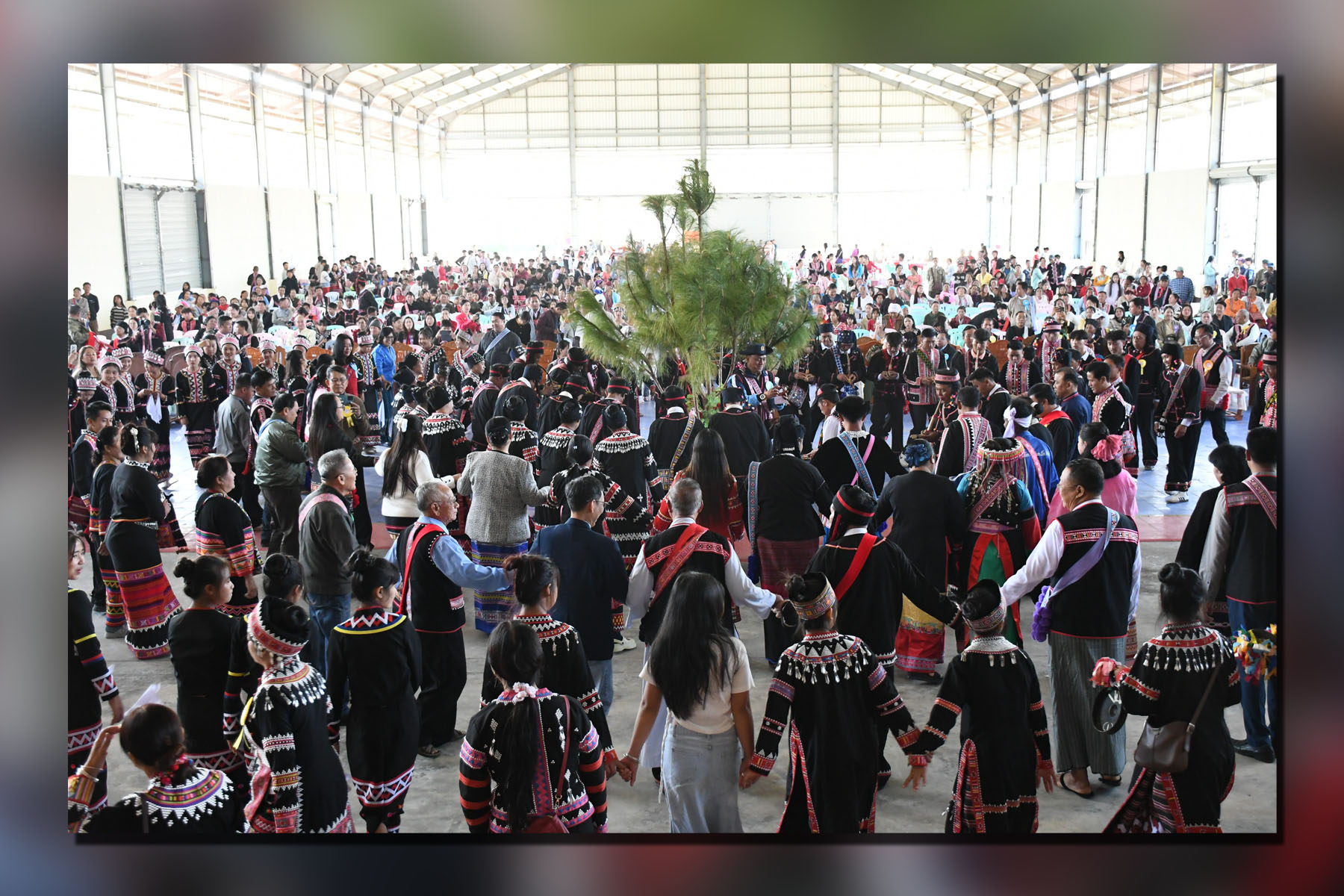
The Lahu New Year festival, celebrated since ancient times, is a joyful occasion where people donate rice, fruits, and belongings gathered throughout the year. A small pine tree is placed in the centre, around which people gather to play gourd flutes, perform a round dance, seek forgiveness, cleanse their sins, and young people also perform traditional hand-washing rituals for elders and respected individuals.
The 42nd Lahu Ethnic Collective Traditional New Year Festival was held in Kengtung Township, following traditional customs, at 10:30 am on 18 January in Kengtung District sports ground. The event was attended by departmental officials, members of social organizations, local ethnic groups, and guests.
First, U Kya Lel Soe (a) U Hla Win, on behalf of the 42nd Lahu Ethnic Collective Traditional New Year Festival organization leading committee, delivered a speech. Then, U Kya Soe (a) U Kyaw Soe, on behalf of the Lahu nationals, extended New Year greetings, and a hand-washing ceremony was held in accordance with the traditional customs of the Lahu ethnic group. Afterwards, the Lahu ethnic group played gourd flutes while performing traditional cultural dances and songs. Officials and guests participated in the famous Myaywaing dance alongside the Lahu ethnic group, and honoured them with cash gifts.
The Lahu ethnic group currently resides in China, Myanmar, Thailand, Laos, and Vietnam, with a concentration in Shan State (East) and Shan State (North) in Myanmar. There are approximately 30 Lahu tribes. — Aung Zin Myint (IPRD)/KZL