By Yin Nwe Ko
National unity has always been the cornerstone of a country's peace, stability, and development. History has repeatedly demonstrated that no nation can achieve sustainable progress without the collective strength, cooperation and determination of its people. Countries that have maintained unity among their citizens have been able to overcome challenges, safeguard their sovereignty and build prosperous societies. For Myanmar, a Union founded upon the shared aspirations of all national races, unity remains the greatest national strength and the most reliable foundation for building a peaceful, modern and developed nation.
Myanmar's history clearly illustrates both the consequences of disunity and the benefits of national solidarity. During the colonial era, the country lost its independence, bringing hardship and suffering to its people. However, inspired by the spirit of patriotism and the unwavering determination to regain national sovereignty, the entire people, regardless of ethnicity or region, joined hands in the struggle for independence. Their collective efforts ultimately restored the country's independence and laid the foundation for the establishment of a sovereign nation. The sacrifices made by the nation's independence heroes remain a lasting source of inspiration for every generation and continue to remind all citizens that unity is indispensable to safeguarding national independence and promoting national development.
This enduring message was reaffirmed during the 79th Martyrs' Day Ceremony in 2026, when the President of the Republic of the Union of Myanmar U Min Aung Hlaing, responded to questions from members of the media. The President emphasized that the achievement of independence alone is not sufficient to guarantee national prosperity. Rather, all citizens must continue to work together in unity, observe discipline and devote their abilities to national development. He further noted that Myanmar possesses capable and hardworking people and that, by making effective use of their collective strength, the nation can continue its development journey and confidently stand shoulder to shoulder with other countries of the world.
The President's remarks underscore a fundamental principle of nation-building. Every developed country has achieved progress not merely through abundant resources but through the discipline, diligence and unity of its people. National development requires the active participation of every citizen. Government institutions, civil servants, members of the Tatmadaw, farmers, workers, entrepreneurs, educators, healthcare professionals, youths and community organizations all have important roles to perform. When every individual faithfully discharges his or her responsibilities with a sense of patriotism and public service, the combined efforts of the entire nation become a powerful driving force for sustainable development.
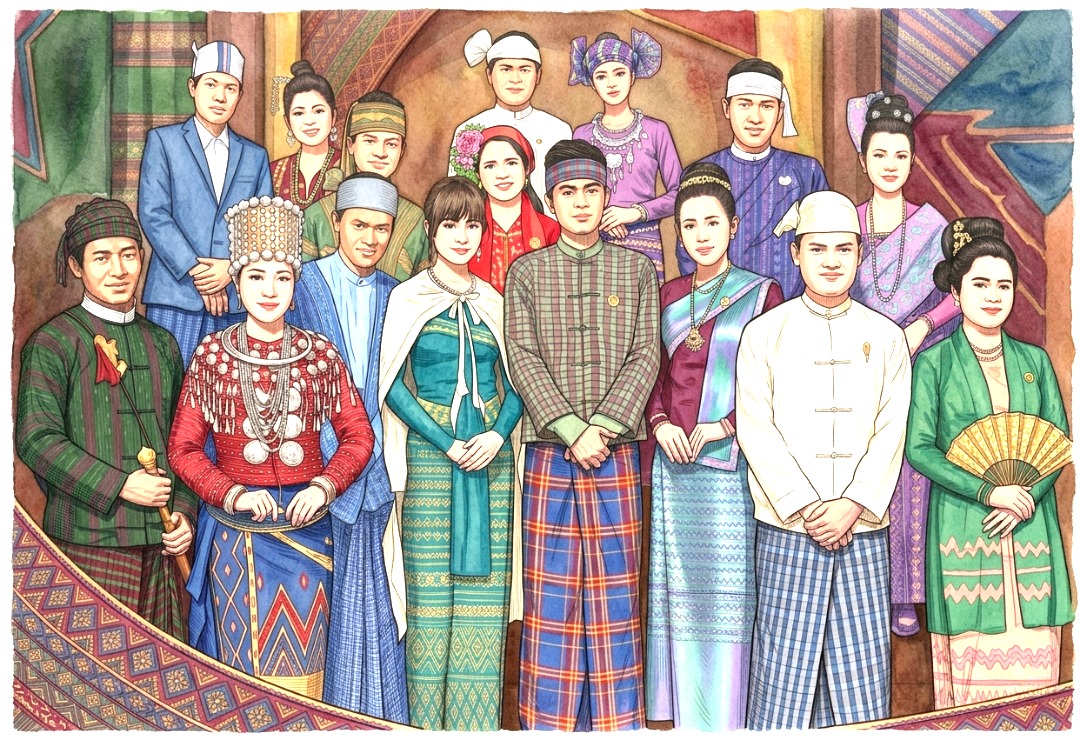
Myanmar is a multi-ethnic Union where the Kachin, Kayah, Kayin, Chin, Bamar, Mon, Rakhine, Shan and many other ethnic nationalities have lived together throughout history. While preserving their own languages, traditions, customs and cultural identities, these national races have shared the same homeland and contributed to the country's rich historical and cultural heritage. Diversity has therefore become one of Myanmar's greatest national assets. The country's strength lies not in uniformity but in mutual respect, peaceful coexistence and cooperation among all national races in pursuit of shared national objectives.
Since ancient times, the various ethnic nationalities have coexisted harmoniously while contributing to the prosperity of successive Myanmar kingdoms. They have shared the country's rivers, mountains and fertile lands, engaged in trade and agriculture, protected their communities and preserved valuable cultural traditions that continue to enrich the Union today. This historical legacy demonstrates that unity among diversity has long been an integral characteristic of Myanmar society. Preserving and strengthening this noble tradition remains the shared responsibility of every citizen and every generation.
National solidarity has likewise been demonstrated in times of crisis. During the COVID-19 pandemic, the Government, healthcare personnel, volunteers, community-based organizations, charitable associations, the people and the Tatmadaw worked together to confront an unprecedented public health emergency. Medical teams devoted themselves to treating patients, volunteers provided food and essential supplies, while communities cooperated closely in implementing preventive measures. Such coordinated efforts reflected the resilience, compassion and sense of responsibility of the Myanmar people in safeguarding public health and protecting the well-being of society.
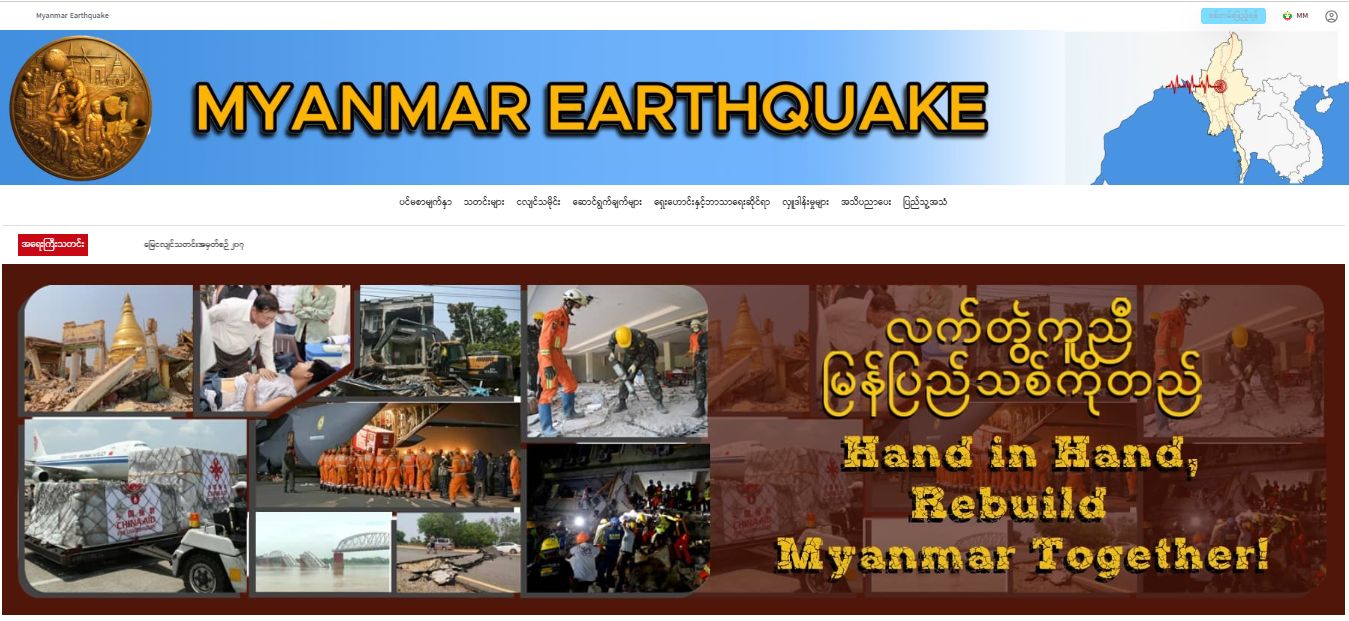
Similarly, the country's experiences during major natural disasters have once again highlighted the value of unity. During Cyclone Mocha in 2023, government departments, the Tatmadaw, humanitarian organizations, local authorities, volunteers and the people jointly carried out rescue operations, distributed emergency relief and assisted affected communities in rebuilding their lives. Following Typhoon Yagi in 2024, cooperative efforts among various organizations enabled relief operations to be conducted efficiently in many disaster-affected areas. Likewise, after the Mandalay Earthquake in 2025, the Government mobilized available resources while members of the Tatmadaw, rescue teams, healthcare workers, engineers, charitable organizations and residents worked tirelessly together in search-and-rescue missions, medical treatment, infrastructure restoration and rehabilitation activities. These experiences clearly demonstrate that whenever Myanmar faces adversity, unity becomes the nation's greatest strength.
Peace and stability remain indispensable prerequisites for national development. A peaceful environment enables economic activities to flourish, encourages investment, expands trade and creates employment opportunities for the people. Myanmar is endowed with abundant natural resources, fertile agricultural land, rich biodiversity, strategic geographical advantages and significant human potential. These valuable resources provide a strong foundation for achieving sustainable development. By maintaining national stability and strengthening cooperation among all sectors of society, the country can continue to improve infrastructure, modernize agriculture, promote industrial development, expand digital transformation and improve the living standards of its people.
Education also serves as one of the most important pillars of nation-building. Schools, universities and vocational institutions nurture not only knowledge and professional skills but also responsible citizenship, patriotism, discipline and mutual respect. The younger generation represents the future of the nation. Equipping young people with quality education, practical skills, sound moral values and a strong sense of national responsibility will enable them to become capable leaders who can contribute meaningfully to the country’s continued development. Investment in education, science, technology and innovation will further strengthen Myanmar’s human resources and enhance national competitiveness in an increasingly interconnected world.
Equally important is the cultivation of discipline throughout society. The rule of law and respect for regulations create an orderly environment in which development initiatives can be implemented effectively. Discipline promotes accountability, efficiency and public confidence while ensuring that national resources are utilized responsibly. Combined with unity and hard work, discipline forms a strong foundation for sustainable development and long-term prosperity. As emphasized by the President, every citizen possesses valuable abilities, and when these abilities are exercised with discipline and a spirit of cooperation, they become powerful assets for national progress.
Myanmar also continues to promote development through the implementation of infrastructure projects, improvements in public services, enhancement of transportation networks, expansion of electricity generation, modernization of agriculture, and efforts to strengthen social welfare. These initiatives are intended to improve the quality of life of the people and create broader opportunities for economic growth. Their successful implementation depends not only on government policies but also on the active participation, understanding, and cooperation of the people. National development is therefore a shared responsibility requiring collective commitment from every sector of society.
The country’s future depends upon the ability of all citizens to strengthen unity while respecting diversity. Differences in ethnicity, language, culture and regional identity should never become barriers to national solidarity. Instead, they should serve as valuable components of a vibrant and inclusive Union, where every national race contributes its unique strengths towards common national objectives. Through mutual trust, understanding and cooperation, the people of Myanmar can continue to preserve national stability while creating favourable conditions for sustained economic and social development.
The legacy left by the nation’s Martyrs continues to illuminate the path forward. Their unwavering patriotism, selfless sacrifices and steadfast commitment to national independence remain enduring examples for present and future generations. Honouring their legacy requires more than remembrance; it requires every citizen to actively contribute to nation-building through unity, discipline, diligence and responsible citizenship.
As Myanmar continues its efforts toward building a peaceful, stable and developed Union, unity must remain the guiding principle for every citizen. By strengthening solidarity among all national races, safeguarding national stability, observing discipline and making full use of the country’s abundant human and natural resources, Myanmar can continue to advance toward a brighter future. With the collective strength of the Government, the Tatmadaw and the people working hand in hand, the nation possesses every opportunity to overcome challenges, accelerate development and build a modern, peaceful and prosperous Union for the benefit of both present and future generations.