By Dr Aung Tun
Introduction
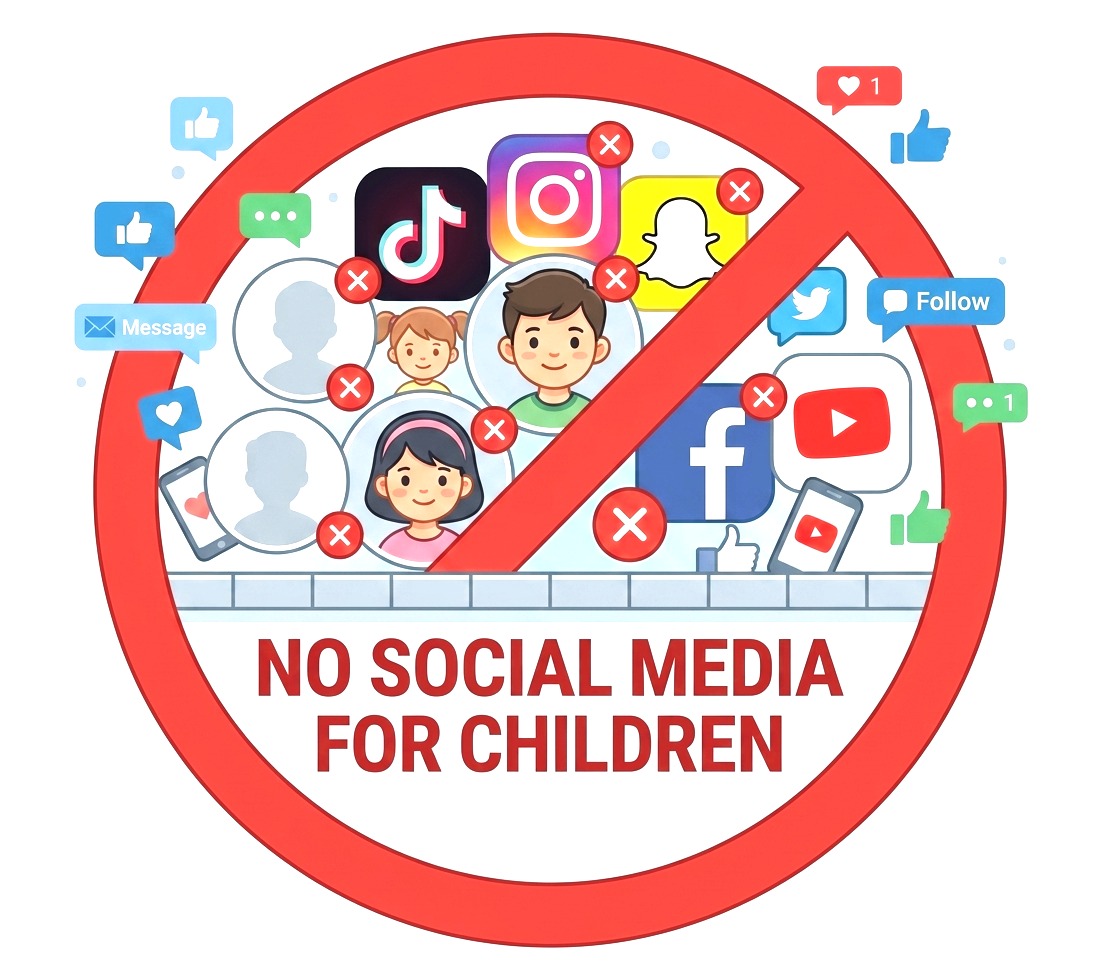
In an era where smartphones have become as commonplace as school textbooks, governments around the world are drawing a bold line: children should not have unrestricted access to social media. On 10 December 2025, Australia made history as the first country to enforce a nationwide ban on social media for children under 16, requiring TikTok, Instagram, Facebook, YouTube, Snapchat, and Reddit to block underage users — with fines of up to A$49.5 million (US$34.9 million) for non- compliance. That landmark decision triggered a global cascade, with at least 14 countries now implementing or drafting similar bans.
As Myanmar’s internet penetration deepens and adolescent mobile phone usage climbs, understanding this global shift is not merely academic — it is a matter of public health, child safety, and national development.
The Global Picture: A Tidal Wave of Regulation
The scope of the global movement is striking. According to CIVICUS Lens (May 2026), four countries have already enforced bans, five more have passed laws awaiting implementation, and approximately 40 additional nations are actively considering legislation. Among the most notable developments:
• Australia (December 2025): The world’s first nationwide ban, blocking children under 16 from 10 major platforms.
• United Kingdom (2026): The UK government announced plans to ban social media for those under 16, stating platforms are “designed to be addictive” and “making children unhappy” while enabling bullying and harassment.
• France (January 2026): The National Assembly approved a ban for children under 15, driven by concerns over cyberbullying and mental health.
• Denmark (2026): Ban for under-15s backed by a cross-party coalition, with a digital age-verification app under development.
• Indonesia (March 2026): Plans to restrict access for users under 16 across YouTube, TikTok, Facebook, and Instagram.
• Greece: Ban for children under 15, effective 1 January 2027.
• India: Karnataka became the first Indian state to ban social media for under-16s in March 2026.
The UK joins a growing coalition of democratic governments that have concluded voluntary platform measures are insufficient to protect children from harm.
The European Union is also preparing the Digital Fairness Act, targeting addictive design practices across platforms. The European Parliam e n t has endorsed a resolution c a l l i n g for an EU-wide ban on social media for under-16s without parental consent, and a total ban for those under 13.
Health Risks: What the Evidence Shows
The legislative wave is grounded in an expanding body of medical and psychological research. Below are five of the m o s t well-document e d risks identified in recent peer- reviewed literature.
1. Depression and Anxiety
A 2025 scoping review in Children (Marano et al.) found consistent links between adolescent social media use and depression, anxiety, body image disturbance, and impaired emotion regulation. Girls are disproportionately affected — Pew Research (2025) found that 34 per cent of teen girls reported social media made them feel worse about their lives, versus 20 per cent of boys.
2. Cyberbullying and Harmful Content Exposure
PMC research (2025) identifies cyberbullying, unrealistic beauty standards, and exposure to harmful content as major platform risks. Cyberbullying is directly linked to self-harm and suicidal ideation in adolescents, with effects spilling into offline life — damaging academic performance, friendships, and long-term emotional health.
3. Addictive Behaviour and Problematic Use
A WHO Europe survey (September 2024) of nearly 280,000 young people across 44 countries found that more than 1 in 10 adolescents (11 per cent) showed signs of problematic social media behaviour — up sharply from seven per cent in 2018. These children struggled to control their usage and experienced measurable negative consequences in daily life.
4. Neurodevelopmental Risks
A large-scale Japanese study found that excessive screen time at age one correlated with increased ASD diagnoses by age three. Yuan et al. (2024) confirmed that heavy screen exposure alters neural development in areas governing social cognition, language, and executive function — risks most acute during early childhood when the brain is most malleable.
5. Sleep Disruption and Academic Decline
The AMA (2024) confirmed that evening social media use drives sleep deprivation, leading to impaired decision-making and emotional instability. Sustained poor sleep degrades concentration, mood, and academic outcomes. France’s draft legislation specifically cited disrupted sleep patterns as a documented harm warranting regulatory action.
Voices From Both Sides of the Debate
Social psychologist Jonathan Haidt, author of The Anxious Generation (2024), commended the regulatory direction and praised Australia’s action, predicting other nations would follow — a prediction now proven correct. The UK government echoed this, calling for collective action to free children from platforms built to keep them hooked.
UNICEF cautioned, however, that age-related restrictions alone are insufficient — meaningful child safety online also requires stronger data protection laws, safer platform design, and digital literacy education. Amnesty Tech argued that the most effective protection comes from regulating platforms for all users, not merely excluding children.
CIVICUS raised additional concerns that in countries with restricted civic space, such bans could become tools for broader state control over online communication.
Relevance for Myanmar
Myanmar’s digital landscape has undergone a dramatic transformation over the past decade. Affordable smartphones and low-cost data plans have brought millions of young people online, with Facebook, TikTok, and YouTube becoming dominant sources of information, entertainment, and social interaction for adolescents across urban and rural communities alike.
Yet protective frameworks — age verification tools, digital literacy curricula, child-safe platform standards — remain largely underdeveloped. Awareness among parents about social media health risks is limited, and schools have yet to systematically incorporate digital well-being into their programmes.
The international experience — from Australia’s pioneering law to the wave of legislation now sweeping Europe and Asia — offers concrete lessons for Myanmar policymakers. First, regulation must be paired with education: children and parents alike need guidance on safe digital behaviours, not merely restrictions. Second, tech companies must be held accountable; the burden of child protection cannot fall solely on families. Third, any meaningful policy response should be grounded in local research into how Myanmar’s children are actually using social media and what specific harms they are experiencing in their own communities.
Conclusion
From Australia to the United Kingdom, from France to Indonesia, governments are choosing to prioritize child well-being over platform convenience. The evidence of mental health harms, neurodevelopmental risks, cyberbullying, and addictive platform design is no longer easy to dismiss — and world leaders are responding with binding legal action.
For Myanmar, this moment is both a warning and an opportunity: a warning that the same harms are not unique to wealthy nations, and an opportunity to act before they become irreversible for a generation still growing up.
Protecting the future generation requires more than internet access — it requires thoughtful stewardship of the digital environments in which that generation is coming of age.
Top References
1. Marano, G, et al (2025). Connected but at Risk: Social Media Exposure and Psychiatric and Psychological Outcomes in Youth. Children, 12(10), 1322. https:// doi.org/10.3390/children12101322
2. Liu, T, et al (2024). The Impact of Social Media on Children’s Mental Health: A Systematic Scoping Review. Healthcare, 12(23), 2391. https:// d o i . o r g / 1 0 . 3 3 9 0 / healthcare12232391
3. World Health Organization (WHO) Europe. (2024, September 25). Teens, screens and mental health. https://www. who . int / e urope / news/item/25-09- 2024
4. Pew Research Centre (2025, April 22). Teens, Social Media and Mental Health. h t t p s : / / w w w. p e wresearch.org/internet/2025/04/22/ teens-social-media-and-mental-health/
5. CIVICUS Lens. (May 2026). Child social media bans: a growing global problem. https://lens.civicus. org/child-social-media-bans-a-growing-global-problem/ (1197)