By Thet Mon Tun
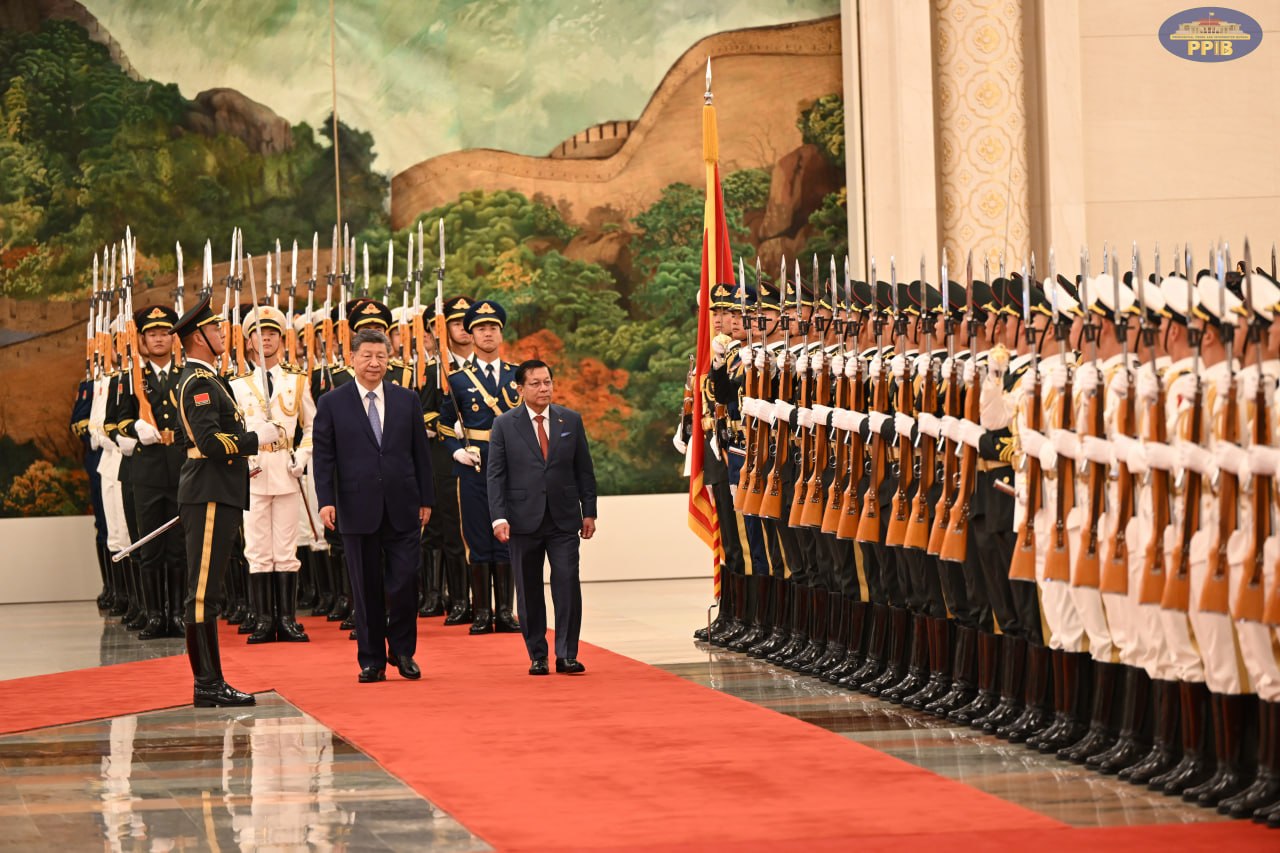
ON the morning of 16 June 2026, a 21-gun salute took place in Tiananmen Square, Beijing, China’s capital. This event marked the beginning of a new chapter in the Pauk-Phaw relations between Myanmar and China on the modern world stage. The Pauk-Phaw relationship in the new era entails closer engagement at all levels, deeper exchanges, and enhanced cooperation among governments, businesses, and individuals for mutual benefits.
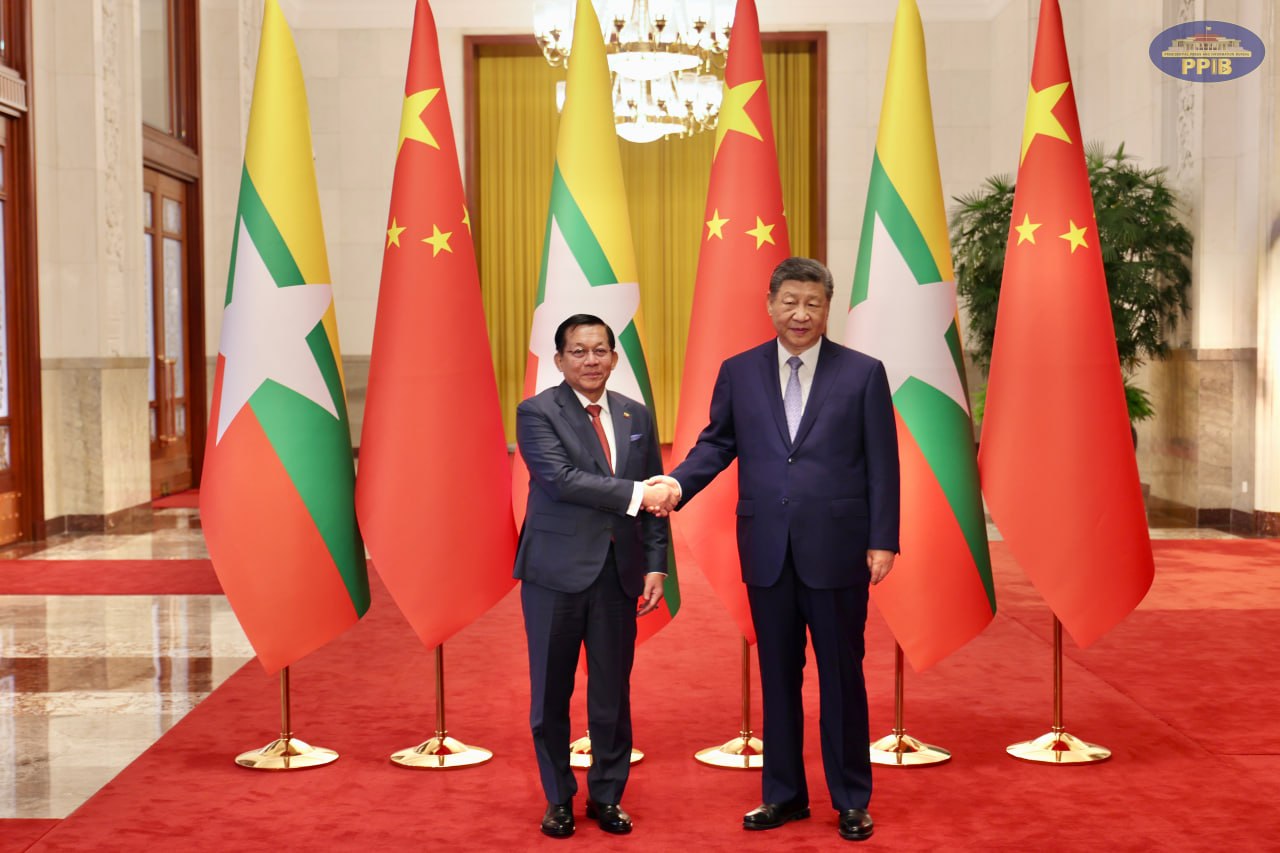
President of the Republic of the Union of Myanmar U Min Aung Hlaing conducted a State Visit to China from 15 to 19 June 2026 at the invitation of Chinese President Mr Xi Jinping. The two presidents engaged in discussions on 16 and 17 June, covering various global topics. The talks were more than exchanges; they reached strategically important consensuses.
President U Min Aung Hlaing also held talks with Chinese Premier of the State Council Mr Li Qiang separately and with Chairman of the Standing Committee of the National People’s Congress Mr Zhao Leji.
A very productive trip
This historic five-day visit seized not only international eyes but also the domestic media’s spotlights. Headlines were stunning. People from various backgrounds in Myanmar are eager to see the development projects that will result from the Myanmar-China bilateral collaboration.
President U Min Aung Hlaing outlined the main objectives of his visit: to promote a comprehensive bilateral partnership across multiple sectors for Myanmar’s development; to support efforts for establishing lasting peace in Myanmar; and to encourage Chinese investments while boosting bilateral trade.
Obviously, sincere, deeper cooperation was extended. The two sides signed many cooperation documents in various fields such as mining, the digital economy, agriculture, forestry, animal husbandry, education, cultural tourism, health, youth, media, and human resources training. Furthermore, reports suggested that Myanmar plans to initiate aerospace works with Chinese technology.
Along with the presidential high-level delegation, researchers, think-tanks, business and media personnel, and many intellectual personnel from different fields were involved in different forums and workshops. In fact, a total of over 70 business agreements for multiple key economic sectors were signed during the Myanmar-China Investment and Trade Networking Summit (MCITP 2026) in Shanghai on 18 June.
About recovering the economy, Amyotha Hluttaw parliamentarian from Arakan Front Party, Daw Khaing Khaing Hsu, shared her expectations with the writer as follows:
“We’ve learned that Myanmar and Chinese business enterprises signed more than 70 agreements in Shanghai. I believe that it will help a lot in skyrocketing our economy. What is more, Myanmar is expected to be an economic hub of tripartite cooperation of major countries like China, Russia and India in global power shifting into Asia.”
The masterclass in diplomacy
In the face of the fluid and turbulent international landscape, Chinese leaders consistently advocate for and make efforts for global peace, prosperity and sovereign equality. Lately, the world leaders have come to acknowledge Chinese wisdom in resolving global conflicts. Leaders and high officials from both the East and West hemispheres paid a massive wave of high-level diplomatic visits to China in recent months.
As a matter of fact, President U Min Aung Hlaing’s visit is the third state visit that China hosted within a month following President Mr Donald Trump’s three-day visit on 13-15 May and President Mr Vladimir Putin’s two-day visit on 19-20 May.
Meanwhile, the 52nd G7 Summit took place in Évian-les-Bains, France, from 15 to 17 June 2026 and the ASEAN-Russia Commemorative Summit was held from 17 to 18 June 2026, in Kazan, Russia.
Myanmar and China were the pioneer nations in signing the Five Principles of Peaceful Coexistence, dating back to 1954. The Five Principles of Peaceful Coexistence is a blueprint of the international law in the post-World War II global order.
The two presidents discussed promoting peace and prosperity and rejecting any form of neocolonialism and militarism during their talks. Both sides agreed to firmly uphold the victory of World War II and the international system with the United Nations at its core; promote equal and orderly multipolar world; oppose all forms of unilateralism, protectionism, bloc confrontation, and the back of militarism.
In addition, Myanmar reiterated its full support for the propositions proposed by Chinese philosophy, such as the Global Development Initiative, Global Security Initiative, Global Civilization Initiative, Global Governance Initiative, and International Organization for Mediation. Chinese side also repeated its support for the full, equal, and constructive participation of Myanmar in all ASEAN mechanisms and processes, as well as at the United Nations, to safeguard Myanmar’s legitimate rights and interests.
“China’s full support on Myanmar’s legitimate and equal rights in the United Nations and ASEAN is expected to have a prominent impact on those blocs’ interactions with Myanmar,” U Ko Ko, chairman of the Myanmar Narrative think-tank group, remarked.
The joint statement issued by the leaders of the two countries – which covers the building of a Myanmar-China community with a shared future, each country’s domestic affairs, bilateral affairs, regional affairs, sub-regional affairs, and global issues – truly reflects the firm, precise, and strategically important stance of these two Asian and South-East Asian nations in global peace and equality.
No one can deny that the strategic collaboration of the two countries with the world’s second-largest economy and a geostrategic South East Asian power plays a major role in enhancing multipolarity.
From long-standing good neighbourliness to an everlasting tie
President U Min Aung Hlaing’s State Visit to China coincided with the 76th anniversary of diplomatic relations between Myanmar and China.
History has already witnessed that Myanmar and China have always been all-weather friends with mutual support on the international stage in successive eras. Both countries’ steadfast commitment to good neighbourliness in accordance with a profound ideology – “Interests should be shared; friends should be permanent” – has been an enduring catalyst in maintaining the bilateral Pauk-Phaw friendship.
The Pauk-Phaw bond has been growing stronger than ever, unprecedentedly. This Myanmar-Chinese’s Pauk-Phaw bond is unbreakable. Both sides have stood shoulder to shoulder and shared weal and woe. China’s continuous support and togetherness towards Myanmar, especially in the hardship, deserve earnest recognition.
Ms Zhao Jin, Myanmar language teacher and associate professor at Beijing Foreign Studies University, remarked: “China-Myanmar bilateral ties have been strengthened and deepened into a solid trust from observation status. It is a systematic and vivid transformation. Both Chinese leaders and Myanmar leaders are very wise and prudent.”
Phyo Wai, editor-in-charge of the Myanmar Transparency News, is one of the renowned journalists in Myanmar. He was involved in the visit as a media personnel and shared his experiences and expectations as follows:
“It was a highly fruitful trip. Chinese people are very polite and respectful, demonstrating great care for our entire delegation. The exchanges were honest and visionary. In my opinion, this marks an essential first step in our country’s development process, paving the way for more sophisticated bilateral projects in the future.”
Last but not least, reports also suggested that President U Min Aung Hlaing requested to convey the Sacred Buddha Tooth Relic from China for the fifth time for public obeisance in Myanmar. Since Theravada Buddhism is the heart of Myanmar’s culture, Buddhist devotees wish to pay homage to the Buddha Tooth Relic for the fifth time in Myanmar. Also, the people of Myanmar are looking forward to extending our warm and heartfelt welcome to Chinese President Mr Xi Jinping to visit Myanmar.