
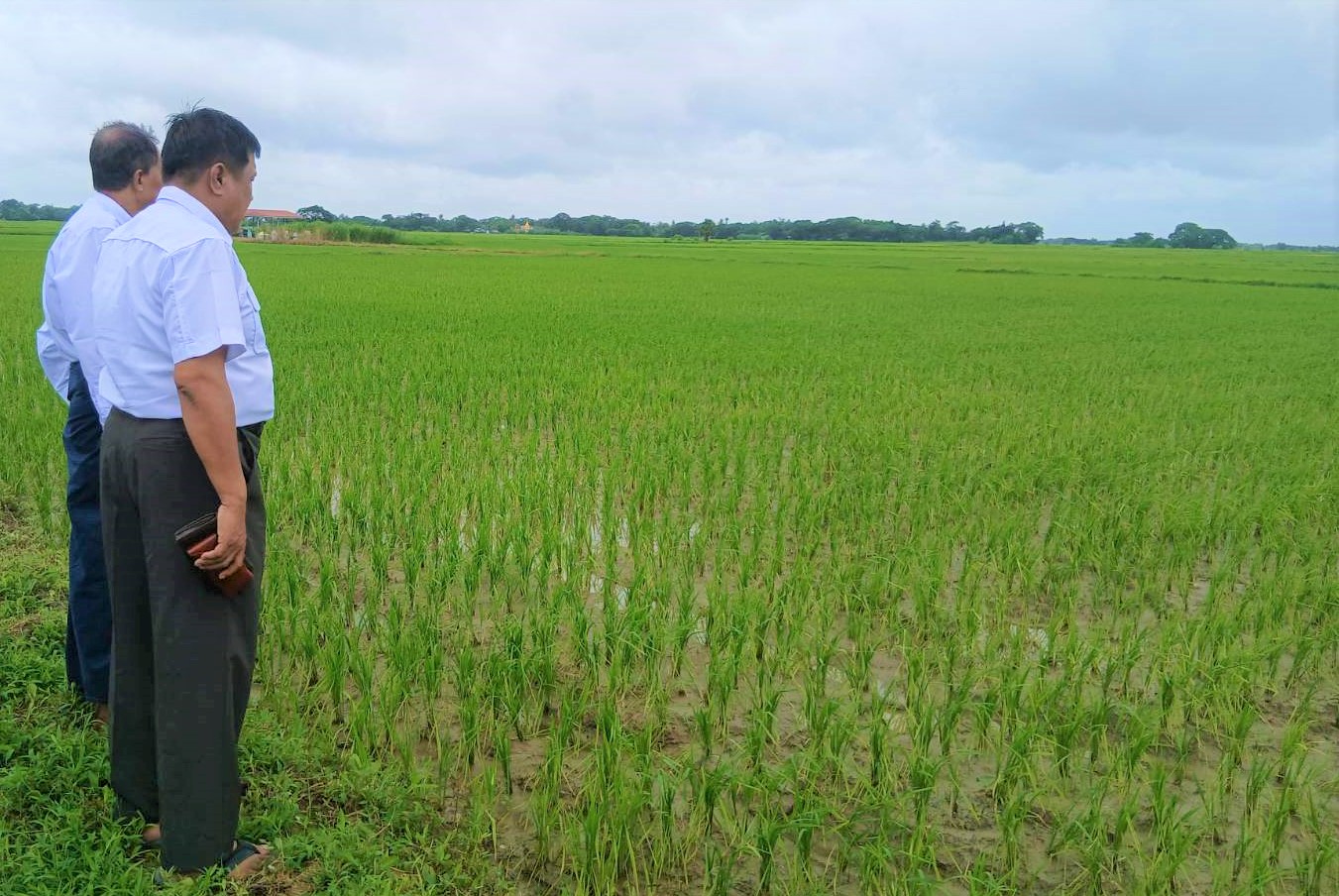
A total of 627,996 acres of monsoon paddy had been cultivated in Yangon Region as of the end of June, out of the target of 1,148,222 acres, according to the Yangon Region Department of Agriculture.
Across the region’s nine districts, 14 high-yield rice varieties designated for export are being cultivated on 39,400 acres during this monsoon season. Moreover, six premium varieties such as Ayamin, Pawsan Hmwe, Pawsan Yin, Inma Yebaw, Basmati and Hmawby-2, and six local varieties: Zeeya, Medone, Ngakywe, Ngasein, glutinous rice and Yahnintun are also under cultivation. Planting will continue until the end of the cultivation season in late October to meet the planned acreage.
This year, the export-oriented cultivation zones are being implemented to achieve targeted yields, support farmers with production inputs, ensure adequate fertilizer application, encourage greater investment in rice cultivation, develop internationally competitive rice-based agricultural production, promote the effective application of Good Agricultural Practices (GAP) and Integrated Pest Management (IPM) through balanced use of organic and chemical fertilizers, and strengthen cooperation among companies, rice millers and farmers to produce safe, high-quality and sustainable rice for export.
“This monsoon season, 14 high-yield rice varieties are being grown in export-oriented cultivation zones. The cultivated area will be further expanded next year. For example, the Pawsan variety, which has strong international demand, was grown on 16,570 acres in six townships last year, but this year cultivation has been expanded to 10 townships. Since high-quality rice will be produced for export this year, farmers will also benefit. Technical training on soil fertility improvement and pest and disease management has been provided, while farmers have also been educated on the combined use of chemical and organic fertilizers. Therefore, rice quality is expected to improve, and farmers are eagerly looking forward to this year’s harvest,” said U Myo Myint, deputy director of the department.
In the export-oriented cultivation zone, the varieties such as Sinthukha, 90-day, Aungnaingtoe, Yadanatoe, Hnankauk, Theehtet Yin, Hmawby-2 and -3, Kayinma, Tunpu, Ngasein Yakyaw, Pawsan, Ayamin and GW-11 are being grown.
Yangon Region cultivated 1,006,205 acres of monsoon paddy in 2023, 1,148,222 acres in 2024 and 1,142,155 acres in 2025. For 2026, the regional government has targeted the cultivation of 1,148,222 acres. To improve yields, the government has distributed 5,640 bags of urea fertilizer produced by Myanmar Petrochemical Enterprise to farmers in the first phase this year. It also plans to distribute an additional 60,000 bags of urea fertilizer and 30,000 bags of compound fertilizer. — Thitsa (MNA)/ KTZH