By Abhay Thakur,
Ambassador of India to Myanmar
गङ्गे तव सुधा भवति जनपदेऽपि साधनम्
शुभोऽयं प्रवाहो दीप्यते समृद्धौ जनानाम्
O Ganga,
Your waters are like nectar, becoming a means of prosperity for the land.
Your auspicious flow shines as a source of well-being and abundance for the people.
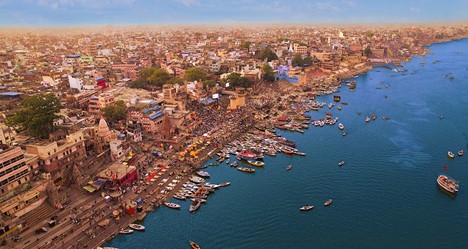
THE Ganga is the sacred river of India, whose banks, central to many Hindu epics, have nurtured and nourished ancient Indian culture and tradition over millennia. The Mekong is similarly revered in folk traditions of the Mekong Region and its people as “the River of the Lord Buddha”. These rivers flow as living symbols of faith, purity, and sustenance for millions, venerated as sacred, shaping the imagination and livelihoods of the thriving communities along their banks. Just as these two sacred rivers have sustained civilizations for centuries through agriculture, fisheries, and trade, the Mekong Ganga Cooperation (MGC) initiative between India and five ASEAN countries (Cambodia, Lao PDR, Myanmar, Thailand and Vietnam) draws its sustenance from the same spirit. In particular, the Quick Impact Projects or QIPs under the MGC initiative channel the same nurturing essence into contemporary development efforts, transforming local aspirations into economic progress and shared prosperity.
The QIP scheme was launched by the Government of India in 2015 to deliver short-gestation, high-impact development outcomes across partner countries, including Myanmar. QIPs act like a modern, practical version of our belief that small, timely interventions can water and irrigate local hopes and produce visible benefits fast, helping unlock the underlying potential for wider socio-economic development of the areas around it. Over 175 QIPs have been undertaken under the MGC initiative so far.
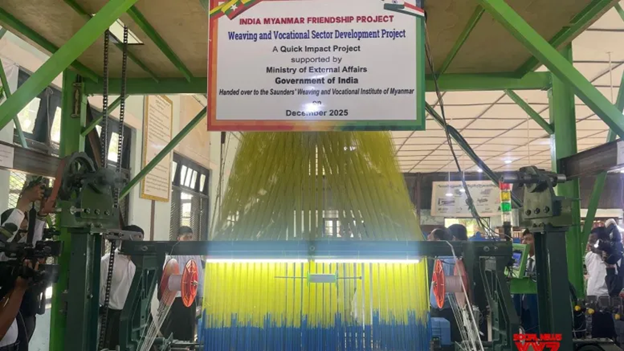
Each QIP is kept deliberately compact, capped at US$50,000 and typically implemented within a year, so results are immediate and easily seen by communities. The funding envelope behind these interventions has grown over time, reflecting increased commitment and broader ambition: the India-CLMV Revolving Fund began at US$1 million per year, was raised to US$1.25 million and later to US$2 million to support more projects and a deeper reach. In Myanmar, the Framework Agreement of 2021, renewed in 2025, supports grassroots initiatives across renewable energy, civic infrastructure, agriculture, education, health, handloom and disaster risk reduction with a committed annual contribution that enables rapid, tangible work on the ground. It is heartening to note that 13 such projects have been inaugurated over the last twelve months.
The value of QIPs lies in their clarity of purpose and speed of delivery. A modest solar-water supply system sustains a round-the-year water supply for village households and for agricultural plantations and livestock, especially through dry months in water-scarce areas, turning subsistence plots into surplus income sources. Expressing the community’s gratitude for one such QIP in Magyisaunt village in Mandalay region, a local villager shared, “I am very thankful to the Government of India and the Dry Zone Greening Department for their collaboration in donating water, as this is incredibly helpful not only for the residents of Magyisaunt Village, Mandalay Region but also for the students, teachers, and school staff.” Similarly, the new village community centre in Lahe Township of Naga Self-Administered Zone provides space for youth, women and the community in general to come together to discuss and deliver modest day-to-day socio-economic activities. The residents also expressed their hope that similar regional development initiatives would continue in the long run.
These voices underscore an essential design choice of QIPs that developmental projects should be implemented in consultation and coordination with local bodies and community members so that priorities and outcomes truly match needs and local ownership. A refurbished training centre in Yangon or a renovated girls’ school in Mandalay with modern computers, teaching aids, and e-books makes an immediate difference to study hours and attendance. Many beneficiary institutions of QIPs in Myanmar have expressed appreciation for India’s support, noting that their new or upgraded facilities have strengthened capabilities and enhanced efficiency. These are not abstract wins - they are the kinds of changes people notice within weeks, and strengthen trust between citizens and domestic institutions, as well as with development cooperation partners.
Beyond their immediate results, QIPs create a cascading local value. Short-term physical and social infrastructure reduces household costs, improves resilience to shocks and catalyzes microenterprise growth. Culturally focused projects are deepening people-to-people ties and strengthening long-term goodwill across the Mekong-Ganga region. Procurement from Indian vendors, where feasible, also links local demand to broader supply chains, expanding the economic footprint of each project beyond its initial investment. By choosing projects with clear, visible returns, QIPs build public confidence and create the political and social space for larger development programs.
The recent renewal of the umbrella agreement between the Governments of India and Myanmar for another five years until 2030 enables continuity and scale, helping partners plan for sustained engagement and replicate successful models across numerous districts and states/regions of Myanmar. This continuity is essential for turning one-off gains into lasting improvements in livelihoods, health and education outcomes.
A diverse range of 10 new initiatives across key socio-economic sectors in Myanmar, expected to commence later this year, will prioritize vulnerable but high-need areas such as earthquake relief and reconstruction, cultural preservation, agriculture, education, renewable energy, and disaster resilience – reflecting the comprehensive and people-centric nature of India’s development partnership. Together, these projects embody the spirit of the MGC — fostering sustainable development, cultural connectivity, and grassroots cooperation between India and Myanmar.
Quick Impact Projects demonstrate that well-targeted, small-scale investments can produce big returns in human welfare. They embody the holy Ganga’s ancient promise in a practical form, modest, life-affirming flows that generate renewal and prosperity, much like the folk narratives of the Mekong, which is believed to bestow fertility and protection upon riverside communities. When communities see results quickly and are involved in design and operation, projects stop being external aid and become local achievements. Those achievements, narrated by teachers, farmers, health workers and youth leaders, are the true measure of success.
The lasting legacy of these projects will be measured in daily routines restored, small businesses sustained and new civic confidence built, which are modern proofs of the promise that when people are allowed to take the lead in small ways, it unlocks new energies and prosperity follows on a large scale. It is this spirit of partnership and local ownership that lies at the heart of India’s endeavours to share the fruits of its own development with its neighbours.
(Views expressed in the article belong solely to the author.)