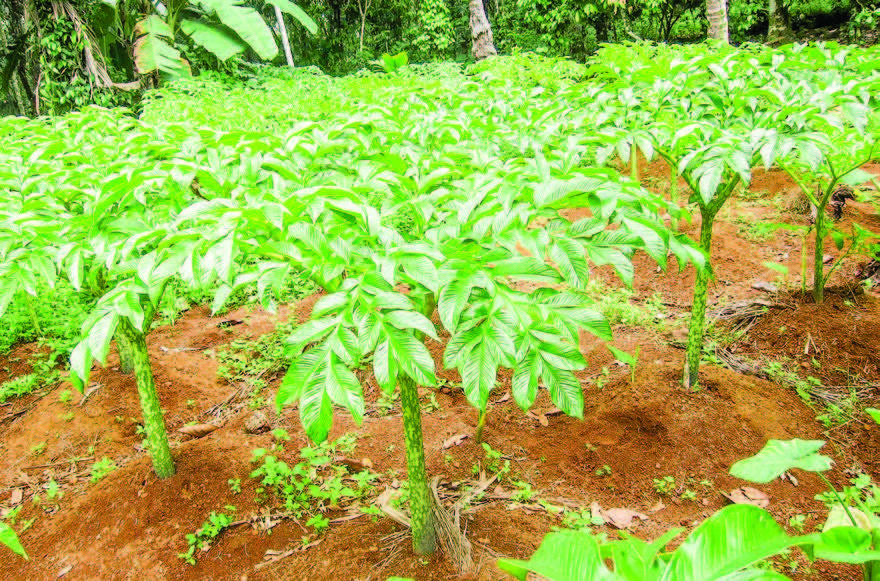
Konjac (elephant yam) produced in Mon State are being bought at a handsome price by foreign buyers due to their excellent powder yield and good glucomannan content.
In Mon State, the yellow konjac is mainly cultivated. Yellow konjac produced in Mon State is widely traded in the market due to its good quality and demand from foreign buyers.
Konjac are used as raw materials in producing noodles, artificial meat, food products such as jelly, industrial raw materials, and beauty products. It is also a popular raw material in traditional and modern medicine manufacturing as it is a natural gift that is particularly suitable for health. In the past, the konjac that grew naturally were dug up and eaten. Now, due to the demand from abroad, they have been systematically cultivated and exported abroad.
During a meeting with konjac producers on 26 February, the Mon State chief minister said that the government is providing necessary support from all sides for the cultivation of konjac as a new crop of the state and the production of konjac-based value-added products.
He also urged the producers to increase the volume of the good-quality crop to be able to distribute it at an affordable price locally while making attempts to penetrate overseas markets.
In Myanmar, Chin State produces konjac most, and Mon State is the second largest producer. As for the production of dried konjac, a total of six dry konjac powder factories in Mon State — four in Ye Township and two in Mawlamyine’s Kyauktan Industrial Zone — are registered with the Mon State Directorate of Industrial Supervision and Inspection.
Dried konjac and konjac powder enjoy good market demand, and five varieties of konjac are grown In Myanmar. But white, red and yellow varieties of the crop are mainly cultivated locally.
In Myanmar, a large number of konjac plants are growing in shady and moist places in Kayin, Kachin, Shan States, Sagaing, Taninthayi, Bago, Ayeyawady, and Magway Regions. — TWA/TH