
Officials at different levels have to prioritize the distribution of quality strains of crops and animals, as well as systematic cultivation and livestock breeding tasks, to achieve success in relevant sectors.
Senior General Min Aung Hlaing underscored that the manufacturing industry, which operates with oil crops and cotton, can benefit the State.
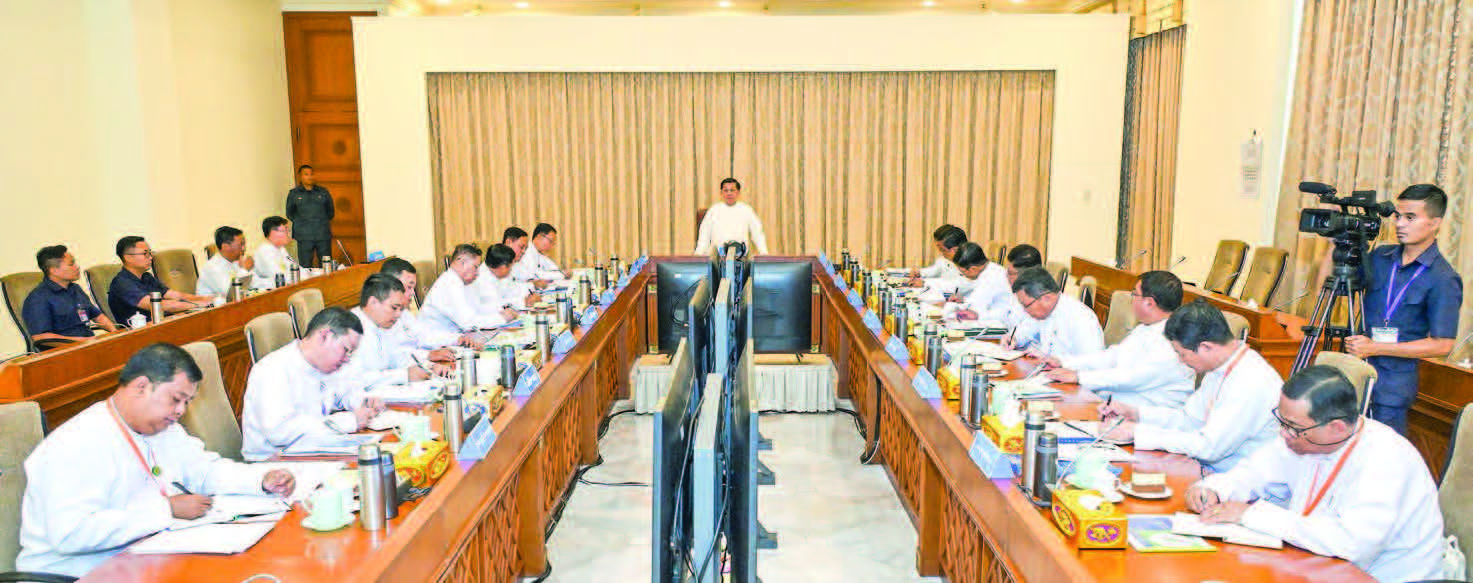
Chairman of the State Administration Council Prime Minister Senior General Min Aung Hlaing delivered a speech at the coordination meeting on the expansion of sown acreage of crops, increase of cotton production and development of livestock breeding sector at the Office of the SAC Chairman in Nay Pyi Taw yesterday afternoon.
Speaking on the occasion, the Senior General said that although groundnut, sesame, Niger and oil palm are thriving in Myanmar, the country imports cooking oil yearly. As oil crops do not meet the target production, production cost is higher, he added.
He said that farmers must be encouraged to grow sunflowers in a double cropping pattern with increasing sown acreage yearly in order to ensure oil sufficiency in the country.
On the other hand, he noted that crude palm oil is used as a raw industrial material and that efforts must be made to produce refined cooking oil.
The Senior General stressed the need to initiate a cotton-based industry as a reform process to generate employment for people, boost income for cotton farmers and enhance their socioeconomic lives.
He underlined that it is necessary to grow some 700,000 acres of cotton plantations nationwide to meet the past record.
He continued to say that, if necessary, the government would issue the funds for carrying out agricultural production. The manufacturing industry, which operates with oil crops and cotton, can benefit the State, he added.
The Senior General instructed all to strive to increase the target production and expand the sown acreage of summer paddy and growing paddy in double cropping in order to benefit the nation.
Union ministers discussed the cultivation of cotton, production of quality cotton, expansion of sown acreage of sunflower, breeding dairy cows and producing dairy products, formation of cooperative societies in regions and states to grow cotton, provisions of cash assistance for inputs, implementation of collaborative and emerald green projects to develop livestock breeding tasks, location of cotton ginning, textile, looms and garment industries in the nation along the cotton production chain, holding of workshops to adopt the action plan to develop the value-added product chain of cotton, registration of oil mills in regions and states, disbursement of loans from Myanmar Agriculture Development Bank to local farmers at a soft interest rate, and allocation of loans to ministries, regions and states for agriculture and livestock breeding industries from the State economic promotion fund.
Attendees also discussed industrial production using cotton, boosting cultivation and production of cotton, and improving the breeding of dairy cows.
In his response to discussions, the Senior General highlighted that a cooperative system based on agriculture is the most appropriate due to bilateral cooperation among groups.
He gave guidance that cooking oil from oil crops grown by the cooperative system should be sold to other regions and states, adding that the ratio of oil mills to raw materials must be appropriate in regions and states.
He highlighted that livestock breeding farms must be operated in a cooperative system to produce quality raw materials at the lowest cost.
In conclusion, the Senior General said that expansion of sown acreage of crops, extended cultivation of oil crops and cotton and development of dairy cow farming are important for the nation.
He stressed that the cultivation of sunflowers must be designated as a national vision.
He outlined that efforts to develop cooking oil and agricultural production can help improve industries and service sectors.
The Senior General urged officials at different levels to prioritize the distribution of quality strains of crops and animals, systematic cultivation and livestock breeding tasks to have success in relevant sectors. — MNA/TTA