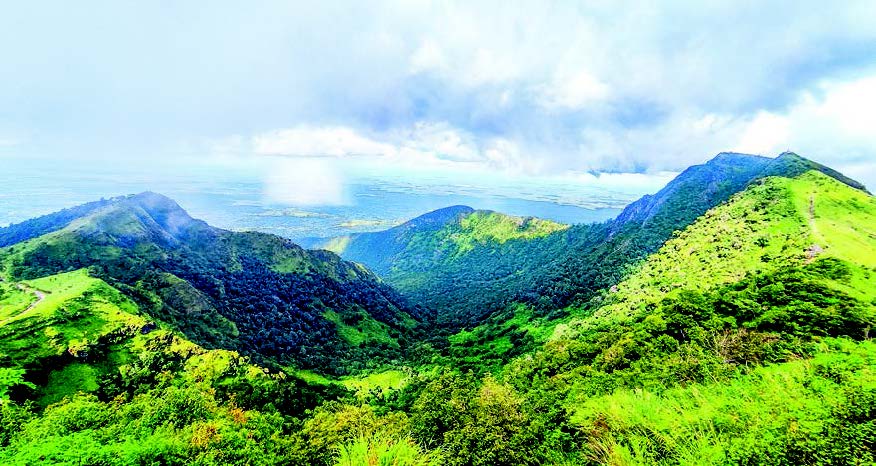
The Mount Popa National Geopart Park near the Mont Popa in Kyaukpadaung township of Mandalay Region boasts minerals of an old volcano some 320,000 years ago and natural beauty in tropical regions to attract local and foreign travellers in monsoon and dry seasons.
The Mount Popa and Mount Popa National Park seem to be decorated with picturesque scenes in every season, and the visitors can observe the herbs, sandalwood, golden deer, dusky leaf monkey, bird species and wildlife in Indaing and deciduous forests in the rainy season.
The Mount Popa National Geopark was established on 20 March 2024, and it is a national-level geopark to conserve ancient geological heritages, biodiversity, culture and ancient heritages, and history and conduct educating programmes to value the local products and natural beauty and sustainable development plans for the development of research and locals. The government makes efforts to establish 10 per cent of the country’s total land as protected areas. There are 59 natural protected areas covering 6.42 per cent of total land areas.
The Mount Papa National Geopark is organized with 15 geosites and is also the first national-level geopark in Myanmar.
“The Mount Popa National Geopark is in a tropical zone with cool mountains and ancient geological features that always welcome visitors. It has various biodiversity and rare wild animals. The visitors can study the mineral resources of old volcanoes and enjoy the natural beauty of mountains, villages and local products. It lies on the way to the Bagan Ancient Cultural Heritage Zone, and so we arrange for the visitors to tour 15 geosites,” said an official of the geopark.
The visitors to Mount Popa National Geopark can visit such geosites as the peak of Mount Popa, volcanic basalt and Ayeyawady sandstone layer, three-layered basalt volcanic stone, Ayeyawady stone layer, Taungnitaung Chalcedony and clay mineral, herbal garden and educating booth, sandalwood and Myanma Golden Deer, bird nest cliff, landscape, basaltic lava flow site, Taungpawywa, fossil wood, Taungnataung site, crater and Gamo Lake. — Nyein Thu (MNA)/KTZH