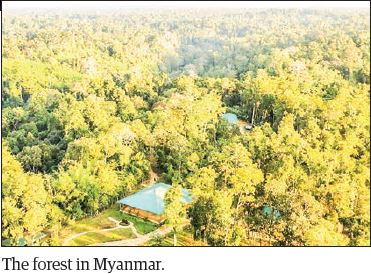

BIODIVERSITY conservation faces challenges due to intensifying climate change effects. Meanwhile, Myanmar has targeted establishing 30 per cent of the country’s total area with reserve forests and 10 per cent of protected land area. It is also working hard in environmental conservation activities with other countries.
The survival of biodiversity is related to the abundance of forests, and global warming causes damage to ice mountains and forests, resulting in the disappearance of inhabitants of biodiversity. Therefore, a total of 196 countries, including Myanmar, conduct environmental conservations.
“Myanmar is working with the relevant countries for environmental conservation. It needs global cooperation to succeed. The country aims to grab 30 per cent of forest coverage and 10 per cent of protected land area. Fine environmental conservation can reduce natural disasters, and so we conduct forest plantation and environmental conservation yearly. The country possesses ice-capped mountains among ASEAN countries, and we are also working with Korea to develop the Khakaborazi National Park. The glaciers melt due to high temperatures, and the evaporation causes storms. Due to the storm initiated in the Bay of Bengal and the South China Sea, the areas with weak conservation can encounter landslides and flooding. Myanmar needs to keep conserving the forests like Htamathi Wildlife Sanctuary,” said U Aung Khine Soe, director of the Environmental Conservation Department.
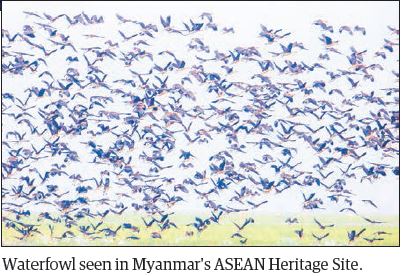
Myanmar hosts eight ASEAN Heritage Sites, including Khakaborazi National Park, Natmataung National Park, Htamathi Wildlife Sanctuary, Alaungtaw Kathapha National Park, Mainmahla Island Wildlife Sanctuary, Lampi Marine National Park, Inlay Lake Wildlife Sanctuary, and Indawgyi Lake Wildlife Sanctuary. — Nyein Thu (MNA)/KTZH