
November 01
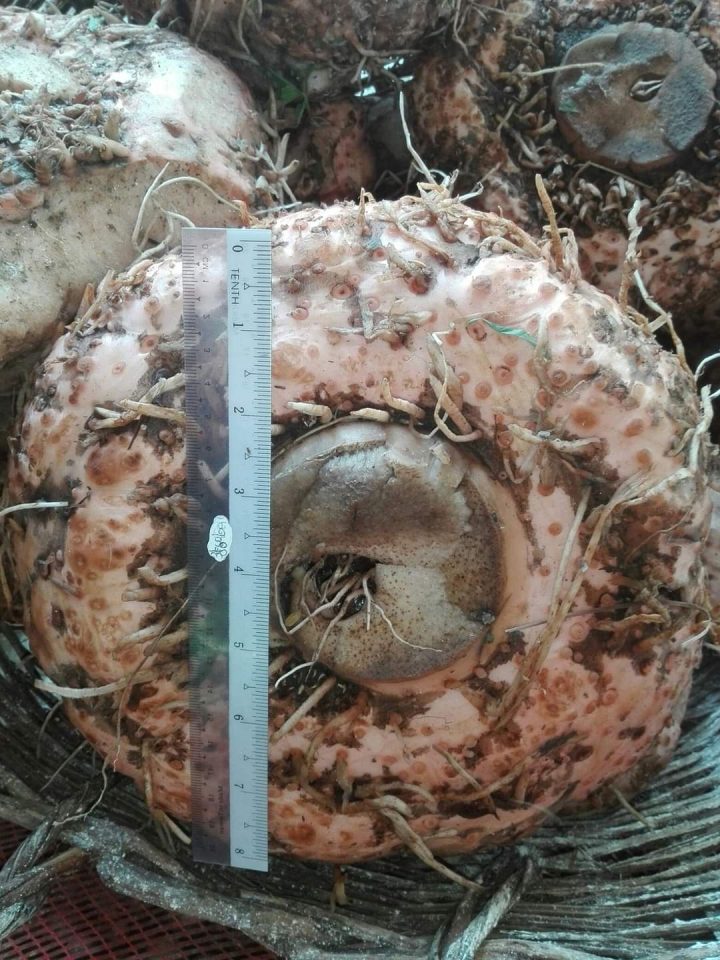
With the end of Konjac harvest season approaching, strong demand drives Konjac (elephant foot yam) prices to more than double of those recorded last year. Konjac businesses from Kayin State are thriving, according to the Department of Consumer Affairs (Tanintharyi).
Konjac season commences in early September and ends in early November every year. Konjac, produced from Kayin State, is sent to mills in Mawlamyine, Mandalay, and Kyaukse. The processing factories manufacture dried Konjac and Konjac powder. Those value-added products are exported to China and Japan.
“This year, domestic demand from Konjac is unprecedentedly high, fetching good prices for those stakeholders engaged in the supply chain, including growers, traders and millers,” said U Min Thu, secretary of Kayin State Konjac Producers and Exporters Association.
Konjac is rich in Glucomannan fiber. Konjac raw materials are utilized in food and beverage, cosmetics, traditional medicine and pharmaceutical industries with value addition. Even the byproducts can be used as animal feed.
Konjac from Myanmar is of better quality than those origins from other countries in Asia. It is a cash crop for residents, generating foreign incomes. Elephant foot yam is cultivated in Kyain-seikkyi, Kyaikdon, Kawkareik, Hlaingbwe and Shwegun townships in Kayin State, with an estimated production of 700,000 viss.
Chin State is the largest producer of Konjac in Myanmar. Konjac is naturally grown in Kachin and Chin states as well as the Sagaing and Taninthayi regions. High profitability and foreign demand prompted locals to cultivate Konjac, according to the Agriculture Department. — KK