By Yin Nwe Ko
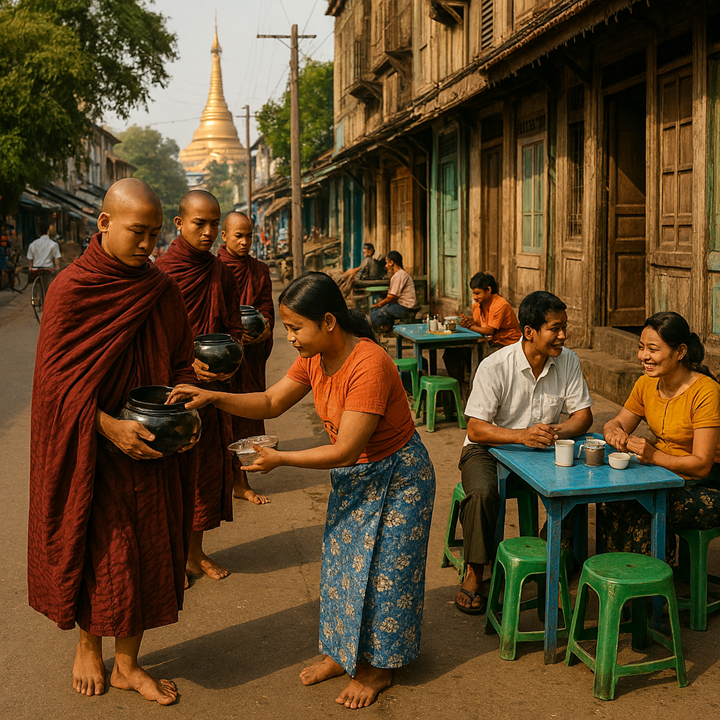
AS THE sun rises over quiet streets in Myanmar, monks walk barefoot through neighbourhoods, their alms bowls cradled in silence, while households wait at doorways with rice and curry in their hands. This simple morning scene, repeated daily across towns and villages, captures the rhythm of life in Myanmar, where tradition is not preserved in museums but lived through ordinary actions. Daily life here is shaped by long-held customs, shared responsibilities, and deep respect for community and belief. Even as modernization introduces new habits and technologies, these traditions continue to guide how people eat, dress, work, celebrate, and relate to one another. To understand Myanmar, therefore, is to look closely at everyday life, where heritage and modernity exist side by side.
Morning Rituals and Community Bonds
In many towns and villages, the day begins with the sound of temple bells or the chants of monks collecting alms. The practice of ‘almsgiving’ is not only a religious duty but also a social bond: households prepare rice and curry to offer monks, reinforcing generosity and spiritual merit.
Tea shops, meanwhile, serve as the heartbeat of community life. From dawn until late evening, locals gather to sip sweet, milky tea or strong black brews, accompanied by snacks like Samusas or Mohinga (Myanmar’s beloved fish noodle soup). These tea shops are more than eateries – they are spaces for conversation, storytelling, and informal debate, reflecting the communal spirit of Myanmar society.
Food as Cultural Identity
Cuisine is central to daily life, with meals reflecting both regional diversity and shared traditions. ‘Mohinga’, often considered the national dish, is enjoyed at breakfast, while curries, salads, and fermented fish paste (Ngapi) dominate lunch and dinner tables. Food preparation is often communal, especially during festivals or ceremonies. Neighbours and relatives gather to cook large pots of rice and curries, reinforcing the value of ‘collective effort’. Traditional snacks like Mont lone yay paw (sticky rice balls served during the water festival) highlight how food is tied to seasonal celebrations and symbolic meanings.
Traditional Attire and Social Etiquette
Clothing in Myanmar reflects both practicality and cultural pride. The ‘Longyi’, a cylindrical piece of cloth worn by men and women, is versatile and comfortable in the tropical climate. Patterns and colours often signal regional identity or social occasions. Social etiquette is deeply rooted in respect. Elders are greeted with bowed heads and polite language, while shoes are removed before entering homes or religious sites. These gestures embody humility and reverence, values that permeate everyday interactions.
Festivals and Seasonal Rhythms
Myanmar’s calendar is punctuated by vibrant festivals that blend religious devotion with communal joy. The ‘Thingyan Water Festival’, marking the Burmese New Year, is perhaps the most famous. Streets transform into arenas of playful water-throwing, symbolizing purification and renewal. Families also prepare traditional foods and visit pagodas, reinforcing both spiritual and social ties.
Other festivals, such as Thadingyut (Festival of Lights) and Tazaungdine (celebrating the end of Buddhist Lent), illuminate towns with lanterns and candles. These events are not only religious observances but also opportunities for families to reunite, neighbours to collaborate, and communities to celebrate shared identity.
Work, Livelihoods, and Craft Traditions
Daily life is shaped by livelihoods that often blend tradition with necessity. In rural areas, farming remains central, with rice cultivation dominating the landscape. Farmers follow seasonal cycles, guided by ancestral knowledge of weather and soil. Craft traditions also thrive. From weaving silk longyis in Amarapura to carving intricate wood designs in Mandalay, artisans preserve skills passed down through generations. These crafts are not merely economic activities – they are cultural expressions that embody patience, artistry, and pride.
Religion and Spiritual Practices
Buddhism permeates daily life, influencing values, rituals, and community structures. Pagodas, large and small, dot the landscape, serving as focal points for meditation, merit-making, and festivals. Families often dedicate time to visiting pagodas, offering flowers, and lighting candles. Spiritual practices extend beyond Buddhism. In many regions, animist traditions coexist, with offerings made to Nats (spirits) believed to protect households and villages. This blend of beliefs reflects Myanmar’s cultural pluralism and resilience.
Family and Social Structures
Family remains the cornerstone of daily life. Extended families often live together, with grandparents playing active roles in raising children. Respect for elders is deeply ingrained, and decisions are often made collectively. Marriage ceremonies, funerals, and other life-cycle events are community affairs, where traditions guide rituals and reinforce social bonds. Even in urban areas, where nuclear families are more common, the sense of extended kinship remains strong.
Modern Influences and Adaptations
While tradition anchors daily life, modern influences are reshaping routines. Smartphones and social media connect people across distances, while urban youth experiment with global fashion alongside traditional Longyis. Education and migration also introduce new perspectives. Students in Yangon or Mandalay may balance traditional ceremonies with modern aspirations, reflecting the dynamic interplay between heritage and progress. Yet, even amid change, traditions remain resilient, adapting without losing their essence.
In Myanmar, tradition is not a distant memory but a living presence woven into daily routines. From early-morning almsgiving and lively tea shop conversations to festive water-throwing during Thingyan and quiet family meals at home, ordinary moments carry cultural meaning. These practices teach generosity, respect for elders, patience, and a strong sense of community. While modern influences are reshaping lifestyles, they have not erased these values; instead, traditions continue to adapt and endure. In a rapidly globalizing world, Myanmar’s daily life offers an important reminder that progress does not require the loss of identity. By honouring the past while embracing change, Myanmar shows how culture can remain alive – not frozen, but evolving – passed from one generation to the next through the simple acts of everyday living.