By Maung Maung Aye
MYANMAR is a land of festivals. The festivals are of different types: religious, cultural, social, etc. Even famous pagodas have their own festivals. Being a famous pagoda, Meilamu Pagoda also has its own festival that is usually held in January every year. Since I live near the Kaba Aye Pagoda, the Meilamu Pagoda is only a 30-minute walk from my home.
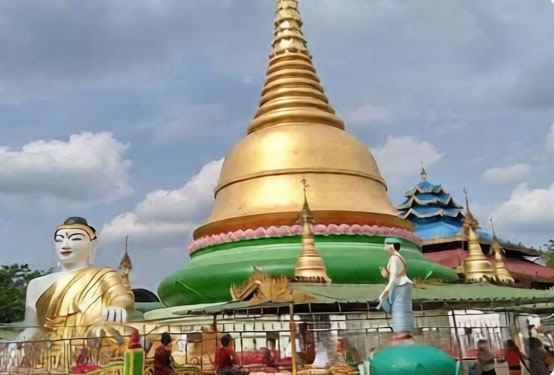
Five years ago, on a cool wintery January evening, I visited this famous festival. Entering the precincts through the western archway gate, I was greeted by the sight of the glittering Meilamu Pagoda shining brilliantly under the floodlights. It rises to the height of 98 feet with its base like a mangrove bud. So, it looked so magnificent in my eyes. This magical sight reminded me of the legend of this pagoda, saying thus: The pagoda was built by King Okkalapa in honour of his mother, Queen Melahmu, who was the adopted daughter of a hermit who discovered an enormous mangrove bud. When it bloomed, a beautiful baby girl appeared inside. Because she came from a mangrove flower, she was named Melahmu, and the hermit raised her as his daughter. When she came of age, she married Sakka, who was in the guise of a handsome lad, and bore King Okkalapa in due course ...
Near the Meilamu Pagoda, two majestic Buddha statues stood: one reclining and another seated in the Dhammacakka mudra. Small prayer halls with tiered roofs surrounded the area, shaded by lush green trees. As I walked around the pagoda compound, I saw some pilgrims dressing in their fine clothes, some saying prayers, some telling their rosary beads, and some donating golden robes to the pagoda that was under renovation. Many stalls sold souvenirs, traditional bags, and handcrafted items. Craftsmen and astrologers also set up booths to offer their services.
One unique attraction was a crocodile-shaped building used as a Buddha museum. In the middle of a small lake, near it stands a shrine dedicated to the brass image of the Vennarable Uppagutta. From the bridge leading to this shrine, visitors enjoyed feeding fish and tortoises. Because it was the festive season, pilgrims filled every nook and corner. Feeling hungry, I went to a food stall near the winding creek. Pilgrims were chatting cheerfully, and a couple nearby was enjoying fritters. After ordering my food, I relaxed and admired the natural beauty of the mangrove-lined creek. I espied the glittering pagodas on another bank in North Dagon. A few sampans glided gently along the creek, while old wooden houses lined the southern bank. To the north, the Ngamoeyeik Bridge connected North Okkalapa and North Dagon, and its traffic was streaming. The creek itself eventually flows into the great Yangon River.
As I gazed at the water, I remembered the old legend of Ngamoeyeik, the crocodile who was said to have lived in this creek. According to folklore, the crocodile served as a matchmaker for Prince Min Nanda and Princess Shin Mwe Hlon, whose love ended tragically. Young lovers still share this melancholy tale and think about it. It also filled me with a sense of quiet sadness.
After spending about half an hour there, I walked out of the precincts to participate in the festive activities along Sudhamma Road. At that time, the darkness was descending gradually from the sky. The festive area became packed with the pwe-goers. The traffic was too heavy and nearly came to a standstill. I crossed the road easily and continued walking along the festive area.
The Meilamu Pagoda festival lasts for ten days each year. My visit happened on a super Sunday, which meant the entire area – from Ward (2) Market, North Okkalapa to the Kyaukyedwin Bridge – was teeming with festival-goers. People jostled through the crowds, some dressed warmly while others wore colourful clothing. Since offices, schools, universities, some shops, and clinics were closed on weekends, people were free from their responsibilities. Therefore, they could relax and enjoy the festive nights.
I reached the top of Kittar Road near Phonegyi Lan bus-stand. There were many entertainments such as merry-go-rounds, Pirate Boat, an artificial playground only for the children, Ferris wheel, etc., at this junction. I saw some children playing merrily on the artificial playground "Happy World '' while their parents stood looking carefully at their movements until time was up. Fun railway services for children added extra enjoyment in the festive area. Some thrill-seekers were riding the Pirate Boat and the merry-go-round. The soundboxes produced Hit Hop songs and jaunty music adaptable to the entertainment. Some were shrieking, riding merry-go-rounds, Ferris wheels. In the cool wintry breeze, it was creepy even to watch their rides. Standing among the lights, music and joyful crowds, I enjoyed the pwe (festival).
I noticed some people selling Thanaka, dried fish, mats, Ngapi, etc. Since their products were available at an affordable price, there were a lot of customers near their stalls. Pork skewers, chicken skewers, etc., were available at some stalls. Most eaters were young people. It was customary for them to wear fashionable clothes and jean pants on the chill, wintry nights.
Residents set up temporary shelters that were built of bamboo poles and tarpaulin sheets. Only then will they be able to protect themselves from the heat of the sun in broad daylight. It is learnt that within ten festive days, some sellers stopped their sales at Ward (2) Market temporarily. They moved and earned their windfalls selling snacks and items, and got the handsome profits. Traditional dramatic shows, known as Zat pwes, entertained large audiences. Among them, the popular “Moe Gyo Ngat Ngae” show drew excited spectators.
Gold fish breeding glass boxes were arrayed in the colorful flourescent lights. Various species of goldfish were swimming to and fro. Their beauty and grace caught the attention of the visitors, especially the children.
Laughter and music filled the air. Young people played dart games to win teddy bears, often kept as gifts for Valentine’s Day. Footwear shops, commodities shops and small stands selling cigarettes, betel quids, and candies lined the road. Food stalls offered classic Myanmar dishes such as mohinga and Rakhine monti. There were many shops selling clothes at affordable prices, temporary bookstalls, and food stalls selling fried or well-cooked pork and steak, fried chicken, chips, fritters, biryani, pickled tea leaves, and other snacks. The festival grounds are also filled with stalls promoting pharmaceutical products and stalls selling pots, pans, bowls, spoons, pillows, and other household items. Visitors eagerly joined and took part in the festival. To the delight of the crowd, the marketeers handed out free samples of coffee, tea, and medicine, much to the delight of the crowd.
Some stalls sell household goods used by housewives. Cups with different shapes and colors and plastic items are available. There were also tattoo shops, which mostly attracted young people. Many of them got tattoos at these shops. Some youths liked tattoos, so they got their bodies tattooed. It is believed that these tattoos protected them from harm and made them look stronger or more attractive. Even some girls had waterproof tattoos on their arms, hands, and other parts of their bodies.
In one stall, colourful teddy bears of all sizes were on display. Many young people drew lots to test their luck. I decided to try as well, paying three thousand kyats. To my delight, I won a pretty teddy bear.
The festival area of this pagoda was always crowded with visitors who had a high standard of living. Most of the pwe-goers were model girls, youths, ladies and parents. Some were local people and came with their friends. Some children came with their parents and relatives. Lovers also visited together. Young people or adults often communicate with each other using mobile phones. They came to the festival in their own cars and wore fashionable clothes. Thus, it can be said that the festival is modern and matches the current trends.
Gourd fritters shops were popular among young people. Besides gourd fritters, Mohinga, salads, and fried bean curds were also available. Young people had fritters with sauce and lettuce, etc. Free green tea was also served. They listened to the music coming from the shops and sat and watched the girls passing by. They truly enjoyed themselves.
One or two large, clever snakes could also be seen. Although they were boa constrictors, they did not harm the visitors. The snake-charmers entertained the crowd with these snakes, and people enjoyed watching them. People also donated money for the snakes’ food as much as they could. It is believed that donating to the snakes brings good luck, since the snakes are living beings too. Some performers, including snake charmers and magicians, entertained visitors, hoping to receive donations.
Enjoyed gourd fritters, pork salad, noodles, and vermicelli. After leaving the precinct, they walk around the shops in the festive area. People also took photographs and uploaded them onto Facebook. I saw some Myanmar puppets sold at the shops.
I saw people playing cane-ball on a stage illuminated by the lights. Crowds gathered to watch. Announcers explained the situation of each competition through loudspeakers. Many hawkers are prepared to sell their products to the festival-goers. Magical shows, animal exhibits, and performances by clever monkeys were visible. It can be said that the Buddha Pujaniya Festival was crowded.
The festival was held for 10 days. Some sellers who came from the countryside did not return home immediately after the festival ended. They kept staying for about three days selling their products, unlike the town sellers who left earlier. They sold items such as thanakha bark, traditional snacks, and traditional toys.
The bathrooms and toilets were located in a separate part of the festival. Most sellers stayed in their temporary shelters throughout the festival and did not return home during these days. They tried to earn money by selling their goods. The bathrooms and toilets were open 24 hours a day, making them convenient. Because of these facilities, sellers could stay clean and healthy during the festival. If they got dirty from sweat and dust, they could use the bathroom for 500 kyats.
Volunteer associations also came to the festival area. They organized groups and set up water pots near the entrances. They donated drinking water to pilgrims and festival-goers. It is said that these donors came to the festival without expecting anything in return.
Indian vendors sold snacks such as samosas and baya kyaw. By means of reading Tarot cards, some fortune-tellers foretold the customers' futures.
Some stalls sold lucky draws, and the customers waited to see the results, checking against their numbers. If they were lucky, they would win money, phones, TVs, washing machines, and other prizes.
There were also stalls with fun games. The sellers used the names of famous football clubs such as Liverpool, Manchester United, and Arsenal to attract customers. They played dice that had the names and symbols of these football clubs. If customers correctly guessed the name of the club that appeared on the dice, they won prizes from the sellers.
In conclusion, my visit to the Meilamu Pagoda Festival was a memorable and enjoyable experience. The festival showed the religious devotion, culture, and joyful spirit of the people. I enjoyed the majestic pagoda, the lively crowd, the food, games and entertainment. People from all walks of life came together to relax and have fun. This festival truly reflects the tradition and modern life of Myanmar. I will always remember this visit and hope to visit the festival again in the future.