By Daw Hla Myet Chell (International Law)
Introduction
Peace treaties have been essential tools in global diplomacy, marking the end of conflicts and establishing frameworks for reconciliation. Historically, these treaties shaped borders dictated terms of surrender, and laid the groundwork for rebuilding nations. However, the nature of peace treaties has evolved significantly in the 21st Century, reflecting changes in international law, geopolitics, and the complexity of modern warfare. This article explores the evolution of peace treaties in the 21st Century, focusing on the changing actors, mechanisms, and challenges shaping these agreements.
The Historical Framework
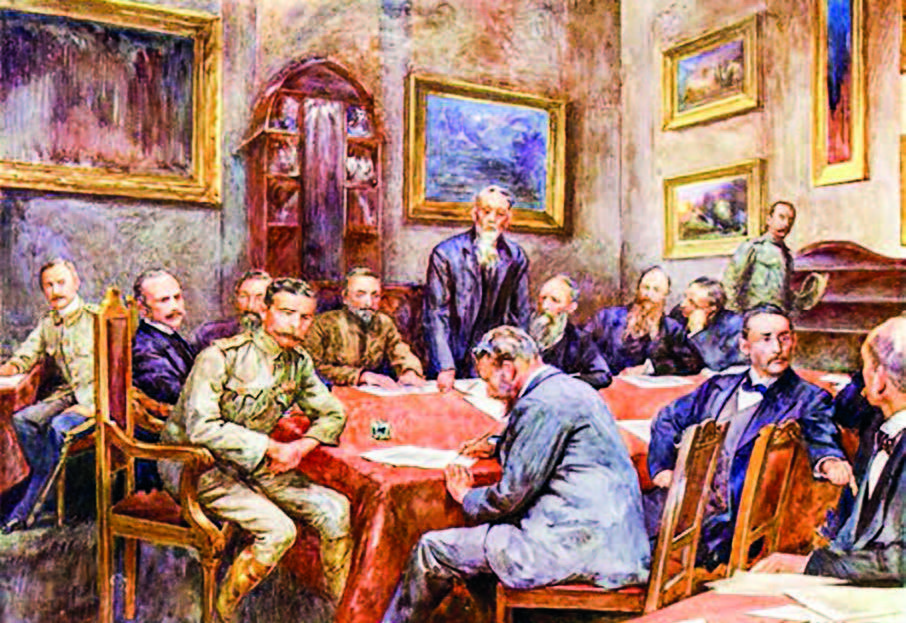
Peace treaties in previous centuries often followed similar patterns. For instance, the Treaty of Westphalia (1648), which ended the Thirty Years’ War, established the modern concept of state sovereignty, emphasizing the principles of non-interference in internal affairs and the balance of power between European states. Similarly, the Treaty of Versailles (1919) concluded World War I by imposing heavy reparations on Germany, redrawing national borders, and creating the League of Nations in an effort to prevent future global conflicts. The Cold War era added new dimensions, where ideological struggles and superpower rivalry influenced treaties, but the actors were still predominantly nation-states. For example, military pacts like NATO and the Warsaw Pact reflected these rivalries, serving as deterrents while promoting the interests of their respective blocs. Similarly, arms control treaties, such as the SALT agreements, were negotiated under pressure to limit nuclear proliferation amidst fears of mutual destruction.
With the end of the Cold War, peace processes took on new forms, focusing on the integration of former adversaries into international systems, as seen with treaties following the breakup of Yugoslavia, most notably the Dayton Agreement (1995). However, the 21st Century has introduced unique geopolitical dynamics that have altered the way peace treaties are negotiated and implemented.
21st Century Peace Treaties: New Actors and Complexities
The 21st Century introduced new dimensions into the art of peacemaking, primarily due to the rise of non-state actors, globalization, and technological advancements. Unlike previous centuries, where peace treaties typically involved state actors, today’s agreements often need to address insurgent groups, terrorist organizations, and multinational corporations.
For example, the Afghanistan Peace Agreement of 2020 involved negotiations between the United States and the Taliban – an insurgent group rather than a recognized state government. The complexities of this agreement highlight the challenge of dealing with non-state actors whose motivations are often ideological or extremist in nature. The inclusion of such groups in the peace process is a significant evolution in treaty-making and raises questions about legitimacy, enforcement, and compliance.
Additionally, peace treaties now have to consider global networks. The use of cyber warfare, economic sanctions, and international legal mechanisms can either enforce or undermine peace agreements. These factors add layers of complexity that make treaty enforcement more difficult than in the past.
The Role of International Organizations
Another defining feature of modern peace treaties is the increasing involvement of international organizations like the United Nations and the European Union and regional bodies such as the African Union. The Colombian Peace Agreement of 2016, for instance, which ended a 50-year conflict with the FARC rebels (The Revolutionary Armed Forces of Colombia), was brokered with significant international oversight, including the involvement of the UN and neighbouring countries.
These organizations now often act as guarantors or mediators of peace agreements, providing neutral platforms and ensuring that the terms are monitored and adhered to. While this offers a higher chance of stability, it also requires multilateral cooperation, which is challenging to maintain in a geopolitically polarized world.
Geopolitical Influences and Major Powers
The influence of global powers continues to shape the nature of peace treaties. The 21st Century has seen a shift towards a multipolar world, where the dominance of the United States is being contested by rising powers such as China and Russia. This contest often leads to proxy conflicts, where peace agreements become strategic tools in a broader geopolitical struggle.
For example, peace agreements in the Middle East, such as those involving Syria, have been heavily influenced by external powers like Russia, the US, and Iran. These agreements often reflect the interests of these powers rather than the local populations, leading to fragile outcomes that are susceptible to collapse.
The Minsk Agreements (2014- 2015), designed to resolve the conflict in Eastern Ukraine, show how peace treaties are often negotiated under the influence of great power politics. Despite being signed, these agreements have largely failed to bring lasting peace, in part due to the competing interests of Russia and Western nations, illustrating the challenges of reaching consensus in a fragmented world order.
The Role of Technology in Modern Peace Agreements
One of the most significant changes to peace treaties in the 21st Century is the role of technology. Cybersecurity, disinformation campaigns, and technological warfare are now central considerations in any peace process. Conflicts no longer take place solely on the battlefield; they unfold in cyberspace, affecting the terms and conditions of modern treaties.
For instance, agreements now frequently contain clauses addressing the misuse of technology, ensuring the prevention of cyber attacks or regulating the use of social media to inflame tensions. The rise of autonomous drones, artificial intelligence in warfare, and cyber sabotage has made peace treaties much more complex, as they now need to cover these technological dimensions alongside traditional military terms.
Future Trends: What Lies Ahead for Peace Treaties?
Looking forward, peace treaties in the 21st Century will likely continue to evolve to meet new global challenges. Climate change, resource scarcity, and migration crises are likely to become focal points of future conflicts, influencing the nature of peace agreements. The South China Sea, for example, is becoming a strategic area of interest due to territorial disputes and natural resources, and future peace agreements may need to include clauses about resource-sharing, navigation rights, and conflict resolution. Moreover, as the world becomes more interconnected, peace processes will increasingly require cooperation across multiple sectors, from civil society to the private sector. Technology companies, for instance, may play a role in ensuring that communication networks are not used to spread disinformation or incite violence during peace negotiations.
Conclusion
The evolution of peace treaties in the 21st Century reflects the complexity of modern conflicts, the changing nature of global power dynamics, and the rise of new actors and technologies. While traditional treaties focus on land, sovereignty, and ceasefires, modern agreements must address a broader range of issues, from ideological insurgencies to cybersecurity. As the world continues to shift towards multipolarity, the success of peace treaties will depend on the ability to adapt to these new challenges, ensuring that peace remains sustainable in an increasingly complex global landscape.
References;
1. C V (2020). The Peace of Westphalia and the Origins of Sovereignty. Journal of International Law and Politics, 52 (1), 123-145.
2. MacMillan, M (2001). Paris 1919: Six Months That Changed the World. New York: Random House.
3. Acharya, A (2001). Constructing a Security Community in Southeast Asia: ASEAN and the Problem of Regional Order. New York: Routledge.
4. Glaser, B S (2019). The South China Sea: A Battleground for International Law and Geopolitical Rivalry. International Journal of Marine and Coastal Law, 34 (2), 1-25.
5. Reuveny, R. (2007). Climate Change and Conflict: The Security Risks of Global Warming. Social Forces, 85 (3), 1169- 1194.
6. Zartman, I W (2005). Peacemaking in International Conflict: Methods & Techniques. Washington, DC: United States Institute of Peace Press.