By Thet Mon Tun
THE year 2025 marks the 80th anniversary of the victory over fascism in both Europe and Asia. Nazi Germany surrendered to the Allied forces on 8 May 1945 in Europe. The Japanese fascists unconditionally surrendered on 2 September 1945 in Asia, which marked the official end of the entire World War II.
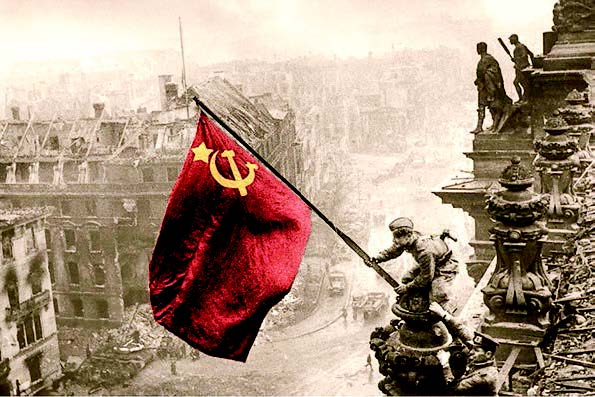
The Russian Federation, formerly the Soviet Union, held the grand parade celebration of the 80th Anniversary of the Great Patriotic War on 9 May 2025 in Moscow for Russia’s victory over Nazi Germany in World War II. World War II in the European Theatre ended on 8 May 1945, following the Soviet troops’ conquest of Berlin on 2 May.
Likewise, the People’s Republic of China schedules to commemorate the 80th Anniversary of Victory of the Chinese People’s War of Resistance against Japanese Aggression and World Anti-Fascist War on 3 September 2025 in Beijing.
Commemorating the World War II V-Day military parades aims to honour humanity, peace and harmony of the world and to dedicate and pay high tribute to all the veterans, comrades and officers who sacrificed their souls during World War II in bringing back world peace. In addition, these V-Day parades serve to remind the nations to bear a spirit of unity in rejecting any forms of expansionism, hegemonism, neocolonialism and domination in today’s global era.
Asian Theatre in the Anti-Fascist War
The victory over Japanese fascists in the Far Eastern Theatre (the Asian frontline), especially by the Chinese and their allies, played a crucial role in the fight against the Axis Powers in World War II.
Documents suggest that at least 27 million people of the Soviet Union died in World War II on the European front line, both in the fights against the Nazis and the civilian fatalities in collateral damage. What is more, the Soviet Union suffered the highest number of casualties of other nations in the European Theatre in World War II. That was in Europe.
In the Asian frontline, the Chinese contribution in the wartime deserves earnest recognition, and China was one of the significant players in the Allied victory in Asia.
At least 35 million Chinese sacrificed their lives and souls in its War of Resistance against Japanese Aggression through the fights, collateral damages, famines and inhumane war crimes. History witnesses the most ferocious war crimes and humiliations (for instance, killings, massacres and rapes in Nanjing) committed by Japanese fascists against human dignity during World War II in Asia.
Battles in the Chinese territory were the bloodiest and longest among different theatres during the Second World War. The Chinese’s unwavering resistance against Japanese fascism for their national sovereignty within 14 years from 1931 to 1945 deserves respect and admiration. Only resilience, persistence and unity brought the world back to peace after the historic war.
Myanmar’s geostrategic location is vital in ending World War II
Myanmar also suffered aggression during World War II, and the people of Myanmar rose to fight against the fascists on 27 March 1945 on a nationwide scale. The day was primarily marked as Myanmar’s Resistance Day against Japanese fascists; then later became the Armed Forces Day of Myanmar, and the country commemorates annually on this day as the birth of its guardians – Myanmar’s Armed Forces (Tatmadaw).
Myanmar, a Southeast Asian country, is geo-strategically located at the junction between South Asia, East Asia and Southeast Asia. The country’s position of sitting at the southern end of the Himalayas mountain ranges, to the bank of the Indian Ocean, and its heartland served as the crucial course for military logistics and supply route of the Allied forces in assisting Chinese resistance against Japanese fascism, which drew the war outcomes ending the fascism.
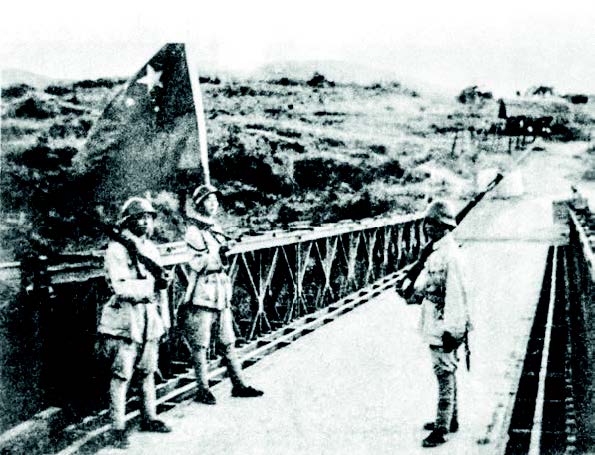
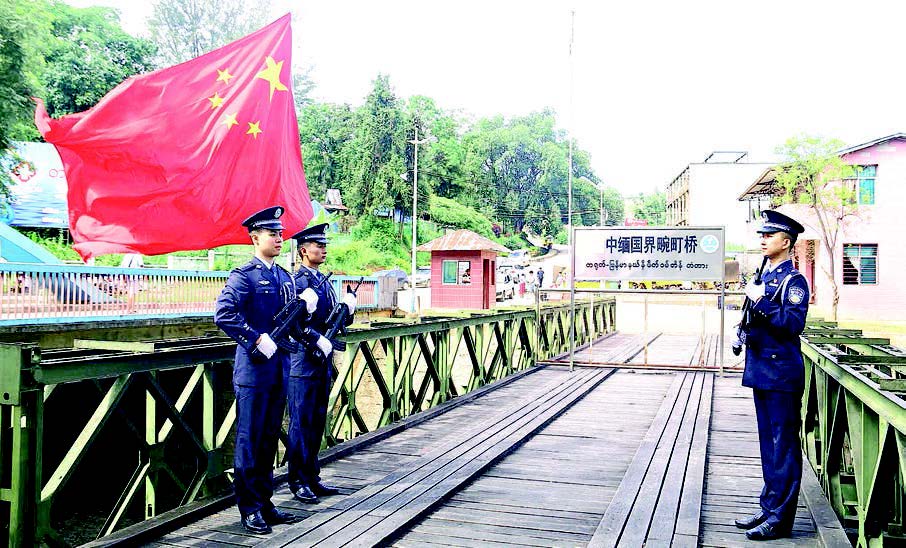
After Japanese forces occupied China’s seaports in 1937, the Chinese initiated construction of the Burma Road (the road linking Lashio in Myanmar to Kunming in China’s Yunnan Province). The road was designed to extend the supply line to the landlocked Yunnan with the mainland of Myanmar. Before Japanese forces cut off the Burma Road in 1942, it served as the primary course of military logistics to the interior of China from Yangon. Fuel, ammunition, and other military supplies from the Allied forces arriving in Yangon Port, then transported to Lashio by railway. Supplies were then transferred via the Burma Road (also known as the Lashio-Kunming Road), passing through Wanding, the China-Myanmar border gate.
Built in 1928 and once serving as the vital wartime lifeline, the Wanding Bridge continues its vital role in the bilateral trade corridor these days. Thus, the bridge still serves as an emblem of regional cooperation between Myanmar and China.
As a matter of fact, old British ancestors already noticed the potential of vital plots of connecting townships located in northern and northeast Myanmar, such as Bhamo, Lashio, Muse and Wanding, between Mandalay and Yangon with China at the very earliest, since colonial times.
When Japanese forces blockaded the Burma Road in 1942, Chinese and Allied forces created a bypass for the supply flow with the Ledo Road. Often overlooked in headlines and news, the forgotten Ledo Road played a crucial role in the China-Burma-India Theatre (the CBI) in the Second World War or the War Resistance against Japanese Aggression in Asia. Once a symbol of Allied forces’ unity, the road significantly influenced the fate and future of Asia.
Shared interests for peace
“Success was made possible only by the ability of men of all nations to work together. To maintain the peace, security and freedom for which all of us have fought,” said one of the World War II Archives.
Hence, the Allied forces’ resistance with unity and their resilient commitment to peace and mankind conquered wars, forces, barbarism and militarism in the Second World War. Togetherness, unity and standing shoulder to shoulder of the Allied forces or the Big Four brought back the world to peace.
Yet today, the need for such unity still remains more than ever. For safeguarding global peace, stability, and security, the major powers should continue to uphold mutual understanding and work together with shared responsibility.
Instead of adopting the political ideology of “There is neither such lasting friends nor enemies; but there is only permanent interest” which was frequently quoted by the Western world, people of all nations should embrace the following notion: “Friends should be permanent and interests should be shared,” which was said by Chinese Foreign Minister Wang Yi, for a shared future; to long live the great unity of the people of the world; and for a shared interests.