
by Mr Abhay Thakur, Ambassador of India to the Republic of the Union of Myanmar
Vasudhaiva Kutumbakam: The world is one family
India’s Multi-sectoral developmental cooperation across Myanmar
Puts People First
INDIA’S developmental partnership with Myanmar is diverse, multi-sectoral and aimed towards the local benefit of diverse communities across the different states and regions of Myanmar. The underlying philosophy of the Indian approach towards international developmental assistance is rooted in the ancient Sanskrit phrase from the Maha Upnishad - Vasudhaiva Kutumbakam, or the world is one family.
Firstly, at the heart of India’s developmental cooperation with the Global South, including Myanmar, lies a people-centric approach and a deep commitment to human resources development. Secondly, Myanmar lies at the confluence of India’s three key foreign policy priorities – Neighbourhood First, Act East and the Indo-Pacific. Thirdly, our ties with Myanmar are age-old and multi-faceted, based on fraternal bonds at the people-to-people level and institutional, cultural and spiritual linkages. Underpinned by these considerations, India’s developmental partnership with Myanmar is based on true friendship and driven by the needs and priorities of Myanmar, and no other motive. In this spirit, a diverse range of developmental initiatives and programmes have been undertaken by India across Myanmar.
Skills and Education for a Digital Tomorrow
India has helped establish four Industrial Training Centres (ITCs) in Pakokku, Myingyan, Thaton, and Monywa – training local youth in welding, electrical work, and electronics. These programs, developed in partnership with HMT (International) Limited, a leading Government of India enterprise, are tightly aligned with industry needs in Myanmar. One young trainee in Myingyan noted, “Before this centre opened, we had no way to learn these skills. Now I can work as a technician and help support my family.”
Higher education has also benefitted students across Myanmar. In Mandalay, the Myanmar Institute of Information Technology (MIIT), developed with Indian assistance and modelled after IIIT-Bengaluru, is fast becoming a hub for digital excellence. Since 2018, MIIT has produced software engineers and data specialists working in tech startups across Myanmar. “Our students solve real-world problems in their final year projects. Some are now team leads in major tech firms”, said an MIIT faculty member, while Theingi Shwe Sin, BE (CSE) student from the batch of 2015, commented that “Equal rights and opportunities for all students as well as the transparent system indicate the institute’s preference to students’ rights and education”. The institute was formally handed over to the Myanmar Government in March 2022, marking a significant milestone in academic cooperation. Similar stories of success have been recreated through the India-Myanmar Centre for Enhancement of IT Skills (IMCEITS), Yangon. An internship candidate from the Artificial Intelligence (AI) course stated that “The most valuable aspect of my training at IMCEITS was the hands-on practical sessions, which gave me real-world experience and helped me understand how to apply the concepts I learned in class”. Similarly, India has also set up a Rice Bio-Park and Advanced Centre for Agricultural Research and Education (ACARE) in Nay Pyi Taw that aims to demonstrate the full potential of the paddy/rice value chain. The association of Indian experts with these projects has also enabled them to contribute to upgrading the post-graduate syllabus at the Yezin Agricultural University in Nay Pyi Taw.
Infrastructure that Connects and Transforms
Much of India’s support has focused on local infrastructure such as the roads, bridges, water systems, and community halls that enable daily life to function more efficiently. U Tint Ko, village-tract leader of Thaphan Chaung Village in Yenanchaung Township of Magway Region, while referring to the QIP initiative of solar-powered water supply system in his village, stated, “We can now use water free of charge and abundantly. I would like to express my sincere gratitude for the support by the Government of India”.
Along the quiet stretches of the India–Myanmar frontier, a powerful story is unfolding, one of roads, resilience, and renewed hope. Over the past decade, India’s grant-based development cooperation has touched hundreds of communities across Myanmar, offering tangible support through over 300 projects in sectors ranging from rural infrastructure, healthcare and heritage to disaster relief and education. The guiding philosophy: PLACE PEOPLE FIRST.
Through flagship bilateral schemes like the Border Area Development Programme (BADP), Rakhine State Development Programme (RSDP), Small Development Projects (SDP) and Quick Impact Projects (QIP), India has invested more than US$36 million through bilateral mechanisms in Myanmar’s frontier regions. This is over and above a multi-million-dollar community initiative funded and executed directly through New Delhi. From mountain villages to coastal settlements, the impact is visible and deeply felt.
BADP initiatives in Chin State and Sagaing Region have funded over 179 minor infrastructure projects across these regions.
In Rakhine, where remote villages often face infrastructural deficits, RSDP interventions have included 250 prefabricated homes and solar electrification. These are not just utility upgrades – they are enablers of dignity and opportunity.
Boosting Livelihoods Through Healthcare and Agriculture
In 2019, a 200-bedded Women & Children Hospital in Monywa was equipped with critical medical equipment, provided as Indian grant assistance. This not only elevated the standard of care but also made healthcare more accessible for families previously dependent on distant urban hospitals. Locals report shorter waiting times, better maternal care, and faster emergency responses. In the health-care field, India has also undertaken projects to upgrade facilities in the Yangon Children’s Hospital and the Sittwe General Hospital. Most recently, a state-of-the-art cancer treatment device, the Bhabatron-II and Imagin Simulator, was set up at Yangon General Hospital.
India’s support extends well beyond basic infrastructure. Under the Small Development Projects (SDP) initiative, rural livelihoods have received significant boosts. In Rakhine State, farmers received tractors and harvesters, which revolutionized local agriculture. “The machines helped us harvest faster and cover more land,” said a farmer.
Preserving Heritage with Care and Craftsmanship
In the wake of the 2016 earthquake, India’s Archaeological Survey of India took on the painstaking restoration of earthquake-damaged monuments in Bagan, after a spectacular completion of the work on the iconic Ananda Pagoda, built in the 12th century. The handing over of restored 11 monuments under the first phase, carried out using local stonemasons, carpenters and traditional artisans, was celebrated in December 2024.
A local craftsman who worked on the project shared proudly, “We used bricks, wood and lime mortar from our villages. It was not just a job – it was a way to honour our ancestors.” These restored monuments now welcome pilgrims and tourists once again, standing as testaments to shared heritage and regional solidarity.
Swift and Compassionate Disaster Response
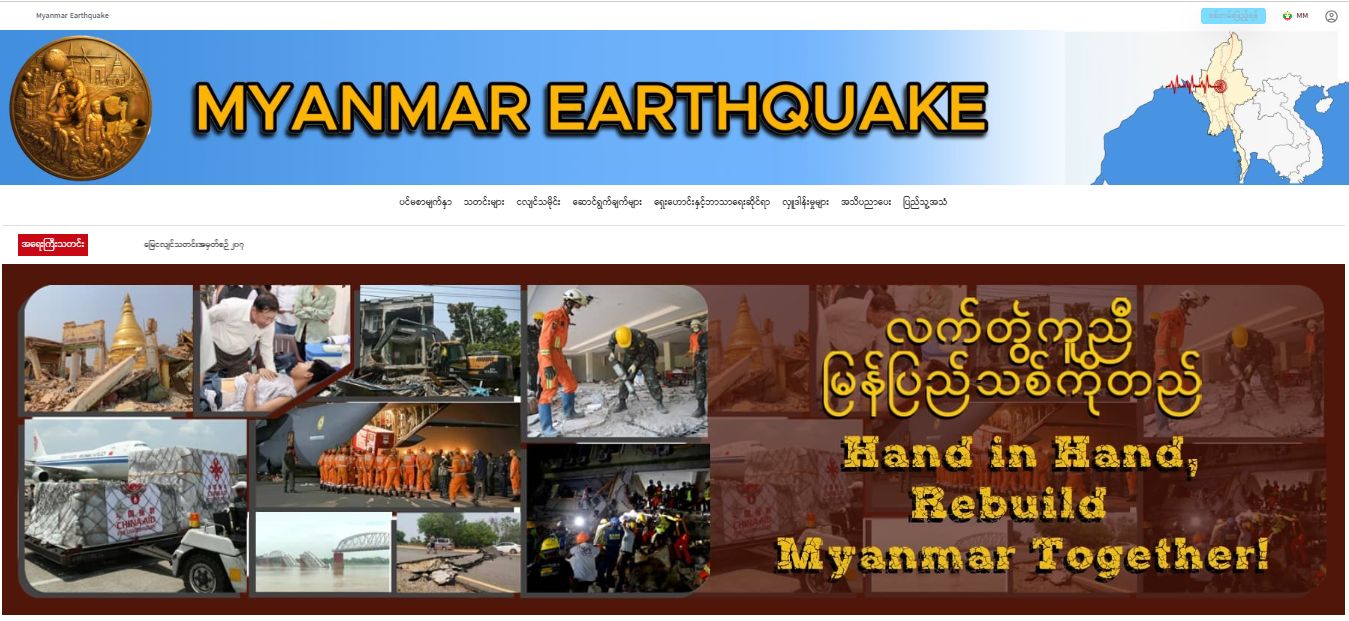
India’s cooperation is perhaps most keenly felt during a crisis. Since Cyclone Nargis in 2008, India has launched 13 major humanitarian operations in Myanmar. The most recent effort, Operation Brahma, was initiated in the aftermath of the devastating March 2025 earthquake. Within 48 hours, Indian teams arrived with tents, food, medical kits, and rescue personnel.
In Rakhine, a community leader recalled the arrival of aid: “When Cyclone Mocha struck, Indian rescue teams were here the next day with tents and medicines. We felt their support immediately; it meant everything to us.”
India also provided critical supplies during the COVID-19 pandemic through Vaccine Maitri, including oxygen plants, PPE kits, and 20 million doses of COVID vaccine, reinforcing Myanmar’s health infrastructure during a time of global crisis.
A Model of Community-Led Development
What makes our development partnership with Myanmar stand out is its community-first model, infrastructure built by local labour, restoration led by artisans, implementation managed by village committees and, wherever possible, materials are sourced from nearby markets, quarries, and workshops. This approach creates not just assets, but local ownership, income, and pride.
“This is more than just aid – it’s empowerment,” noted a project coordinator in Sagaing, “Each initiative is shaped by local needs and built by local hands.”
As Myanmar marches forward and continues navigating its development path, India’s engagement offers a roadmap rooted in mutual respect, sustainability, and shared responsibility. Each road laid, each clinic equipped, each monument restored is more than a project – it’s a bridge between nations, with communities driven by their own aspirations.
(Views expressed in the article belong solely to the author.)