
Dr Aung Tun
EVERY year on 29 September, the world unites to observe World Heart Day. This year marks a significant milestone – the 25th anniversary of this crucial global health campaign, initiated in 1999 by the World Heart Federation (WHF) in collaboration with the World Health Organisation (WHO) (1). Under the powerful theme “Don’t Miss a Beat,” the 2025 campaign serves as an urgent reminder for individuals, communities, and governments to pay close attention to cardiovascular health. This year’s theme, “Don’t Miss a Beat”, is more than a slogan. It is a call for urgent, collective action to protect every heartbeat. The global health community reminds us that up to 80 per cent of premature heart disease and stroke cases are preventable – a fact that turns tragedy into opportunity.
The Global Burden: Cardiovascular diseases (CVDs) remain the world’s leading cause of death, claiming an estimated 20.5 million lives annually according to the latest Global Burden of Disease study (2). This accounts for approximately one-third of all global deaths.
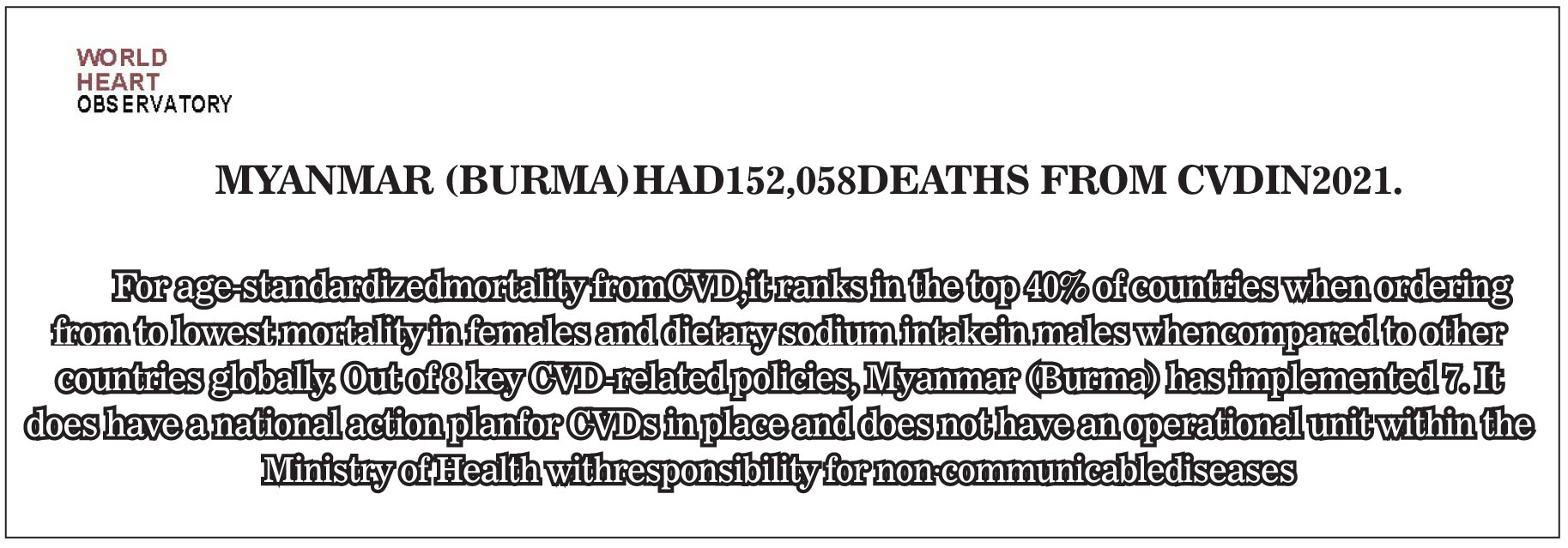
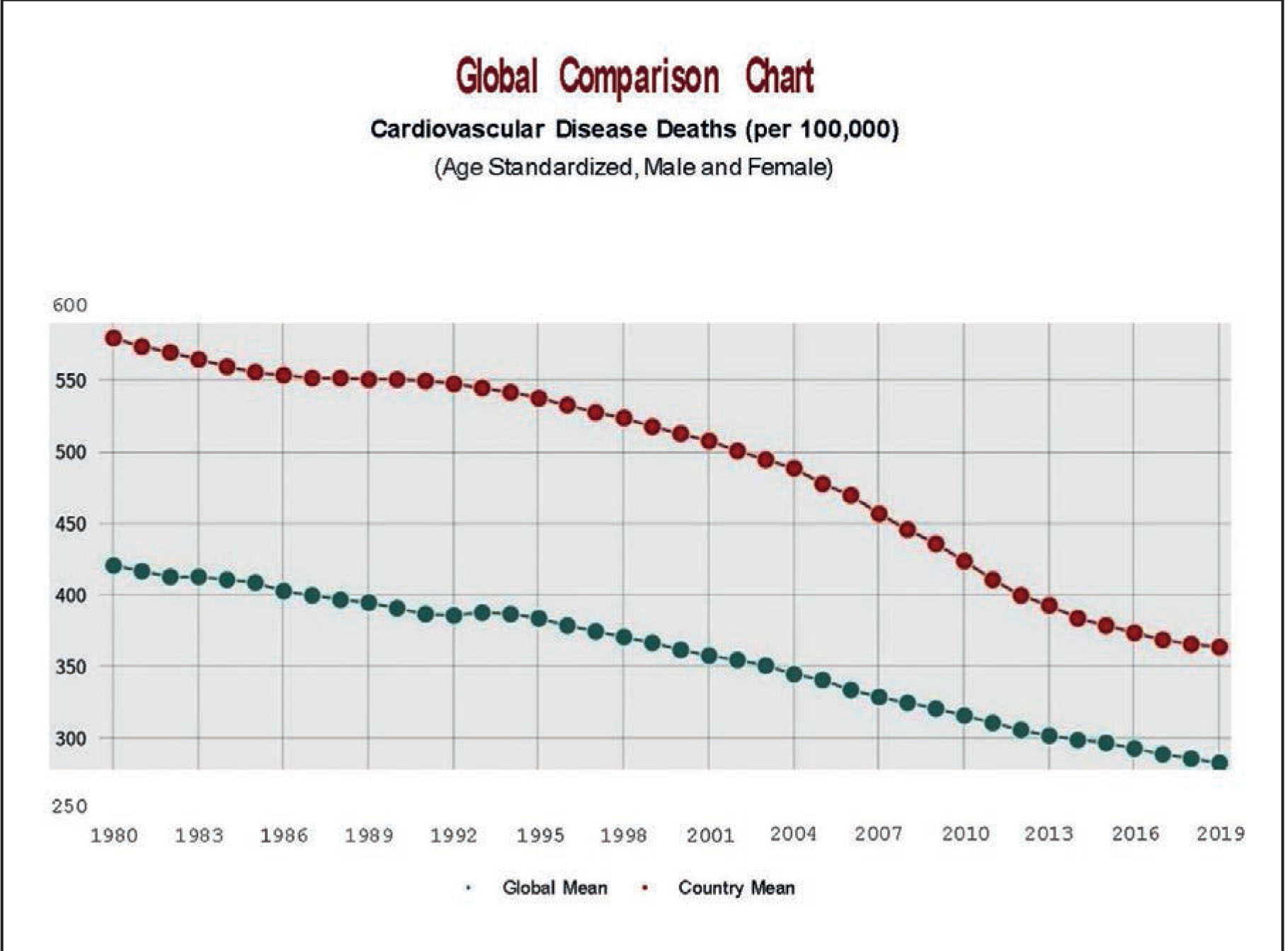
The Alarming Situation in Myanmar: The burden is particularly heavy in Myanmar: According to the World Heart Observatory, Myanmar suffered 152,058 deaths from CVD in 2021 alone (6). The age-standardized CVD mortality rate stands at 364 per 100,000 population, placing Myanmar in the top 40 per cent of countries globally for highest CVD mortality rates (6). A 2012 community-based survey conducted in four townships (Kyauk- Tan, Mawlamyaing, Pathein, and Pyay) revealed high rates of CVD morbidity among adults aged 40 and above: nine per cent suffered from angina, 7.5 per cent reported a possible heart attack, and 2.8 per cent had heart failure (7). The same study found a hypertension prevalence of 51 per cent, indicating a massive underlying risk factor burden (7).
“This year’s theme, ‘Don’t Miss a Beat,’ is especially relevant for Myanmar, where CVD mortality rates are critically high,” says a local public health expert. “It urges everyone not to overlook warning signs, not to delay check-ups, and not to skip healthy habits. With such a high prevalence of risk factors, proactive care is our best defence.”
The Silent Threat: Understanding Cardiovascular Diseases
Cardiovascular diseases are a group of disorders of the heart and blood vessels. They often develop silently over time, making awareness and early detection paramount. Key conditions highlighted during World Heart Day include:
- Coronary Artery Disease (CAD) and Angina: Caused by the buildup of plaque in the heart’s arteries, leading to reduced blood flow. A study in Myanmar found that nine per cent of adults over 40 suffer from angina symptoms, a key indicator of CAD (7). It is the most common type of heart disease globally (4).
- Hypertension (High Blood Pressure): A ‘silent killer’ that damages arteries and strains the heart. With a prevalence of 51 per cent in a local study and nearly 25 per cent in the general adult population according to 2015 estimates, it is a primary target for public health efforts in Myanmar (6, 7).
- Heart Attack (Myocardial Infarction) and Heart Failure: The prevalence of possible heart attack was 7.5 per cent, and heart failure was 2.8 per cent in the surveyed Myanmar population, showing the significant burden of these severe conditions (7).
- Stroke Dominance: Unlike Western nations, where heart attacks lead, in Myanmar, stroke is the top killer, claiming more lives than any other CVD.
The Dangers and Far-Reaching Effects
The Human Toll
A sudden stroke or heart attack can forever alter a family’s destiny. Survivors often face long-term disabilities, loss of independence, and emotional struggles such as anxiety and depression. The silent scars extend well beyond the hospital ward, affecting caregivers and communities.
The Financial Strain
Treatment for CVD – emergency surgeries, medications, lifelong care – comes at a high price. These costs can push families into debt or poverty. Many are forced to sell assets or sacrifice children’s education just to afford medicine. Worse still, CVD often strikes people during their productive working years, destabilizing family incomes and straining the nation’s workforce. CVD is not just a medical issue; it is a socioeconomic crisis that deepens inequality and slows national development.
If left unaddressed, Myanmar will continue to lose thousands of lives annually to preventable heart disease – a loss the nation cannot afford.
Key Risk Factors in Myanmar: A Call for Action
The high CVD mortality in Myanmar is driven by widespread modifiable risk factors (3, 5, 6):
- Tobacco Use: Prevalence of tobacco smoking is 23.9 per cent, significantly contributing to CVD risk (6).
- Hypertension: Affecting about one in four adults, it is a major driver of strokes and heart failures (6, 7).
- Unhealthy Diet: The country has relatively high rates of dietary sodium intake, fueling the hypertension epidemic (6).
- Physical Inactivity and Obesity: These factors, along with diabetes, are on a rising trend in both urban and rural areas (7).
Your Heart-Healthy Action Plan: Prevention is Better Than Cure
Adopting a heart-healthy lifestyle is the most effective way to reduce the high risk of morbidity and mortality seen in Myanmar. The World Heart Federation recommends several key steps (1, 5):
1. Nourish Your Heart:
Focus on a balanced diet rich in fruits, vegetables, whole grains, and lean proteins. Reducing salt intake is particularly crucial given the high sodium consumption in Myanmar.
2. Move for Your Heart:
Aim for at least 150 minutes of moderate exercise per week to combat a sedentary lifestyle.
3. Prioritise Mental Wellness and Sleep:
Chronic stress and poor sleep can harm your heart.
4. Know Your Numbers and Quit Tobacco:
Get regular check-ups to monitor blood pressure, cholesterol, and blood sugar levels. Quitting tobacco is one of the most significant steps to reduce CVD risk.
National Efforts and The Role of Healthcare
There are positive developments in the national response. Myanmar has a National Action Plan for CVDs and has implemented seven out of eight key CVD-related policies (6). Cardiologists and dedicated heart care units across the country play a vital role. However, challenges remain in ensuring equitable access to services. Strengthening primary healthcare for early detection and management of risk factors like hypertension is critical to reducing the overall burden, as evidenced by the high morbidity rates found in community surveys (3, 7).
How You Can Get Involved in World Heart Day 2025
This year’s celebration calls for collective action. Here’s how you can participate (1):
- Keep the Beat Challenge: Move for 25 minutes for 25 days in September.
- Share Your Story: Use social media to share your heart-health journey with #DontMissABeat.
- Support Local Awareness: Participate in local health campaigns and advocate for stronger prevention programmes.
Let’s Make Every Heartbeat Count in Myanmar
World Heart Day 2025 is a global movement with profound significance for Myanmar. With an age-standardized CVD mortality rate of 364 per 100,000 and a high prevalence of conditions like angina and hypertension, the need for action is urgent (6, 7). The theme “Don’t Miss a Beat” is a direct call to a nation where CVDs claim over 150,000 lives annually. By raising awareness, adopting healthier habits, and supporting strengthened healthcare systems, we can work towards a future where fewer families in Myanmar are affected by preventable heart disease. This 29 September, let’s promise not to miss a beat in protecting our hearts.
Cardiovascular disease is preventable, treatable, and beatable. On this 25th anniversary of World Heart Day, let Myanmar rise together with the world:
- Individuals must commit to healthier lifestyles.
- Communities must spread awareness and support one another.
- Policymakers must strengthen access to affordable medicines and prevention programs. We cannot afford to miss another beat. The time to act for Myanmar’s heart health is now.
Together, we can save lives.
References
- World Heart Federation. (2024). World Heart Day 2025 Campaign Toolkit.
- GBD 2021 Causes of Death Collaborators. (2024). Global Burden of Disease Study 2021. The Lancet.
- Ministry of Health and Sports, Myanmar & WHO. (2020). STEPS Survey 2014: Noncommunicable Disease Risk Factors in Myanmar.
- World Health Organization. (2021). Cardiovascular diseases (CVDs) Fact Sheet.
- Yusuf, S, et al (2020). Modifiable risk factors, cardiovascular disease, and mortality in 155,722 individuals from 21 countries (PURE study). The Lancet.
- World Heart Federation. (2023). World Heart Observatory: Myanmar Country Profile.
- Zaw, KK, et al (2017). Prevalence of cardiovascular morbidities in Myanmar. BMC Research Notes.