SENIOR General Min Aung Hlaing highlighted that while political leadership within the government may change, civil servants continue to carry out their duties according to their responsibilities.
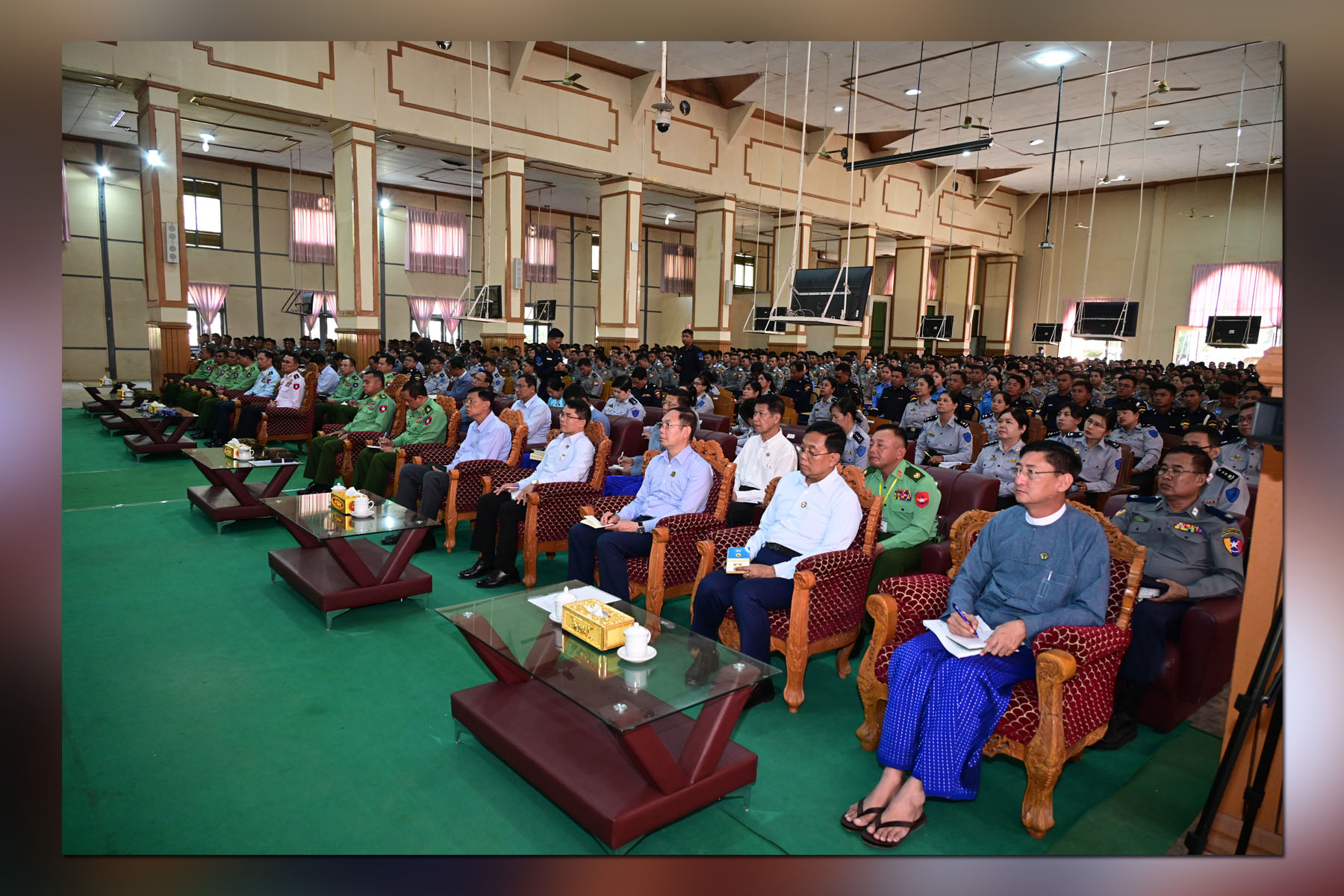
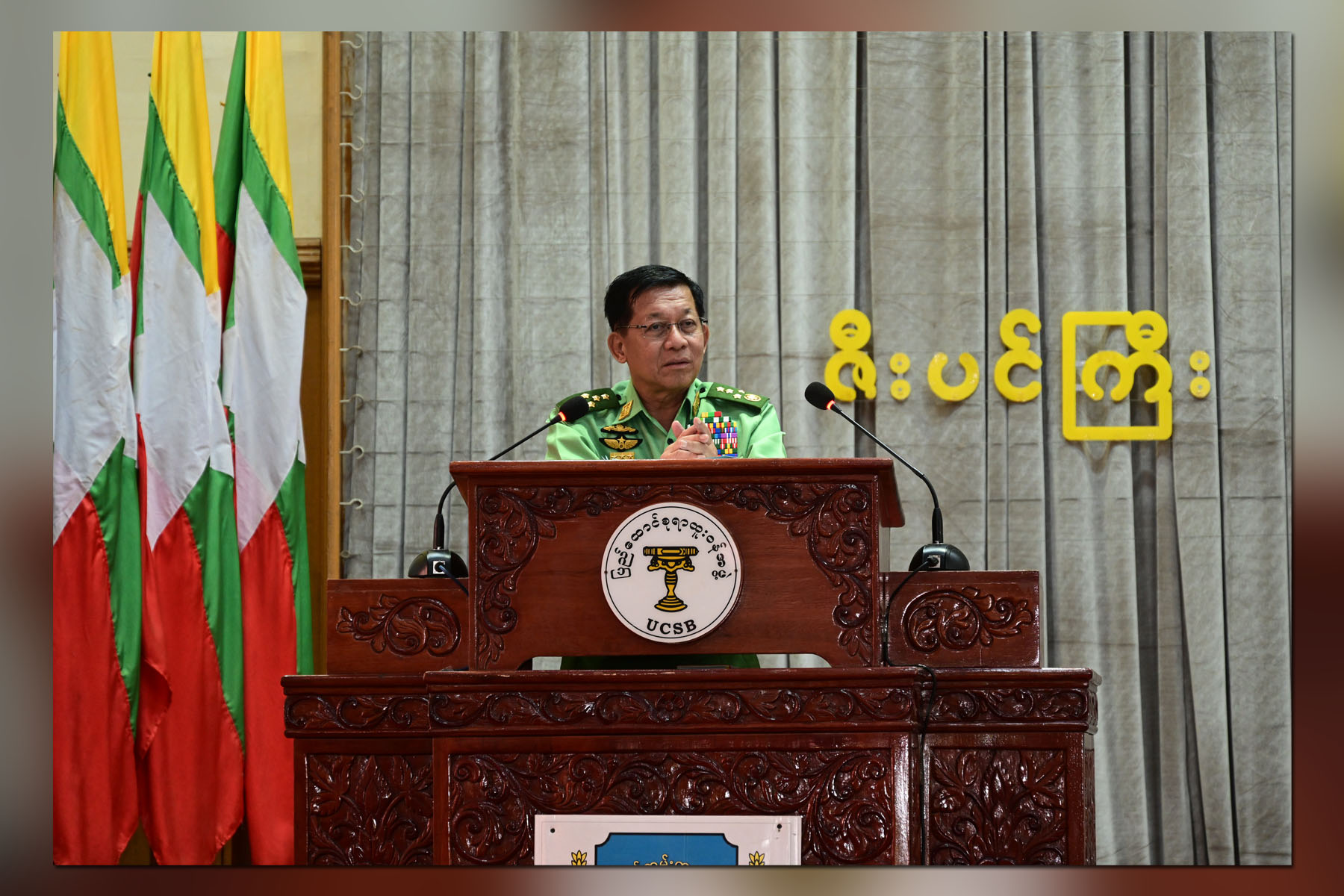
Acting President of the Republic of the Union of Myanmar and State Security and Peace Commission Chairman Senior General Min Aung Hlaing said so at the meeting with instructor officers and trainees from the Civil Service Academy (Upper Myanmar), the Police Officer Training Depot (Zeebingyi) and the Central Firefighting Training School (PyinOoLwin) in Zeebingyi of PyinOoLwin Township in Mandalay Region at the Yadana Hall of the Civil Service Academy (Upper Myanmar) yesterday afternoon.
Speaking on the occasion, the Senior General underlined that training schools are designed to cultivate competent civil servants, with the understanding that good civil servants lead to a good nation.
The Senior General stressed that while political leadership within the government may change, civil servants continue to carry out their duties according to their responsibilities. Even if policies differ depending on the ruling party or government, the functions of offices and departments remain unchanged.
He pointed out that all the trainees applied for and were selected as civil servants, and thus have earned the privilege of serving as government employees. As chosen civil servants, they should not live ordinarily but strive to be competent, high-quality civil servants and work diligently to improve their own lives.
He urged the trainees to learn from the historical experiences of the country to build a modern, developed, stable, and peaceful nation in the future.
The Senior General underscored that civil servants must have a broad and thorough understanding of political changes.
He recounted that from 2021 until the present, during their tenure, political armed conflicts, political blockades, natural disasters, and various difficulties and challenges were overcome through the collective strength of loyal civil servants and responsible citizens.
In a democratic country, he emphasized that elections are extremely important. When casting their votes, trainees should choose those who can act in the best interests of the country and regions, uphold Our Three Main National Causes, and work in harmony with Tatmadaw, which is the most stable and enduring institution of the State.
Regarding the economy, the Senior General explained that there were persistent trade deficits, which were covered by funds obtained from non-trade sources. Only by supporting domestic production could goods be generated, and exports increased. Producing goods is necessary to have the exports needed for trade, and obtaining these exports ensures the foreign currency required by the State, which in turn reduces trade deficits.
He remarked that if essential consumer goods can be produced domestically to meet local demand, it will reduce the use of foreign currency spent on imports. Thus, producing sufficient domestic foodstuff instead of importing them will significantly lower foreign currency expenditures.
He added that the purpose of taking the time to explain in detail like this is to help understand the political changes and the economic situations that have occurred in the country.
The Senior General noted that trainees have spent time, money, and effort to attend these courses, so it is necessary to genuinely learn and master the knowledge during their training. After completing the training, when the time comes to fulfill your responsibilities in building the future of the nation, trainees should take lessons from past events and apply them in the best possible way.
After the meeting, the Senior General and party cordially greeted the trainees.
Also present at the meeting were Commission Secretary and Joint Executive Chief General Ye Win Oo, Union ministers, the Mandalay Region Chief Minister, senior military officers from the Office of the Commander-in-Chief, the commander of Central Command, rectors and principals of the Civil Service Academy, the Police Officer Training Depot, and the Central Firefighting Training School and officials. — MNA/TTA