By Dr Aung Tun
UNIVERSAL Health Coverage (UHC) Day, observed worldwide on 12 December, is a moment to reaffirm global solidarity in ensuring that every individual can access essential health services without financial hardship.
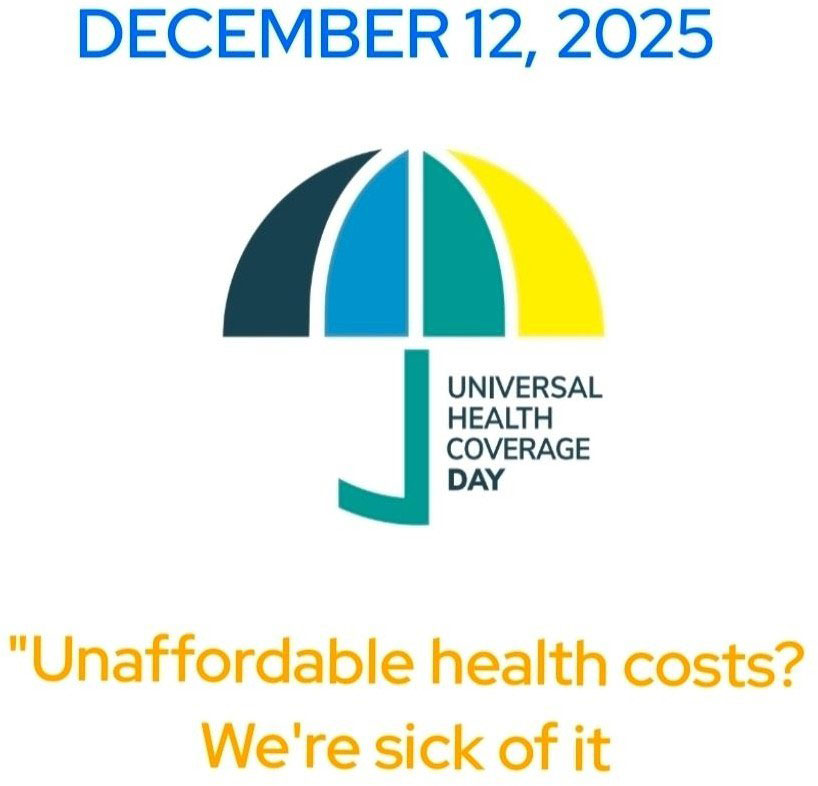
The 2025 UHC Day theme — “Unaffordable health costs? We’re sick of it!” — highlights a growing crisis: rising healthcare expenses continue to push millions into poverty. The theme reinforces a simple truth: accessing healthcare should not come at the cost of a family’s future.
UHC means that essential preventive, promotive, curative, rehabilitative and palliative services must be accessible, equitable and affordable for everyone. It is not only a health objective but a key driver of social stability and national development.
1. Global Foundations of UHC
The roots of UHC can be traced to the historic Alma-Ata Declaration of 1978, where Primary Health Care (PHC) was declared the foundation for “Health for All.” Alma-Ata emphasized equity, community participation, and accessible essential services. These principles remain central to UHC today.
In 2012, the United Nations General Assembly formally recognized UHC as a global priority, establishing 12 December as International UHC Day. This set the stage for mobilizing countries, governments, civil society and development partners around a common agenda.
When the Sustainable Development Goals (SDGs) were adopted in 2015, UHC was included as a specific global target – SDG 3.8. Achieving UHC by 2030 is a shared responsibility among all nations and requires coordinated policy actions, strategic financing and resilient health systems.
2. UHC and SDG
Under the 2030 Agenda for Sustainable Development, UHC is central to SDG 3: Good Health and Well-being.
SDG Target 3.8 commits all countries to:
• Achieve universal access to essential health services
• Ensure access to safe, effective and affordable medicines and vaccines
• Provide financial risk protection for all populations
Without UHC, SDG 3 cannot be achieved. Strengthening Primary Health Care (PHC), ensuring equitable service delivery and expanding financial protection remain the key pathways toward these global commitments.
3. Global Challenges in Achieving UHC
Despite progress, the world remains far from achieving UHC. According to global health monitoring reports, half of the world’s population still cannot obtain essential health services. Many families are forced to pay out-of-pocket for medical care, leading to severe financial distress.
A significant number of people face catastrophic health expenditures, meaning they must use a large portion of their household income to pay for healthcare. This often forces families to reduce spending on food, education and housing, creating deeper cycles of poverty.
These financial barriers are a major obstacle to universal health access. Without strong financial protection mechanisms, such as insurance schemes, government subsidies, and social safety nets, millions continue to face preventable suffering and financial ruin.
Global UHC challenges include:
• Heavy reliance on out-of-pocket spending
• Shortage and unequal distribution of health workers
• Limited financial protection mechanisms
• Weak health infrastructure, especially in rural areas
• Insufficient investment in PHC
The 2025 theme serves as a call to action: the world must no longer accept unaffordable health costs.
For countries working toward SDG 3, financing and protecting populations from health-related financial shock remain the most challenging components of UHC implementation.
4. Myanmar’s UHC Efforts
Myanmar has taken important steps to advance UHC, particularly through policy reforms, PHC strengthening and strategic health planning.
• The National Health Plan (2017-2021)
Myanmar implemented the Basic Essential Package of Health Services (BEPHS) with the ambition to deliver essential health services to all people at minimal financial burden.
These services were designed to reach the majority of the population living in:
Townships, Sub-townships, Village-tracts and Villages. BEPHS prioritizes services that are fundamental to PHC revitalization and essential for expanding UHC coverage.
• Strengthening the Health System
To ensure effective PHC delivery, Myanmar has been working to reinforce all major components of the health system, including:
• Health workforce capacity
• Essential health infrastructure
• Service delivery networks
• Health financing mechanisms
These system-strengthening efforts aim to support equitable service expansion and improve population health outcomes.
5. Myanmar’s UHC Challenges
Although Myanmar continues its efforts toward SDG 3 and UHC, several significant challenges remain:
• Insufficient financial protection: Many households still experience financial hardship due to high out-of-pocket health spending.
• Gaps in health system capacity: Workforce shortages, limited logistics and inadequate infrastructure impede service quality.
• Inequity in access: Rural, remote and hard-to-reach populations face barriers to essential care.
• Service disruptions: Emergencies, natural disasters and instability affect continuity of care.
• Need for stronger governance and data systems: Effective decision-making requires reliable information and coordination.
For Myanmar to advance UHC, nationwide prioritization, investment and policy commitment are essential.
6. My Participation in PHC Revitalization (Chiang Mai Consultation)
As part of efforts to strengthen UHC, I had the opportunity to participate in the Regional Consultation on Innovations in Primary Health Care, held in Chiang Mai, Thailand, from 17- 19 August 2010.
The objective of the consultation was to explore innovative approaches to revitalize PHC across the South-East Asia Region. Discussions centred on the foundational principles of PHC:
• Social equity
• Universal access
• Multisectoral collaboration
• Community participation
Participants agreed that these principles are essential for building strong, people-centred and sustainable health systems.
Representing Myanmar, I joined colleagues from the region in sharing national experiences and analysing the challenges of PHC revitalization. One key message from the meeting was that strengthening PHC is fundamental to achieving UHC because PHC ensures that people can receive essential services at an affordable cost.
During the consultation, I presented the collaborative effort between Myanmar’s Ministry of Health and Japan’s JICA titled “Using Community Resources for PHC – Healthy Mother Project (Myanmar)”.
The project demonstrated how community-based strategies and PHC strengthening directly contribute to improved maternal and child health outcomes, a key component of UHC.
7. A Collective Roadmap to 2030
UHC is more than a health target; it is a promise of fairness, security and opportunity. As the world marks UHC Day 2025, all nations are urged to strengthen financial protection, invest in PHC, and promote community participation.
For Myanmar, this is an opportune moment to reaffirm its dedication to building an equitable, resilient and people-centred health system. By prioritizing financial protection and integrating UHC principles across sectors, the country can move closer toward the global 2030 goal.
UHC is achievable when governments, communities, health workers and partners work hand in hand.
• Citizens
Communities should actively engage in health programmes, understand their rights to services, participate in consultations, and support local health initiatives.
• Health Workers
A competent, motivated and equitably distributed workforce is vital. Health workers must uphold quality, compassion and fairness in service delivery.
• Civil Society and the Private Sector
Non-governmental organizations, community groups and private providers contribute to service delivery, advocacy, and innovation. Their collaboration with the government strengthens overall health system performance. Community engagement ensures health systems respond to people’s needs, uphold dignity and equity, and build trust – critical for the success of UHC.
Achieving UHC is not merely a policy ambition; it is a promise of dignity, fairness and security for all people. With strong leadership and sustained commitment, Myanmar can make significant strides toward achieving UHC and fulfilling SDG 3.
References
1. Universal Health Coverage Day 2025 Theme: WHO/ UNICEF
2. World Health Organization (WHO), Regional Office for South-East Asia. Regional Consultation on Innovations in Primary Health Care. Chiang Mai, Thailand, 17-19 August 2010.
3. World Health Organization (WHO) “2018 Health SDG Profile: Myanmar,”
4. World Health Organization (WHO): Alma-Ata Declaration (1978). International Conference on Primary Health Care.
5. United Nations General Assembly (UNGA): Resolution on Global Health and Foreign Policy: Universal Health Coverage. 2012
6. World Health Organization (WHO) & World Bank: Tracking Universal Health Coverage: Global Monitoring Report (2024-2025)
7. Strategic Directions for UHC, Myanmar, MOH,2014