Rooted in local natural environments, cultures and customs, traditional medicine continues to be relied upon worldwide as a valuable heritage passed down from ancestors.
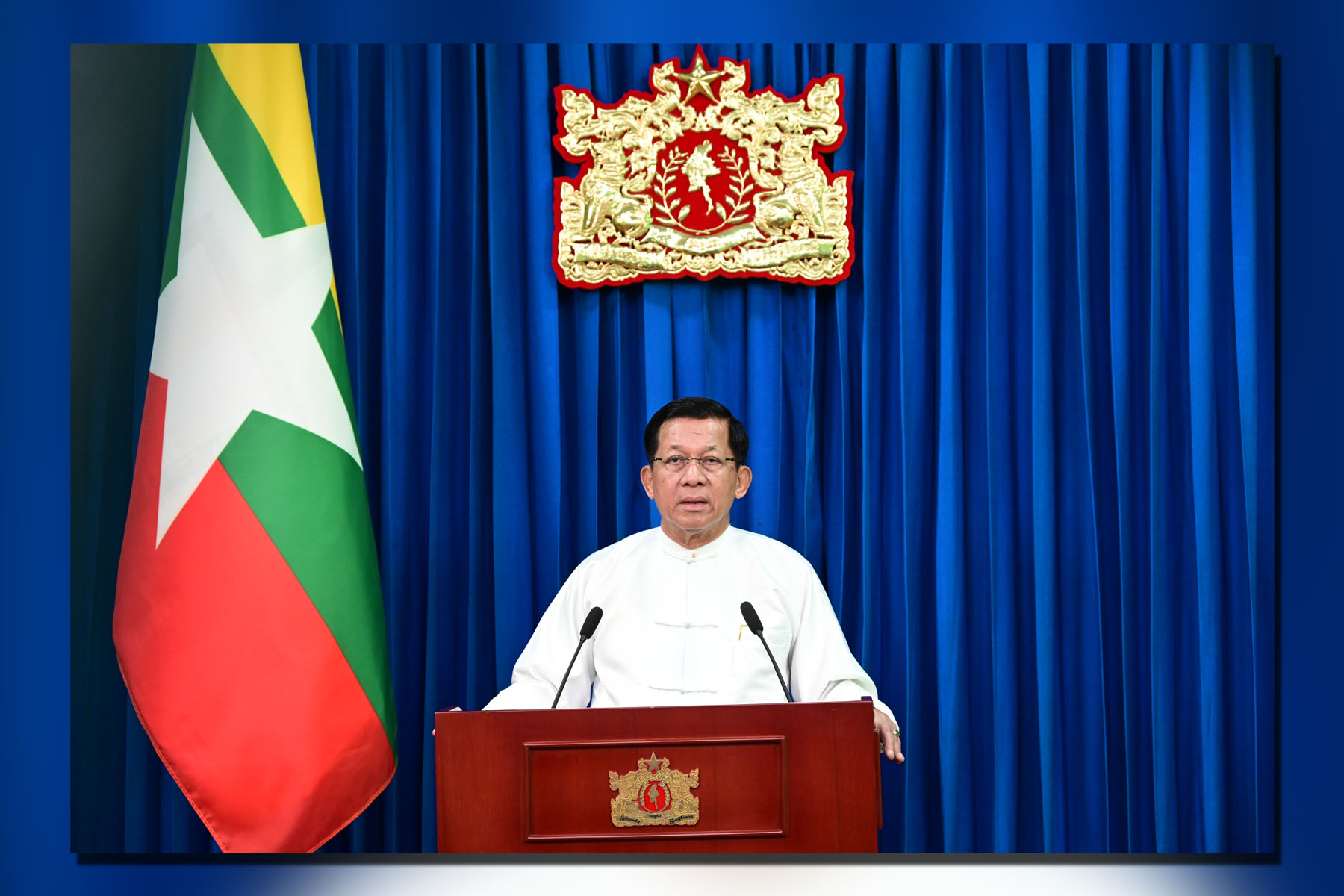
ACTING President of the Republic of the Union of Myanmar and State Security and Peace Commission Chairman Senior General Min Aung Hlaing sent a video speech in honour of the opening of the 24th Myanmar Traditional Medicine Practitioners Conference and Myanmar Traditional Medicine Symposium on 16 December 2025. The full text of the translated video speech is as follows: —
Everybody, Mingalaba!
I extend my heartfelt greetings and best wishes to all the responsible individuals attending the Myanmar Traditional Medicine Practitioners Conference and the Myanmar Traditional Medicine Symposium, to the distinguished traditional medicine practitioners from each region and state, to the experts in related fields, and to all distinguished guests. May you be filled with happiness, good health, and peace of mind. I sincerely hope that you will continue to cherish, preserve, and promote the heritage of traditional Myanma medicine.
The Myanmar Traditional Medicine Practitioners Conference and the Myanmar Traditional Medicine Symposium, which began in the year 2000, have since been held annually, and this year marks their 24th edition.
The objectives of this year’s conference are:
To further improve methods of diagnosis and treatment using Myanmar traditional medicine;
To enable the people to understand the medicinal properties of surrounding plants and common kitchen ingredients;
To enhance primary healthcare services through traditional medicine;
To preserve, safeguard, and promote the traditional systems of Myanma medicine.
Myanmar traditional medicine has played an important role in the healthcare of the nation’s people from ancient times up to the present day. For this reason, in line with the country’s health policies, the conferences and knowledge exchange events are held annually to use traditional medicine and medicines to better safeguard public health. At present, this effort aligns with the fourth objective of the National Defence and Security Council: “To emphasize enhancing the national education and health sectors for sustainable development of the State”. It also supports the national goal of promoting long-lasting health and well-being for all citizens by strengthening the inclusive healthcare sector.
To preserve, safeguard, and promote traditional Myanma medical education and medicines – a national cultural heritage – and to provide better healthcare to all citizens through traditional medicine, the country has established a major Traditional Medicine University that annually trains a new generation of traditional medicine practitioners. To date, in order to further develop traditional medicine in line with modern needs and to produce highly skilled traditional medicine practitioners, the first-ever doctoral course in traditional medicine was launched in the 2025 academic year.
Looking back over Myanmar’s history, we can see the long-standing tradition of safeguarding public health through traditional medicine. For this reason, to enhance the practical skills of traditional medicine practitioners in providing healthcare to ethnic communities, a specialized training programme on physiotherapy was conducted in July and August 2025 at traditional medicine hospitals (100-bed) in Nay Pyi Taw and Yangon. We also see that during natural disasters and other emergencies, traditional medicine has actively played a role in assisting and protecting the public. Furthermore, to foster respect and appreciation for the heritage of Myanmar traditional medicine, efforts have been expanded in each region and state to provide traditional medicine education, and the delivery of traditional medicine-based healthcare services in schools has been intensified. It is with pride and satisfaction that we acknowledge these developments.
As a member of ASEAN, Myanmar not only cooperates with other member countries across various sectors but also actively participates in collaboration within the traditional medicine sector. If Myanmar’s traditional medicine production industry can advance beyond the domestic industrial level to achieve regional and international standards, expanding production, improving quality, and enhancing packaging, it can boost the national economy and improve the socioeconomic well-being of the people. For this reason, in the ASEAN economic community, Myanmar is working together with other member countries to strengthen cooperation in the fields of traditional medicine and health supplements, to harmonize technical requirements and guidelines, and to facilitate smoother trade.
Therefore, I am pleased to note that in 2025, officials from the Ministry of Health and the Department of Traditional Medicine actively participated and led discussions in several international events, including the 37th Product Working Group for Traditional Medicines and Health Supplements (TMHSPWG) Meeting and related sessions held in Singapore; the conference on traditional medicine and allied research among ASEAN countries held in Thailand; the workshop in Hanoi, Vietnam, on quality research related to raw materials of traditional medicine in Southeast Asian countries; the 3rd China-ASEAN cooperative conference on traditional medicine production held in China; and he international forum on tourism health development for ASEAN countries held in Guangxi, China.
Moreover, Myanmar is cooperating with international organizations such as the Shanghai Cooperation Organization, the ASEAN, the BIMSTEC and the Mekong Region in the traditional medicine sector.
Traditional medicines used by the public daily need to be safe, reliable, and of high quality and efficacy. In this regard, each step of the laboratory testing process is crucial, and it is necessary to enhance the capabilities of laboratory staff. Similarly, effective measures must be taken to prevent dishonest practices that could compromise the quality and integrity of traditional medicines.
In countries around the world, traditional medicine exists according to their local natural environment, culture, and customs, and people continue to rely on it as a heritage of their ancestors. While modern medicine and pharmaceuticals have advanced and are in use, it is well recognized that traditional medicine and remedies still serve as an important support for health. According to Myanmar’s traditional medicine, it is important to understand the medicinal properties of local plants and common kitchen ingredients, so families can protect their health and live longer, healthier, and disease-free lives. Therefore, under the slogan “Caring for public health through traditional medicine,” traditional medicine practitioners should be encouraged to provide more health education and guidance to help the public maintain balanced daily living and proper nutrition.
In conclusion, the annual Myanmar Traditional Medicine Practitioners Conference and the Myanmar Traditional Medicine Symposium are held to further develop traditional medicine and enhance public health through its practice. May the traditional medicine practitioners from different regions and states who meet at this significant conference come together in unity, consultation, and friendship. I sincerely hope that this gathering will help accelerate the advancement of Myanmar traditional medicine and strengthen its capacity to better protect and promote the health of the people.
Thank you all.