STATE Security and Peace Commission Vice-Chairman, Defence Services Deputy Commander-in-Chief, and Commander-in-Chief (Army) Vice-Senior General Soe Win yesterday met members of the Kachin State government, departmental officials, town elders, Rectors, Pro-rectors, teachers, staff, and students of Myitkyina University, the Education Degree College, and the Polytechnic University at designated locations, where he delivered a speech.
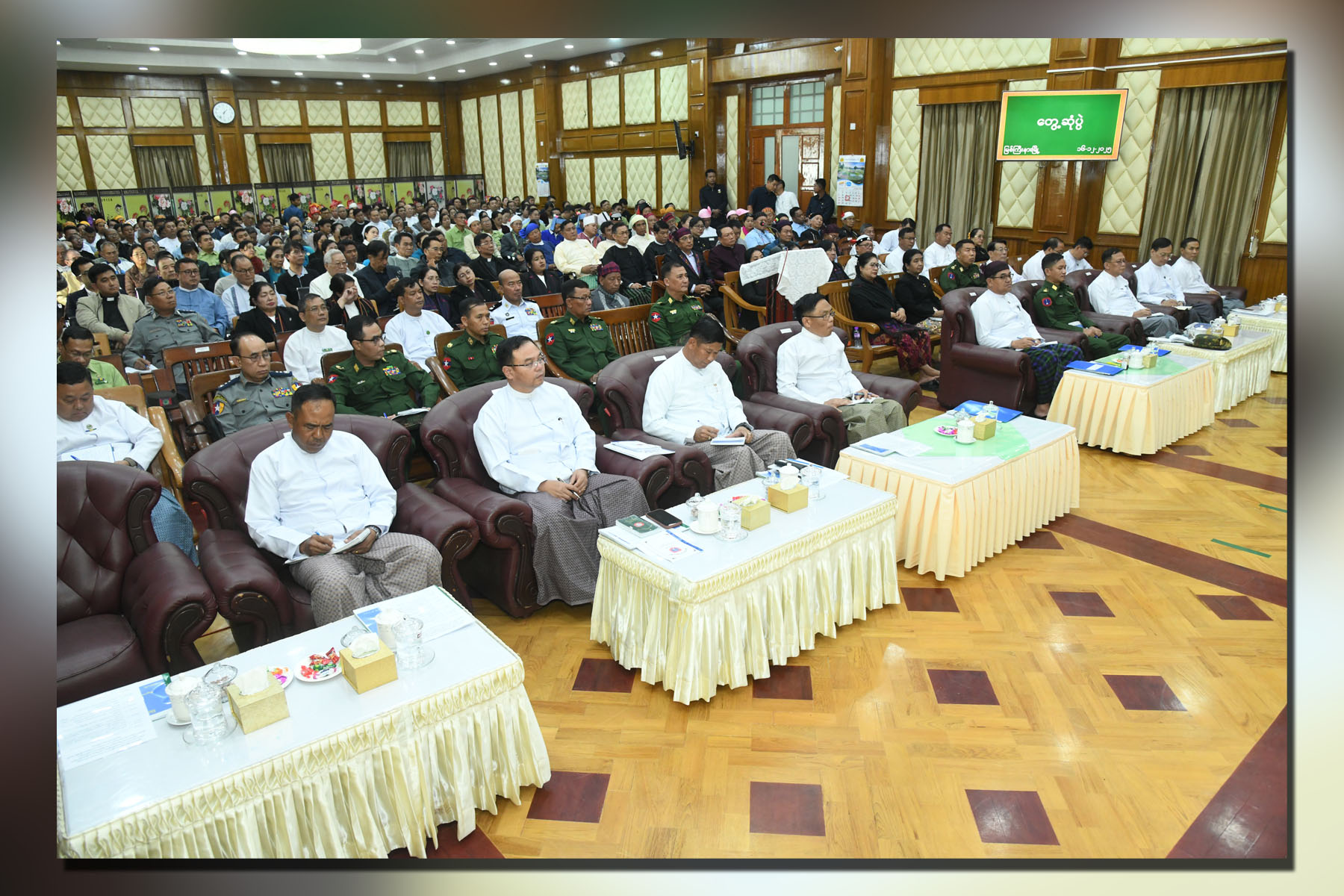
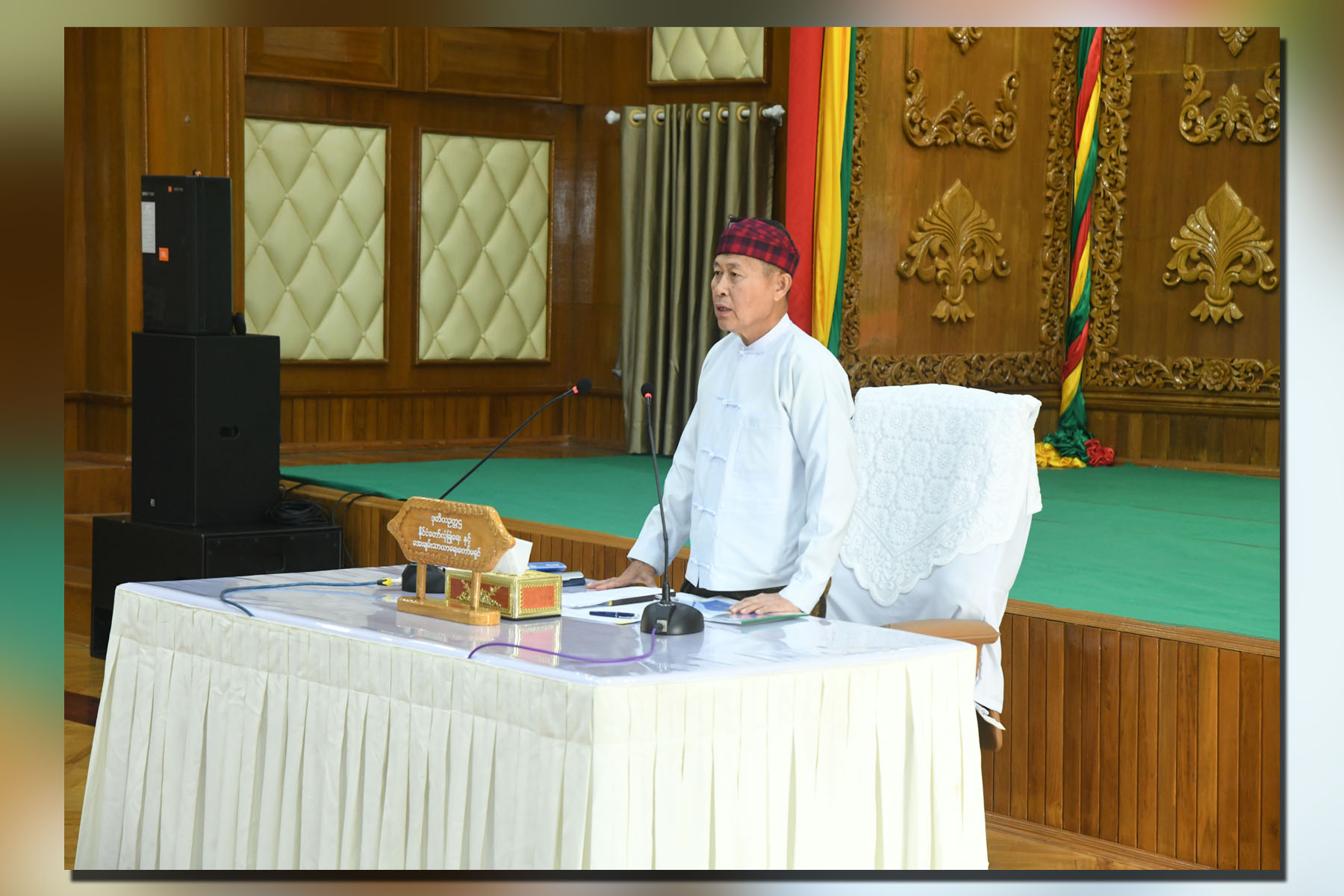
Yesterday afternoon, he met members of the Kachin State government and departmental officials at the Kachin State Government Office meeting hall and delivered a speech.
The meeting was attended by Daw Dwe Bu, a member of the Advisory Body of the National Defence and Security Council, Kachin State Chief Minister U Khet Htein Nan, senior military officials from the Office of the Commander-in-Chief, the Northern Command Commander, deputy ministers, state government ministers, departmental officials from districts and townships, ethnic traditional cultural groups, religious associations, and township leaders.
During the meeting, the Kachin State chief minister briefed attendees on the state’s current situation, progress in regional development, implementation of agricultural and livestock activities, projects undertaken during the financial year, foreign exchange earnings from agricultural products, loans extended to farmers and business owners from the State Economic Development Fund, progress in MSME activities, preparations for the successful conduct of the multi-party democratic general election, and the implementation status of the Head of State’s directives.
State Security and Peace Commission Vice-Chairman, Defence Services Deputy Commander-in-Chief, and Commander-in-Chief (Army) Vice-Senior General Soe Win addressed the development of Kachin State, emphasizing coordination in line with the Head of State’s instructions. He noted that since assuming responsibility on February 1, 2021, some civil servants left due to threats and coercion, while loyal officials continued their duties.
Vice-Senior General Soe Win outlined the schedule for the upcoming multiparty general election: the first part on 28 December 2025, the second on 11 January 2026, and the third two weeks later. He highlighted that elections are essential to form a new government and transfer state power. To ensure a free and fair vote, the Myanmar Electronic Voting Machine (MEVM), based on the Direct Recording Electronic (DRE) system, will be used. Developed locally and certified by the National Certification Committee and the Myanmar Standard Mark, the system has been proven effective in countries such as India, Bhutan, Iran, Brazil, and others.
He stressed the importance of voter participation, regional peace, and cooperation with officials. Voters are encouraged to select candidates with the knowledge, morality, and leadership skills necessary to serve the region effectively and uphold political, administrative, economic, and security responsibilities.
Vice-Senior General Soe Win highlighted the importance of agriculture and livestock for the national economy, emphasizing the need for accurate statistics, dedicated employees, and awareness-raising activities by officials. He urged MSMEs to focus on producing and exporting new agricultural and livestock-based products rather than limiting sales to local markets.
He also stressed that electricity is essential for agricultural production and industrial development. Hydropower, being the most cost-effective source at K82 per unit compared to K171 for solar, K235 for natural gas, and K215 for coal, should be prioritized. He specifically called for the review, discussion, and implementation of the Myitsone Hydropower Project on the Ayeyawady River to generate electricity in Kachin State.
The Vice-Chairman of the Commission said national economic policies on investment, finance, and trade require a strong base of educated human resources, making the promotion of education essential for development. Citing the 2014 Population and Housing Census, he noted that the country’s population exceeds 51 million, with 66.9 per cent in the working-age group (between 15 and 64 years old), up from 54.8 per cent in 1973, reflecting urban migration and expanding job opportunities. He added that 66.9 per cent of the working-age population is educated, underscoring the need for greater investment in education to support long-term socioeconomic growth and attract foreign investment.
Since taking office, the Head of State has expanded and upgraded universities and colleges, increased funding for basic education, and strengthened support for teachers. Literacy at the Union level stands at 92.1 per cent among more than 22 million people. However, school attendance declines sharply after age 14, falling to 43.3 per cent among those aged 15-19 and 15 per cent among those aged 20-24, with only 1.6 per cent of adults having attended university or college. To address this, 89 technical high schools have been opened in 88 districts, and he called for cooperation among the government, parents, students, and communities to overcome barriers such as school fees, lack of interest, and disabilities and to improve grade transition rates.
Then, town elder U A Phu highlighted the need for adequate fertilizer, repaired waterways to prevent flooding, and support for overall agricultural development. U La Mai Gwan Ja requested clarification on the benefits and guarantees that the Myitsone Hydroelectric Project would provide for local communities, village leaders, and religious organizations. Deputy Minister U Aye Kyaw explained ongoing discussions with Chinese companies regarding the project’s implementation.
Vice-Senior General Soe Win discussed the Myitsone Hydroelectric Project, noting that it was initiated during his tenure as regional commander but halted due to political crises just before the final stage of dam construction. He addressed concerns from residents and religious leaders about earthquake risks, explaining that the dam, located 25.4 kilometres from the Sagaing fault line, was originally designed to withstand a Maximum Credible Earthquake (MCE) of 7.1.
The project includes six sites along the Maykha and Malikha rivers with a total capacity of 19,099 MW, 6,000 MW of which is allocated to Myitsone. The selected dam type, a Concrete Face Rock Fill Dam (CFRD), will have an installed capacity of 5,600 MW. Seismic considerations were informed by other local dams, such as Zaungtu and Kon, which withstood the March 28, 2025, Mandalay earthquake. Experts from the Asia Charter Professional Engineer (ACPE) team recommend designing the dam to withstand even stronger earthquakes.
The project plan also includes measures to regulate the water table and prevent annual flooding in Myitkyina. Water levels along the Ayeyawady River are expected to reach 10 metres annually, allowing navigation from Myitkyina to the Ayeyawady Region, while sediments from the riverbed will serve as natural fertilizer for farmers along the river.
If the project is successful, it will benefit both the country and Kachin State by increasing productivity, providing electricity, and enabling year-round use of the waterway. The local ethnic communities, association officials, and village elders who attended expressed their pleasure and appreciation for the initiative.
Vice-Senior General Soe Win presented awards and honours to 15 ethnic traditional cultural organizations and five religious organizations, with officials receiving them on their behalf. He also greeted attendees and toured MSME exhibitions showcasing local agricultural and livestock products, food items, traditional clothing, accessories, and handicrafts made from amber, gemstones, and bamboo.
In the evening, Vice-Senior General Soe Win held a meeting with Rectors, Pro-rectors staff, and students of Myitkyina University, the Degree College of Education, and the Polytechnic University, emphasizing the role of youth as future national leaders. He cited education data from the 2014 census, noting a population of over 51 million, a literacy rate of 92.11 per cent, and that 66.9 per cent of the population is aged 15 to 64. While school enrollment stands at about 90 per cent, with a net enrolment rate of 94.8 per cent, he highlighted weaknesses in grade transition, as only 15 per cent of those aged 20 to 24 are at the university level. He called for cooperation among the government, parents, communities, and students to address challenges such as school fees and access to education, stressing continued support for the education sector and the responsibility of youth to contribute to national development.
Vice-Senior General Soe Win also met university officials to review institutional needs, coordinated necessary measures, and presented awards to schools. He then visited Myitkyina Public Hospital to meet patients, assess medical conditions, encourage health workers, and present food and cash gifts. He also paid religious visits to Dhammarakkhita Wantho Monastery and the Kachin Baptist Church, where he met religious leaders, made offerings and donations, exchanged Christmas gifts, and conveyed greetings and thanks. — MNA/ TH